


Galleried Occasional Table
A galleried occasional table is a small, versatile stand featuring a raised rim, offering both practical surface space and refined decorative presence.
Galleried Occasional Table
When you search for a galleried occasional table, you encounter compact furniture designed to hold small items securely atop its surface thanks to a raised wooden or metal edge. These pieces function variously as side tables, tea tables, lamp tables, or etageres depending on their specific form and height.
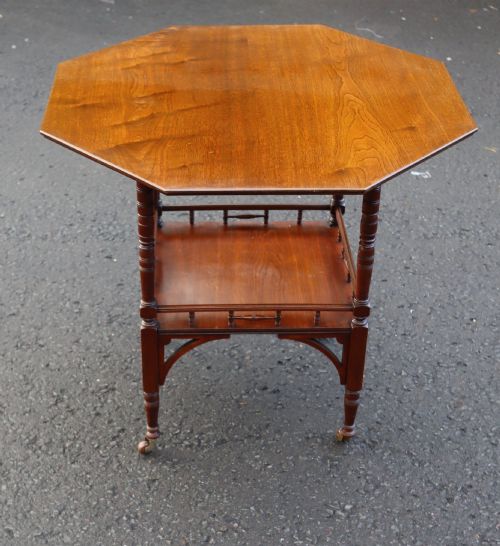
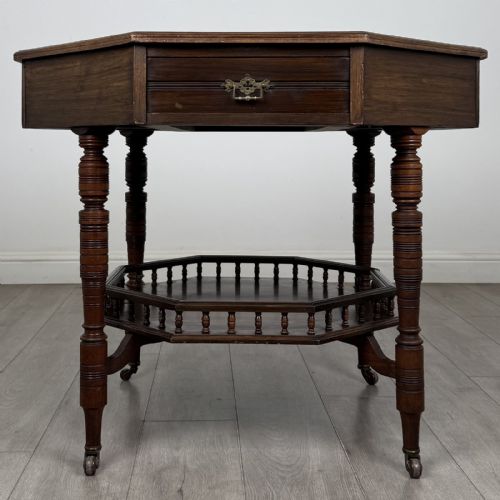
The pieces appearing on this page span several centuries and styles, ranging from Georgian and Regency examples to Edwardian, Victorian, and French Revival interpretations. You will find single-tier designs alongside two-tier variants, circular or octagonal tops, and occasional tables incorporating revolving book sections or drop leaves.
Origins stretch across English workshops of the eighteenth and nineteenth centuries as well as French cabinet makers working in Louis XV and Louis XVI styles. Materials vary widely, encompassing solid or flame mahogany, walnut, satinwood, and amboyna, frequently paired with brass galleries, marble tops, or onyx inserts.
How They Were Made
Cabinet makers utilised select hardwoods such as mahogany and walnut, often applying finely figured veneers like flame mahogany or exotic satinwood across the top and tiered surfaces. Delicate boxwood stringing and marquetry inlay frequently accentuate the borders and legs of Edwardian and Georgian pieces.
The defining gallery feature is constructed either from turned wooden spindles, fret-cut pierced wood, or cast and polished brass affixed to the perimeter of the tabletop. Supporting structures range from slender tapered legs and multi-tiered pillars to sturdy pedestals on tripod bases.
Secondary construction details include hand-dovetailed joints within small drawers and traditional joinery methods appropriate to the period, whether eighteenth century or early twentieth century.
Materials utilised across the selection include mahogany, walnut, satinwood, amboyna, brass, marble, and onyx.
What Varies in Quality
The distinction between standard examples and superior pieces rests on the choice of timber and the precision of the cabinet work. Finely grained flame mahogany, rich walnut, and carefully matched satinwood veneers indicate a higher tier of production.
The integrity and refinement of the gallery itself dictate much of the piece's character. Cast brass railings or finely pierced wooden galleries require meticulous craftsmanship compared to simpler turned spindles.
Proportion and decorative restraint set exceptional furniture apart. Pieces that balance delicate leg supports with stable, well-balanced tiers without appearing crowded or heavy demonstrate superior design.
Gillows
The Galleried Occasional Table Glossary
- Gallery
- A raised rim or border surrounding the edge of a tabletop, designed to prevent items from sliding off. Galleries can be fashioned from brass, pierced wood, or turned spindles.
- Etagere
- A set of open shelves or tiers designed for displaying small objects, ornaments, or books. These pieces often incorporate galleries on multiple levels.
- Marquetry
- Decorative veneer work forming geometric patterns or pictorial designs using various coloured woods, boxwood, and other materials.
- Tripod base
- A support structure comprising three legs radiating from a central pillar, commonly found on wine tables and small occasional tables.
- Stringing
- A thin inlay of contrasting wood, such as boxwood, set flush into the surface to create linear borders around table edges and drawer fronts.
Galleried Occasional Table: Frequently Asked Questions
What is a galleried table used for?
These tables served primarily as movable stands for tea, writing materials, or lamps in drawing rooms and parlours. The raised rim allowed owners to place small valuables or glassware on the surface with greater security.
Today, they function effectively as bedside stands, compact side tables, or display surfaces for ceramics and small sculptures in modern interiors.
How do I identify a Georgian table?
Georgian pieces, dating from the eighteenth century, typically display solid mahogany construction with understated elegance, straight or cabriole legs, and traditional cabinet joinery. They often feature simpler timber grains and robust proportions compared to later revival styles.
Examining the underside and interior construction reveals period-appropriate hand-cut joints and timber ageing characteristic of the seventeen-hundreds.
Are two-tier tables authentic?
Two-tier occasional tables appear frequently across the Victorian and Edwardian periods, as well as in French Revival pieces from around nineteen hundred. They provide an additional lower shelf for storage or display.
Construction methods and timber matching across both tiers help confirm the integrity of the piece's period origin.
How do I care for a veneer surface?
Maintain polished wood and delicate veneers by keeping them away from direct sunlight and extreme temperature fluctuations that cause timber to dry out. Dust gently with a dry cloth and avoid harsh chemical cleaners.
Periodic application of appropriate furniture wax preserves the lustre of mahogany, satinwood, and walnut surfaces.