



Galle Acid Etched Glass
Galle acid etched glass brings organic Art Nouveau forms into the light through layered cameo glass and botanical motifs.
Galle Acid Etched Glass
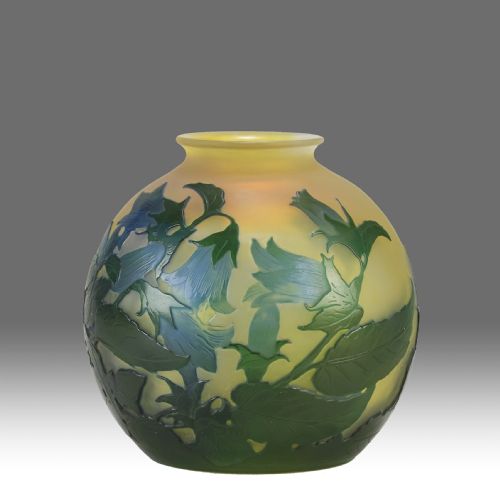
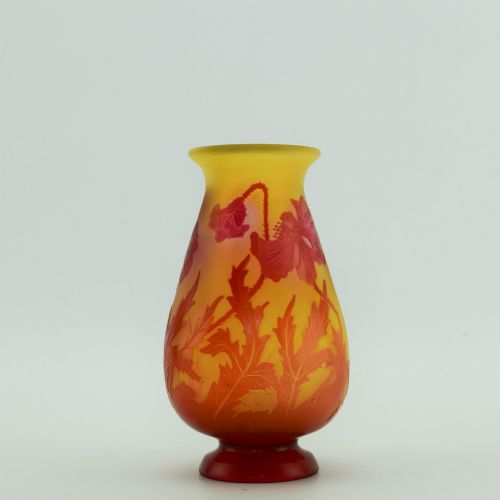
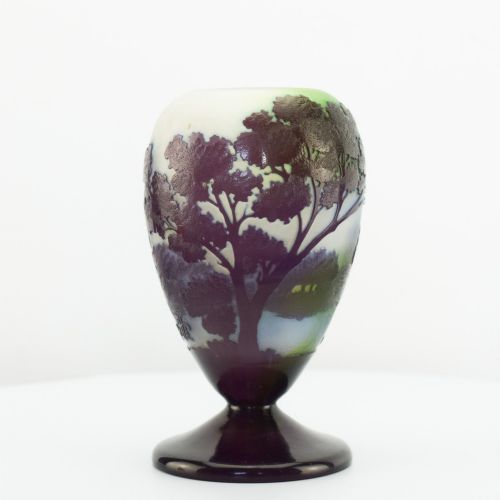
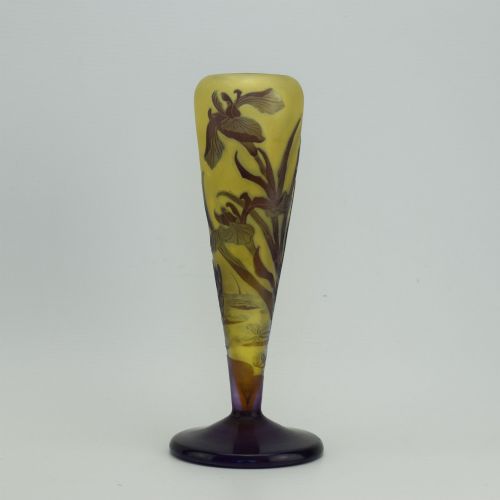
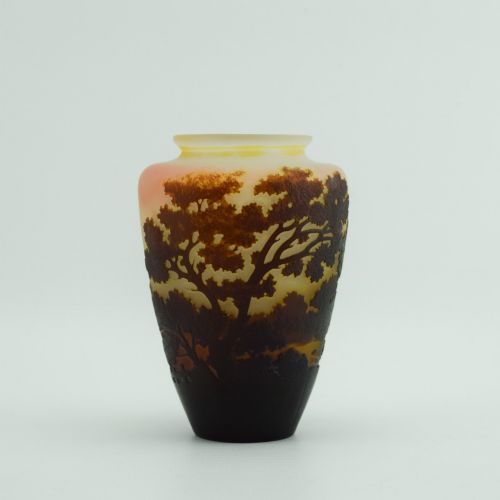
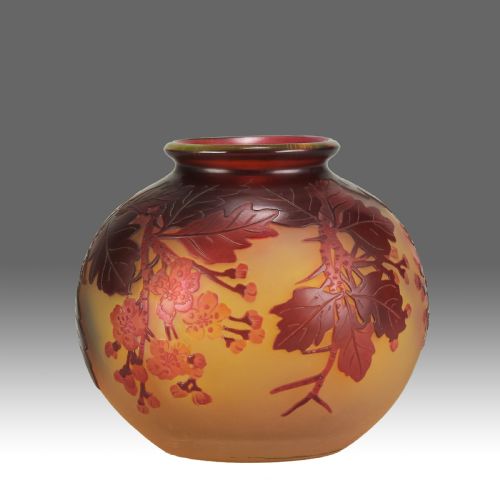
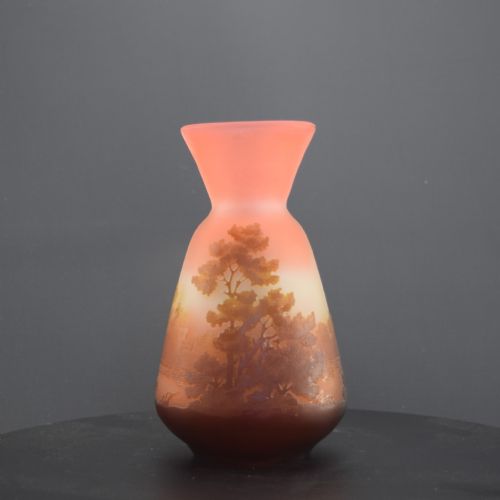
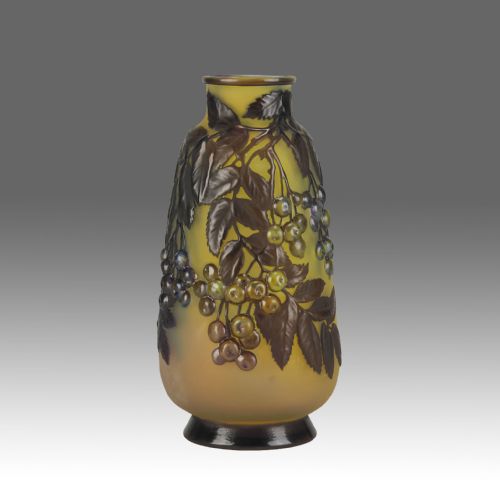
Galle acid etched glass consists of vases shaped in the early twentieth century during the Art Nouveau period. These vessels display natural subjects ranging from aquatic iris and water lilies to landscapes and floral themes including cornflowers, poppies, and apple blossoms.
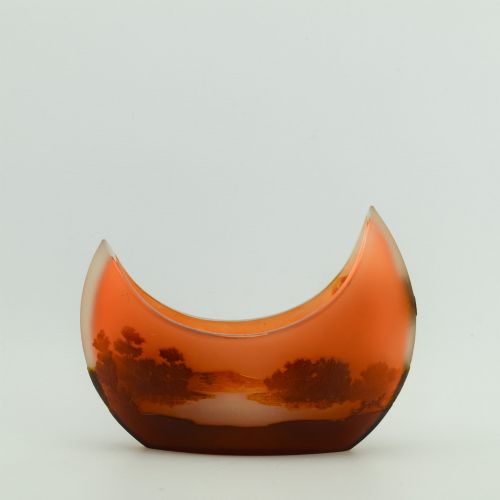
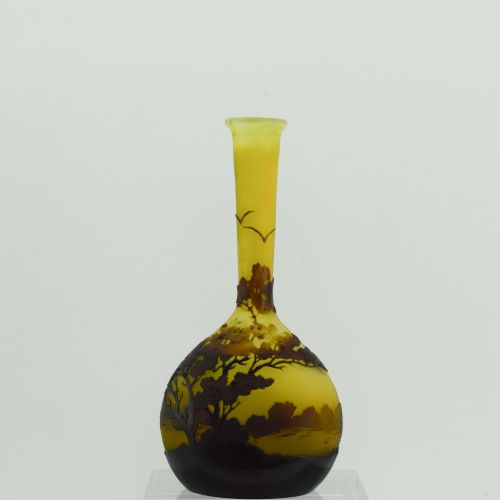
The pieces on this page are predominantly vases produced across several decades from 1900 to 1920. Collectors encounter distinct forms such as banjo vases, crescent-shaped vessels, and footed cylinders.
Materials and production methods
These works utilise cameo glass and frosted glass surfaces shaped through acid etching techniques. Artisans applied acid to eat away specific layers of glass, revealing contrasting colours underneath.
The technique allows for intricate designs such as the Sorbier Souffle vessels and multi-coloured landscape scenes. Manufacturers combined chemical etching with layered glass blanks to achieve depth in each botanical or scenic depiction.
Sycamore seeds and oak acorns found a permanent home in French glass, ensuring autumn leaves outlasted the trees.
Distinctions in quality
Quality rests in the complexity of the design and the subtlety of the colour transitions across the glass layers. Pieces designated as fine quality demonstrate precise control of the acid-etching depth to accentuate botanical details like leaves and petals.
Emile Galle
The Galle Acid Etched Glass Glossary
- Cameo glass
- Glass vessels made with multiple layers of different colours fused together, then carved or acid-etched to create a raised design. This technique yields high contrast between the background and the foreground motifs.
- Acid-etched glass
- Glass decorated by applying hydrofluoric acid to eat away unprotected areas of the surface. The process produces textured, frosted, or recessed patterns.
- Frosted glass
- Glass treated to achieve a matte, non-reflective appearance rather than a transparent finish. This texture diffuses light across the body of the vase.
- Art Nouveau
- An international style of art and architecture that flourished between 1890 and 1910, characterised by sinuous lines and motifs inspired by natural forms. Works from this movement frequently incorporate plant stems, flowers, and landscapes.
Galle Acid Etched Glass: Frequently Asked Questions
What periods do these vases come from?
The listings span the early twentieth century, with production dates recorded across the 1900s, 1910s, and 1920s.
These pieces sit firmly within the Art Nouveau movement.
How were these glass vases used?
These vessels were created as decorative display objects for interiors rather than functional containers for everyday cut flowers.
Their intricate cameo scenes and coloured glass layers were intended to catch natural light on mantelpieces and display cabinets.
What motifs appear on the glass?
Decoration focuses heavily on botanical subjects including poppies, cornflowers, hydrangeas, oak leaves, and aquatic iris.
Other examples depict distinct scenery such as Vosges landscapes and crescent-shaped compositions.
How do I identify Art Nouveau styling?
Art Nouveau design relies on flowing organic lines and direct inspiration from the natural world.
On these vases, the style translates into rendered plant forms, botanical specimens, and naturalistic landscapes.