



Full Hunter Watch
A full hunter watch protects its dial beneath a spring-loaded metal cover, offering a pocket timepiece built for daily practicality and secure carriage.
Full Hunter Watch
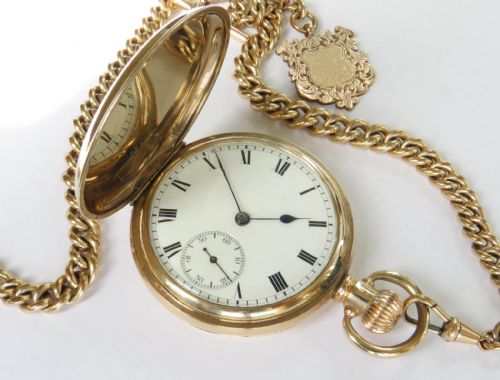
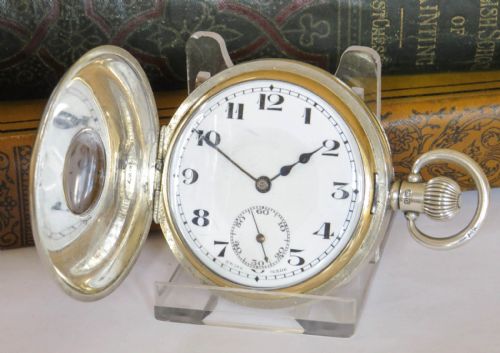
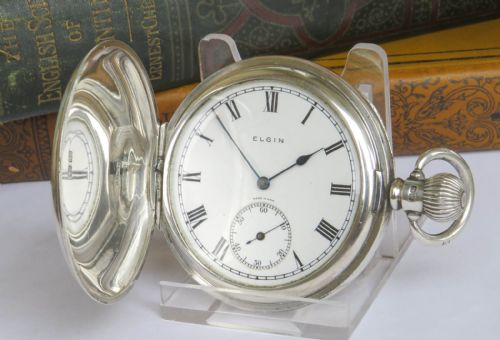
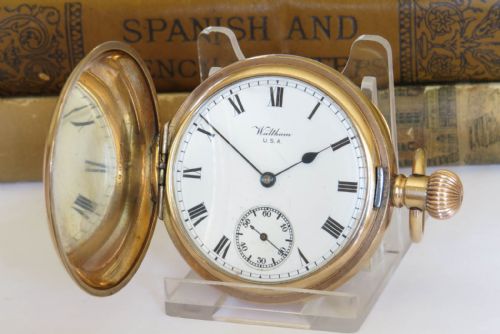
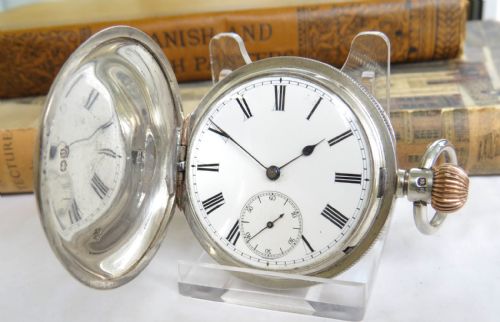
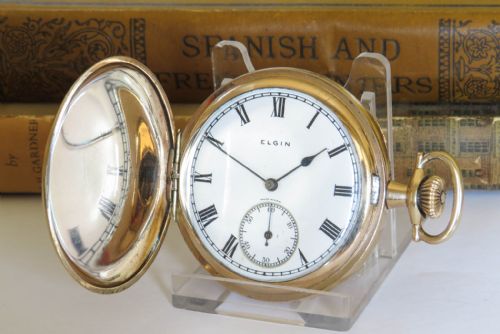
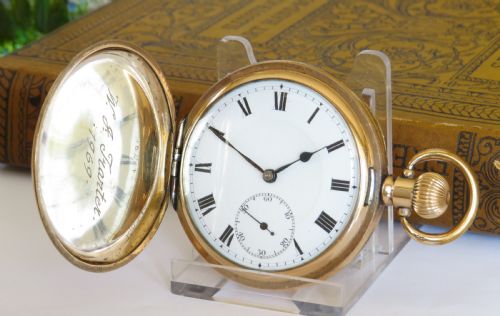
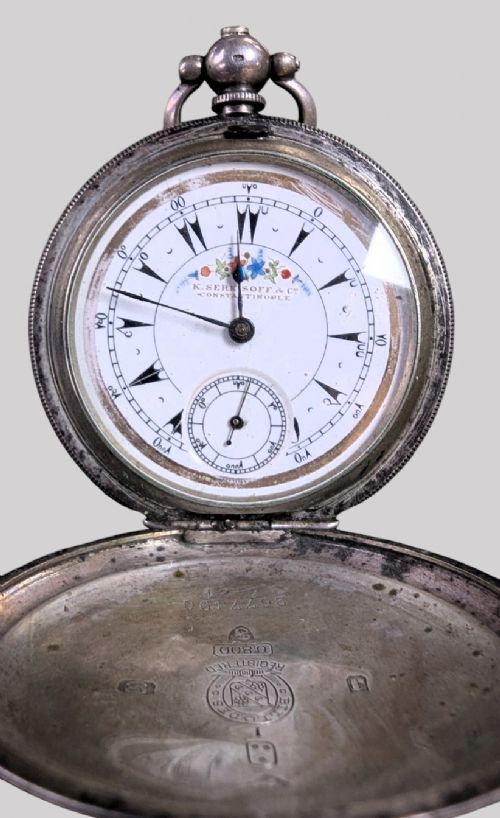
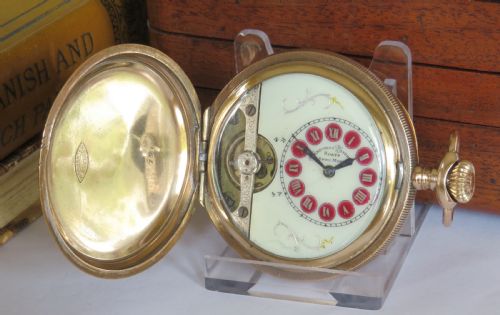
The pieces appearing on this page range from nineteenth-century fusee pocket watches in solid gold to early twentieth-century silver and gold-plated examples by makers such as Waltham and Elgin. Buyers frequently encounter Edwardian and 1920s specimens alongside Victorian Ottoman market pieces.
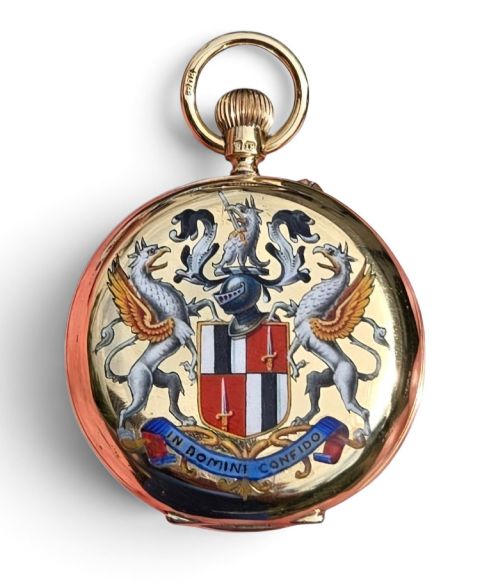
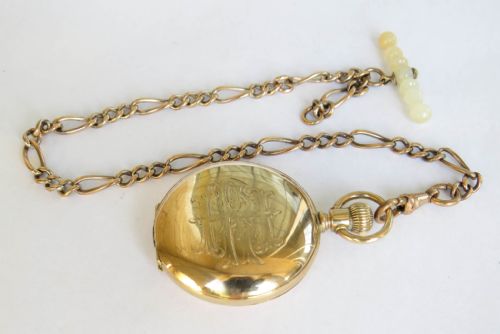
Pocket watches of this design served practical daily roles, sometimes carrying personal inscriptions, bravery awards, or intricate engraved decoration on the outer case. The closed front shielded the glass and enamel dial from knocks during work or travel.
Materials and Construction
Watchmakers utilised a range of metals for cases, spanning solid 18ct and 14ct gold, 9ct gold, silver, gold filled, gold plate, and steel. Many cases received engine-turned or intricately engraved geometric and floral patterns directly onto the front and back covers.
Interiors rely upon delicate white enamel dials paired with glass crystals and dark hands, driven by mechanical movements ranging from standard lever escapements to fusee and verge mechanisms. Certain advanced examples incorporate repeating complications and specialised chronomètre adjustments.
Listings feature full hunter watches spanning the 1870s through the 1930s, incorporating silver, gold, and enamel finishes.
Distinctions in Quality
Quality rests in the complexity of the movement, separating standard three-hand button-wind calibres from high-grade fusee mechanisms, repeating complications, and jewelled movements by premier makers. Case metal also determines tier, with solid gold housings sitting above silver, gold-filled, and plated alternatives.
The execution of the exterior ornamentation dictates desirability, distinguishing plain utilitarian cases from those featuring deep hand-engraving, engine-turned guilloche work, or specialised regional markets such as the Ottoman trade. Preservation of the enamel dial and the crispness of the spring-hinged cover mechanism complete the assessment.
Waltham·Elgin·Longines·Omega·J W Benson·Rotherhams·Charles Frodsham·Corgémont
The Full Hunter Watch Glossary
- Full hunter watch
- A pocket watch enclosed by a spring-loaded metal cover that protects the dial from damage. The lid springs open when the winding crown is depressed.
- Fusee
- A conical pulley system used in older pocket watches to maintain even tension on the gear train as the mainspring unwinds. This mechanism ensures consistent timekeeping throughout the power reserve.
- Engine-turned
- A mechanical decoration technique producing intricate geometric patterns etched into metal cases. It provides both texture and visual depth to the exterior.
- Enamel dial
- A fused glass powder face fired onto a metal disc, yielding a smooth, glossy white surface for painted numerals. These dials require careful handling to prevent chipping.
- Repeater
- A complication mechanism that chimes the hours, quarters, or minutes on demand via gongs inside the case. Such pieces represent high levels of watchmaking skill.
Full Hunter Watch: Frequently Asked Questions
How do I open the front cover?
Depress the crown winding button firmly to release the spring-loaded latch holding the front lid closed.
Avoid prying the cover open with fingernails or tools, as this strains the delicate hinge.
Can I carry a full hunter daily?
Many buyers wear these timepieces in a waistcoat pocket secured by a matching chain or fob.
Regular servicing by a watchmaker keeps the mechanical movement running accurately for daily use.
How do I wind a vintage pocket watch?
Turn the crown clockwise between your thumb and forefinger until you feel gentle resistance.
Stop winding immediately when the tension increases to avoid damaging the mainspring.