



Fruitwood Inlaid Table
These fruitwood inlaid table selections bring warm tones and intricate patterned surfaces into a room, offering both practical surface space and historic character.
Fruitwood Inlaid Table
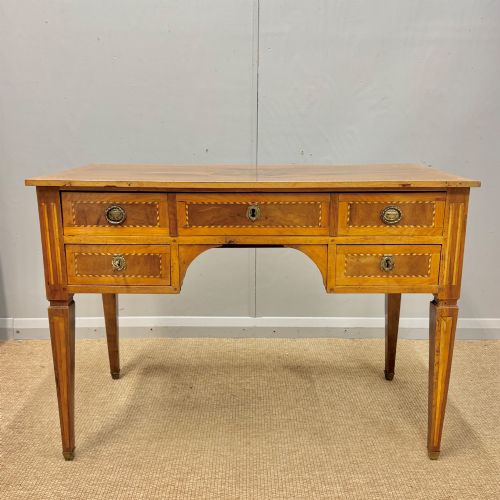
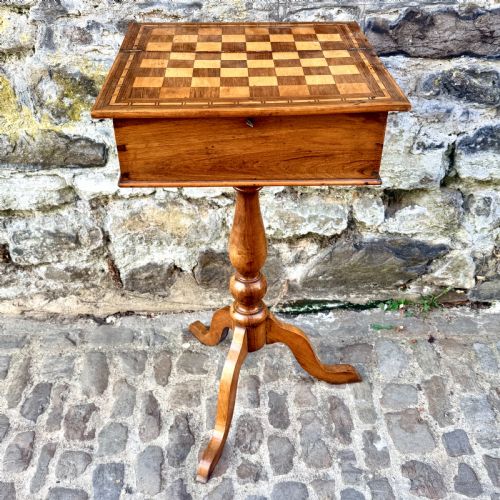
When you search for a fruitwood inlaid table, you encounter diverse forms spanning centuries from the seventeenth through to the twentieth. The selection ranges from dining tables and extending variants to card tables, gaming boards, and occasional side pieces.
French Provincial examples and Italian Sorrento pieces appear alongside Georgian designs and Dutch Baroque specimens. Forms vary from console tables and bedside cabinets to freestanding desks and centre tables.
The materials frequently combine fruitwood with walnut, mahogany, oak, and satinwood, enhanced by marquetry and parquetry. These tables serve as functional furniture while displaying intricate geometric or pictorial wood ornamentation.
Materials and construction
Cabinet makers utilised fruitwood as a primary timber or as a contrasting veneer for detailed surface decoration. Marquetry inlay and parquetry patterns required precise cutting of diverse woods to fit flush within the primary surface.
Additional materials such as brass, ebony, bone, and marble frequently augmented the timber framework. Joinery methods varied from traditional gate leg mechanisms to sturdy console and pedestal structures suited to the specific furniture type.
Fruitwood Inlaid Table Retail Price Guide 2026
Typical asking prices for fruitwood inlaid table among the pieces listed under this phrase on Sellingantiques today, from the lower quarter to the upper quarter. They describe what is for sale here now, not the wider market.
Materials recorded across the archive include fruitwood, walnut, oak, mahogany, satinwood, brass, ebony, bone, and marble.
Assessing quality in inlaid tables
Quality rests upon the precision of the marquetry inlay and the stability of the underlying timber structure. Finer pieces demonstrate tight joints where contrasting woods meet without noticeable gaps or raised edges.
The sophistication of the design dictates distinction, with elaborate pictorial or geometric patterns showing superior craftsmanship compared to simpler borders. Original surface patination and intact secondary materials like brass or bone further distinguish exceptional examples.
Paul Garnier
The Fruitwood Inlaid Table Glossary
- Fruitwood
- Timber derived from fruit-bearing trees such as pear, apple, or cherry, prized for a fine grain and warm tone. It takes polish well and forms a stable base for intricate veneer work.
- Marquetry inlay
- Decorative technique of applying small pieces of veneer to a structure to form pictorial or geometric designs. Craftsmen arrange contrasting woods to create depth and pattern.
- Parquetry
- Geometric mosaic woodwork used for surfaces such as tabletops, created by fitting regular veneer pieces together. It produces repeating patterns like cubes, chequers, or basket weaves.
- Demi lune
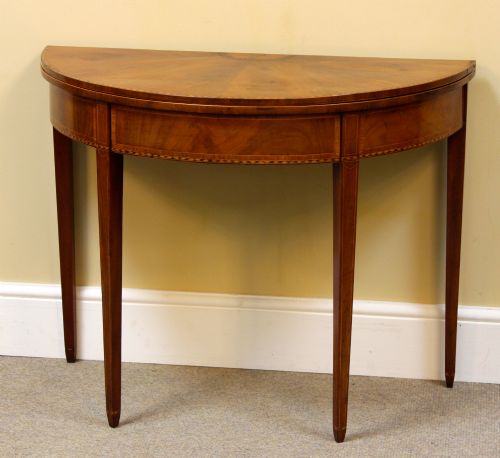
- A half-moon shape characteristic of certain card and side tables designed to sit flush against a wall. These pieces often feature fold-over tops supported by pivoting legs.
- Sorrento ware
- Woodwork originating from the Italian town of Sorrento, noted for intricate micro-mosaic marquetry depicting landscapes, figures, or floral motifs. It frequently appears on nineteenth-century tables and boxes.
Fruitwood Inlaid Table: Frequently Asked Questions
What is a fruitwood inlaid table used for?
These tables served various domestic functions depending on their specific form, ranging from dining and writing to card games and display. Smaller versions functioned as bedside cabinets or occasional stands.
Today, they act as focal points in living spaces, hallways, and dining rooms, providing both surface utility and decorative historic interest.
How do I date an inlaid table?
Dating relies on observing the furniture style, construction techniques, and the specific characteristics of the inlay work. Pieces span from seventeenth-century Baroque cabinets to twentieth-century provincial tables.
Comparing the secondary timbers, hardware, and joinery style against known historical periods helps narrow down the decade of manufacture.
What woods are used in these tables?
Makers combined fruitwood with walnut, oak, mahogany, and satinwood to create contrast and colour variation. Additional elements such as ebony, bone, and brass frequently appear within the decorative surface patterns.
The choice of timber often reflects the regional tradition of the workshop, whether French, Italian, German, or English.
Are these tables suitable for everyday use?
Most examples remain structurally sound for gentle daily use, provided they receive appropriate care and protection from moisture and direct heat. Occasional and side tables handle normal decorative loads easily.
Dining and desk variants can be utilised carefully, though antique surfaces benefit from coasters and protective pads to preserve the historic polish.