



Fruit Bowl Canvas Art
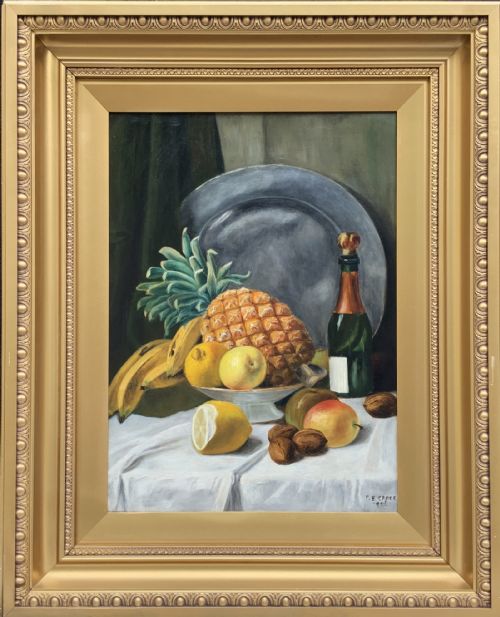
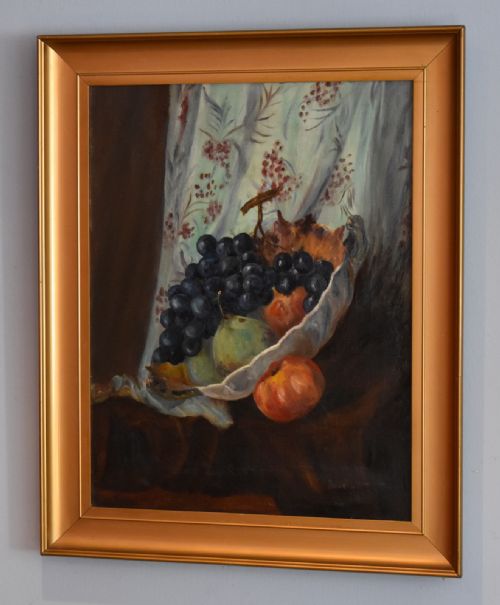
Fruit bowl canvas art brings traditional realism, post-impressionism and classical realism into interiors through oil paintings on canvas.
Fruit Bowl Canvas Art
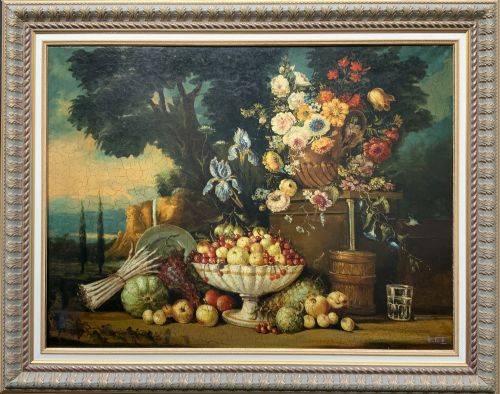
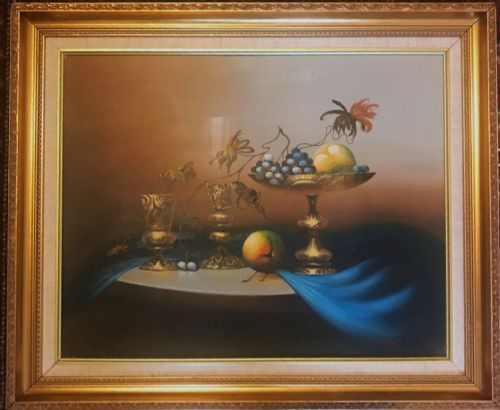
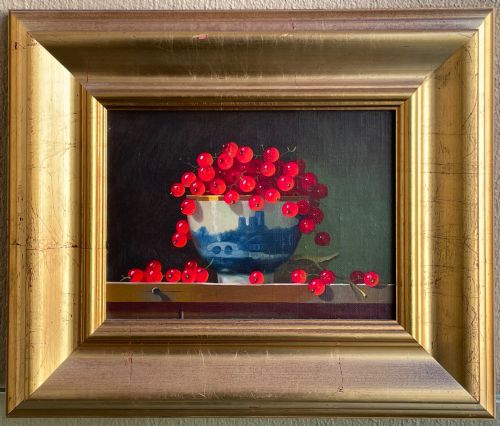
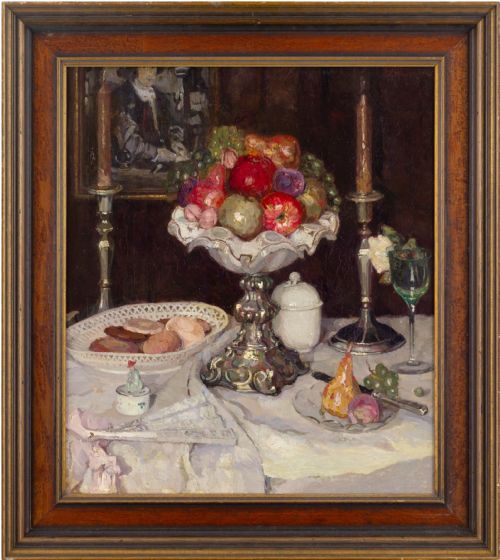
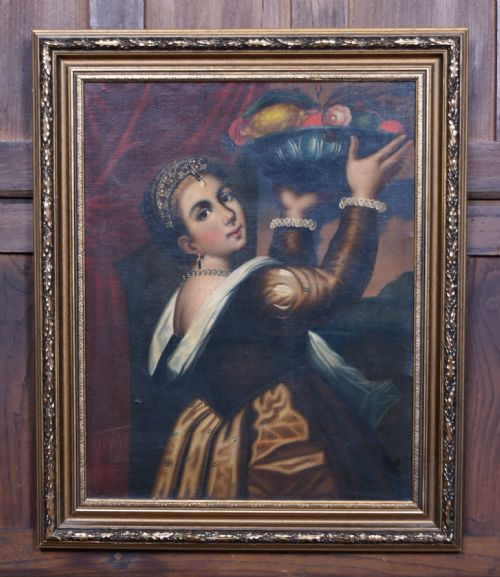
When buyers search for fruit bowl canvas art, they encounter oil paintings and still life paintings executed on canvas support. These works range from classical realism and traditional realism to post-impressionism and contemporary realism.
The selections span periods including the Edwardian era, 1910, 1930, 1940, 1950, 1960, and the nineteenth century. Common subjects depict apples, grapes, red berries, and banquet arrangements alongside items like candlesticks, biscuits, and blue and white jugs.
Most examples originate from European schools and named painters such as Jozsef Molnar, Else Preußner, Ian Parker, Bela Balogh, and J.C. de Bruin. Pieces vary from intimate studies to large banquet compositions framed in wood or gilt wood.
How fruit bowl canvas art was made
These works utilise oil paint applied directly onto stretched canvas surfaces by artists working within diverse European traditions. The handling of medium ranges from smooth academic finishes to visible, textured brushwork associated with post-impressionist approaches.
Many surviving paintings retain their original wooden or gilt wood frames, sometimes enhanced with gold leaf. The interaction between the painted pigment and the gilded or plain timber moulding completes the presentation of the canvas.
Fruit Bowl Canvas Art Retail Price Guide 2026
Typical asking prices for fruit bowl canvas art among the pieces listed under this phrase on Sellingantiques today, from the lower quarter to the upper quarter. They describe what is for sale here now, not the wider market.
Listings feature oil paintings on canvas spanning the nineteenth century up to 1960, incorporating wood and gilt wood frames.
What varies in quality
Quality rests in the fidelity of the composition and the confidence of the brushwork, distinguishing ambitious banquet scenes from simpler single-subject studies. The handling of light on fruit surfaces, textiles, and ceramic jugs demonstrates the painter's technical control.
The preservation of the original canvas and the integrity of the accompanying gilt wood or plain wood frame influence the overall character of the piece. Works bearing clear signatures and documented artist attributions carry stronger historical interest.
Jozsef Molnar·Else Preußner·Ian Parker·Bela Balogh·J.C. de Bruin
The Fruit Bowl Canvas Art Glossary
- Oil on Canvas
- Pigments suspended in a drying oil medium applied to a woven fabric support. This technique allows for rich colour blending and textural depth.
- Still Life
- A painting genre focused primarily on inanimate subject matter, such as fruit, vessels, and household objects. It highlights arrangement, lighting, and form.
- Gilt Wood
- Timber framing coated with a thin layer of gold leaf or metallic gilt finish. It serves to frame and elevate the painted canvas.
- Classical Realism
- An artistic approach emphasising accurate observation, precise draftsmanship, and traditional methods of representation. It prioritises visual truth over expressive distortion.
- Post-Impressionism
- A stylistic movement extending beyond impressionism that utilises expressive brushwork and heightened colour. It values personal interpretation of form and subject.
Fruit Bowl Canvas Art: Frequently Asked Questions
What periods do these paintings date from?
The available works span the Edwardian period, 1910, 1930, 1940, 1950, 1960, and the nineteenth century. Each era brings distinct stylistic approaches to still life composition.
Buyers will find traditional academic techniques alongside mid-century interpretations and post-impressionist handling.
How should I hang an oil painting on canvas?
Canvas paintings require stable wall hooks secured to structural supports, avoiding areas subject to direct sunlight or damp conditions. Proper hanging protects both the canvas tension and the surrounding frame.
Ensure the wall mounting matches the weight of the timber or gilt wood frame accompanying the artwork.
What subjects typically accompany fruit in these scenes?
Artists frequently pair fruit such as apples, grapes, and red berries with tableware, candlesticks, biscuits, and blue and white jugs. These secondary elements introduce variety in texture and shape.
Compositions range from intimate tabletop studies to expansive banquet arrangements.
How do I identify different painting styles?
Styles are recognised through brushwork application, colour palette, and compositional arrangement. Classical and traditional realism focus on precise detail, whereas post-impressionism employs looser, more expressive marks.
Examining the canvas closely reveals whether the artist favored smooth blending or textured impasto.