


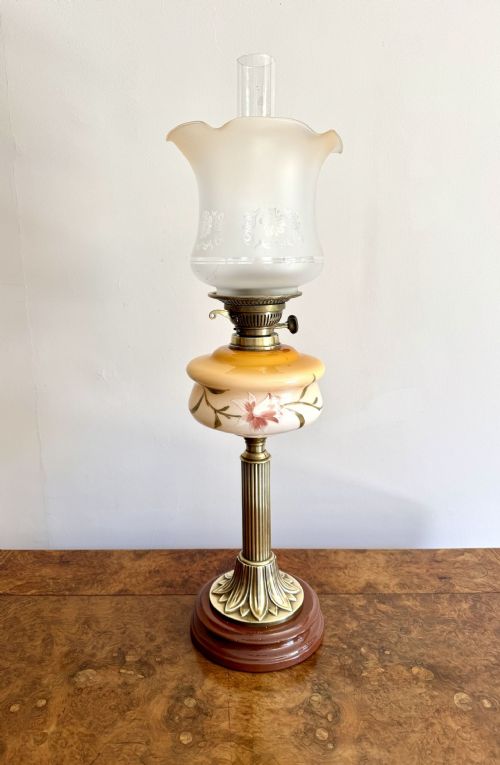
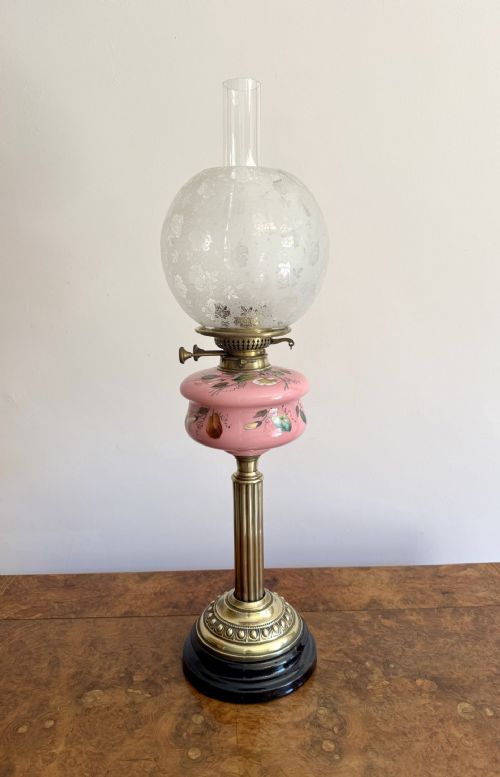
Frosted Glass Lamp
Frosted glass lamps combine diffused illumination with tactile surface textures, spanning periods from Victorian oil lamps to Art Deco lighting.

Frosted Glass Lamp
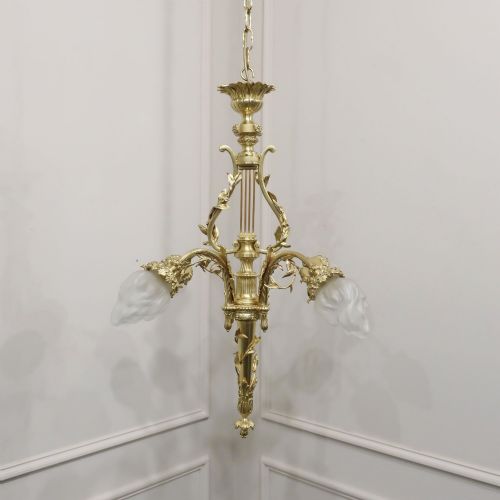
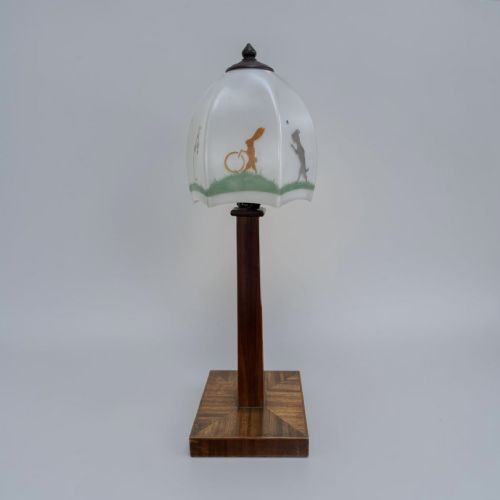
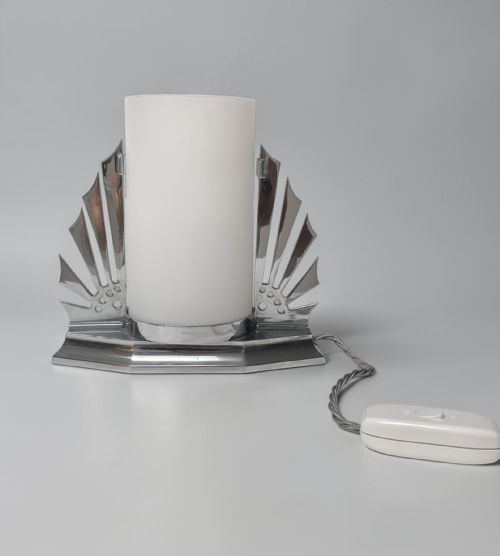
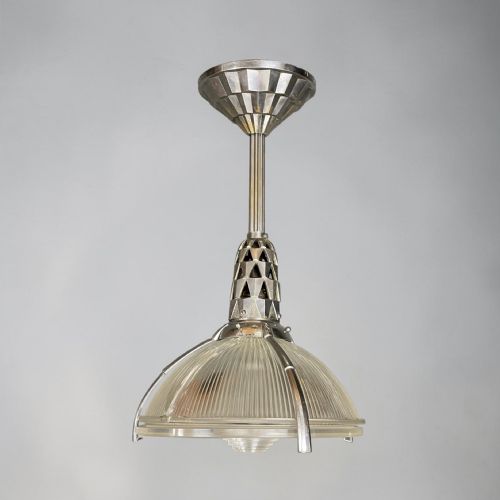
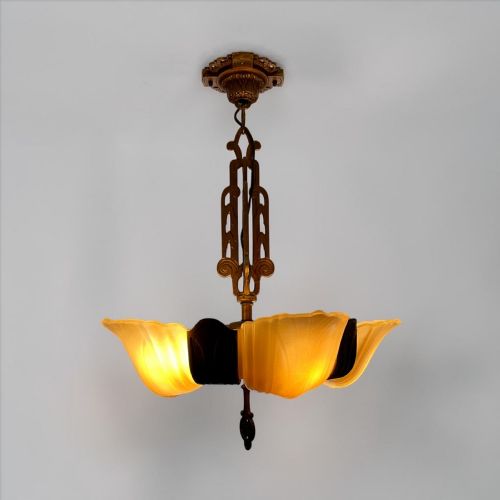
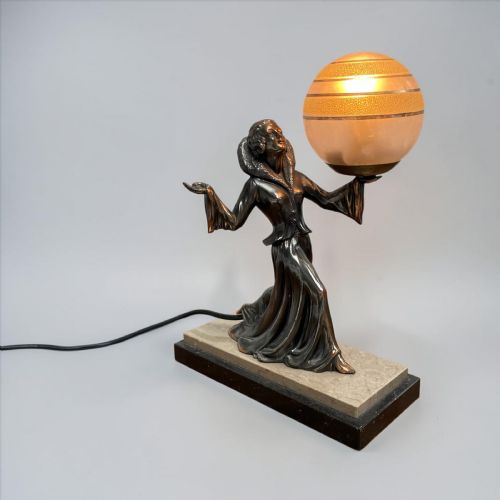
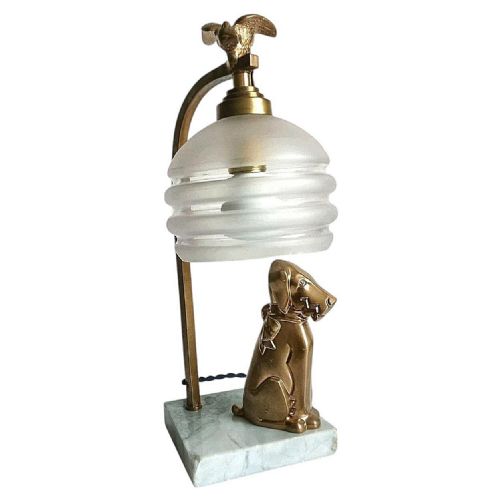
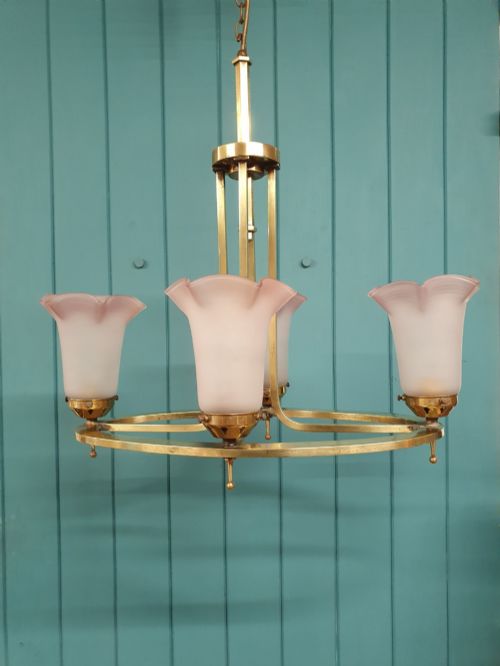
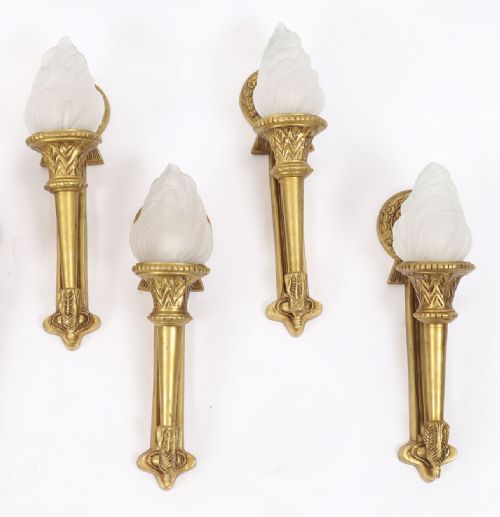
A frosted glass lamp takes many forms across the inventory, appearing as table lamps, wall lights, pendant lights, chandeliers, and desk lamps. These pieces originate from periods including the Victorian era, the Edwardian period, and the 1920s and 1930s Art Deco movement.
The version most frequently met on this page is the Art Deco table or ceiling lamp, often paired with chrome, brass, or wrought iron. Examples range from clam shell shades to novelty figures and geometric slip shade designs.
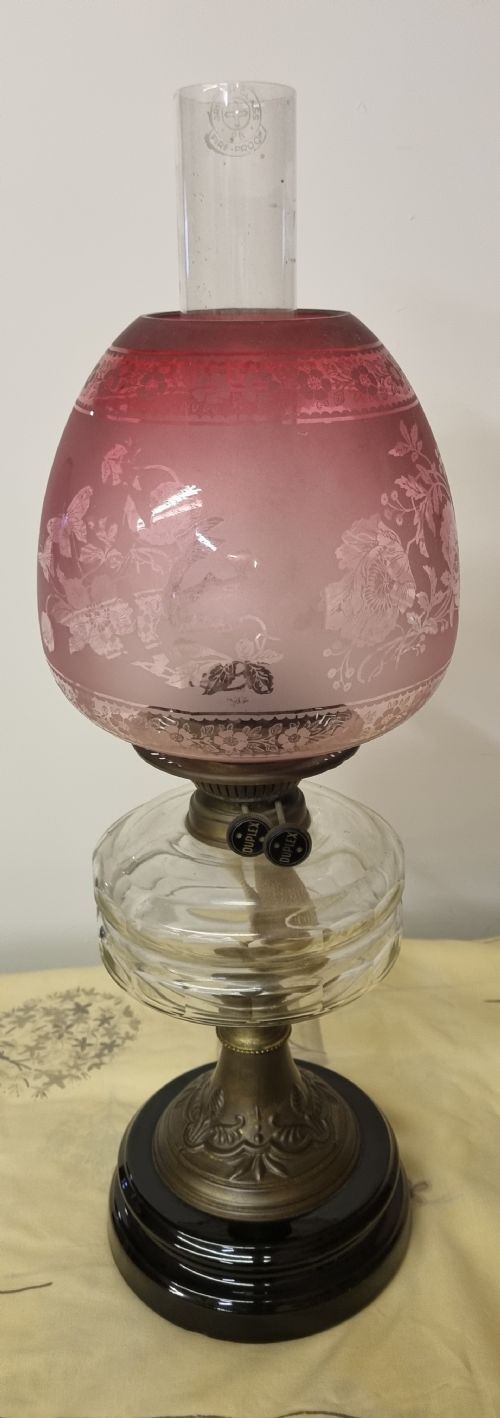
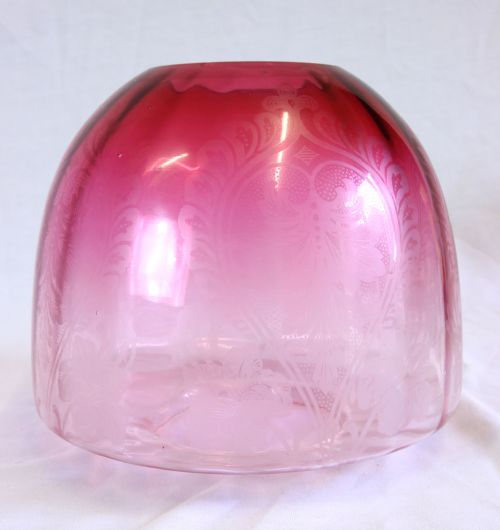
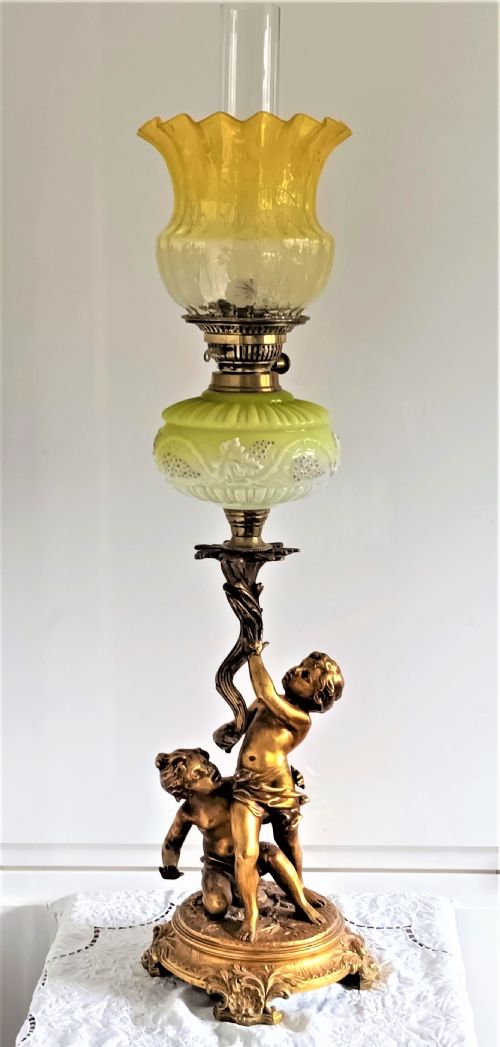
Earlier iterations take the form of Victorian and Edwardian oil lamps and gas wall lights, combining brass, ceramic, or cranberry glass fonts with frosted shades. These earlier pieces bridge the transition from functional household lighting to decorative electric fixtures.
How they were made
Makers utilised acid etching, sandblasting, or chemical treatments to achieve the characteristic opaque surface of frosted glass, diffusing the light output. This technique was applied to diverse forms, from delicate pendant shades and clam shell bowls to robust slip shades.
Metalwork frames and mountings rely on cast brass, spun copper, nickel, chrome, and wrought iron, frequently combined with marble, ceramic, or gilt bronze bases. These structural elements support and frame the glass components using collars, screws, and patinated brackets.
Frosted Glass Lamp Retail Price Guide 2026
Typical asking prices for frosted glass lamp among the pieces listed under this phrase on Sellingantiques today, from the lower quarter to the upper quarter. They describe what is for sale here now, not the wider market.
Listings feature brass, bronze, chrome, and wrought iron paired with frosted glass across Victorian, Edwardian, and Art Deco periods.
What varies in quality
Quality reveals itself in the weight and depth of the glass moulding, where superior shades exhibit even thickness, crisp surface relief, and balanced diffusion without thin patches. The integration between the glass shade and its metal mount demonstrates the precision of the original manufacture.
Metal components separate mass production from finer workshops through the crispness of casting detail, hand-chasing, and durable plating or patination. Substantial brass, bronze, and wrought iron structures provide stability and longevity compared to lighter, pressed metal alternatives.
Émile-Jacques Ruhlmann·F&C Osler·Karl Ens·Anton Buschelberger·Muller Bros·Degue·Loetz
The Frosted Glass Lamp Glossary
- Slip Shade
- A moulded glass shade that slides or drops into a metal frame or basket, commonly found in Art Deco ceiling and wall lights.
- Font
- The oil or paraffin reservoir of a lamp, often manufactured in coloured glass, ceramic, or brass beneath the burner and shade.
- Ormolu
- Gilded bronze or brass mounts used extensively on French Neoclassical and Revival lighting fixtures to add decorative detail.
- Spelter
- A zinc alloy cast into figures and bases, frequently finished with a bronze or patinated coating for mood lamps.
- Cranberry Glass
- A rich red glass created by adding gold chloride to the molten batch, utilised for Victorian oil lamp shades.
Frosted Glass Lamp: Frequently Asked Questions
How do I identify an Art Deco lamp?
Art Deco lamps display geometric motifs, symmetrical lines, and stylised animal or human figures, often utilising frosted glass paired with chrome, brass, or wrought iron.
These pieces typically date from the 1920s and 1930s, showing streamlined industrial influences alongside decorative modernist aesthetics.
Were these lamps originally electric?
Many of the earlier examples, particularly from the Victorian and Edwardian periods, started life as oil or gas lamps before later conversion to electricity.
Twentieth-century pieces, especially from the Art Deco period, were designed specifically for electrical illumination from the outset.
What is a slip shade lamp?
A slip shade lamp uses individual moulded frosted glass panels that slot directly into a central metal frame or housing.
This construction method allowed designers to create multi-light chandeliers and wall sconces with integrated, sculptural glass bodies.
How should I clean frosted glass?
Clean frosted glass gently using warm water and a mild detergent, avoiding harsh abrasives that might alter the textured surface.
Dry the glass thoroughly with a lint-free cloth to prevent water spots on the treated exterior.