



Frosted Flame Glass Lights
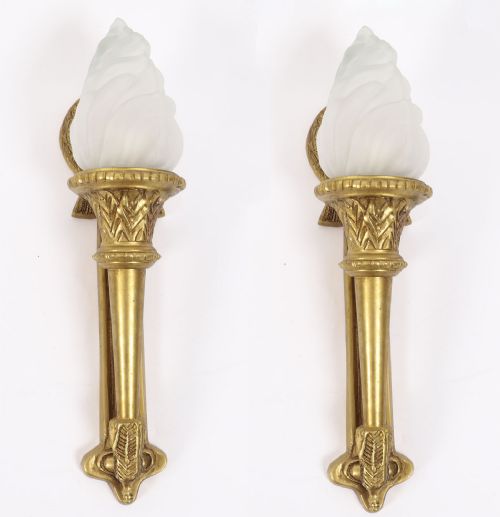
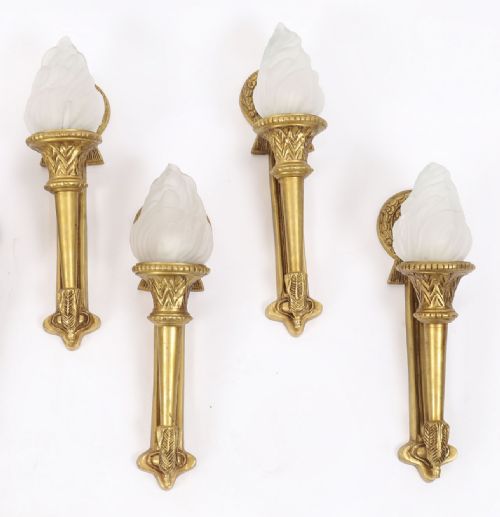
These frosted flame glass lights bring genuine warmth and character to a room.
Frosted Flame Glass Lights
When you search for frosted flame glass lights, you look at wall lights, table lamps, and wall sconces shaped to resemble torches or flames. These fixtures draw on periods from the nineteenth century through to the Art Deco era.
The versions you are most likely to meet on this page feature flame-shaped glass paired with metal mounts. Many date from the nineteen-thirties, showing distinct Art Deco styling alongside earlier Neo-Classical and Art Nouveau pieces.
How they were made
These pieces combine moulded glass with metals such as ormolu, bronze, gilt bronze, chrome, brass, and spelter. Makers achieved the characteristic texture of frosted glass through acid etching or sandblasting.
Structural elements frequently incorporate cast metal components like ormolu and bronze. Early twentieth-century pieces also utilise modern materials of the period, including bakelite and catalin.
Frosted Flame Glass Lights Retail Price Guide 2026
Typical asking prices for frosted flame glass lights among the pieces listed under this phrase on Sellingantiques today, from the lower quarter to the upper quarter. They describe what is for sale here now, not the wider market.
Listings feature frosted glass paired with bronze, ormolu, and chrome across the Edwardian period and the 1930s.
What varies in quality
The refinement of the metal casting dictates the calibre of the mount, separating standard commercial production from finer work. Crisp detailing in ormolu and bronze leaf patterns indicates superior craftsmanship.
The quality of the glass shade itself governs the overall visual balance of the fixture. Heavier, evenly frosted glass with smooth edges distinguishes the better pieces on the market.
Emile Picault·Auguste Moreau
The Frosted Flame Glass Lights Glossary
- Ormolu
- A gilded bronze technique popular in French decorative arts. It gives metal mounts a rich, golden appearance.
- Spelter
- An alloy of zinc used as a cost-effective substitute for bronze. It frequently appears in nineteenth-century figural lamps.
- Catalin
- A cast phenolic formaldehyde resin developed in the twentieth century. It provides colourful, durable components for Art Deco fittings.
- Sconce
- A wall-mounted lighting fixture designed to hold a bulb or candle. These pieces project light outward into a room.
- Neo-Classical
- A style drawing inspiration from classical antiquity. It introduces symmetrical motifs and restrained ornamentation to lighting designs.
Frosted Flame Glass Lights: Frequently Asked Questions
How do I clean frosted glass shades?
Wash the glass gently in warm soapy water using a soft cloth. Avoid harsh abrasives that might damage the frosted surface.
Dry the pieces thoroughly with a lint-free cloth before reattaching them to the metal mount.
Can these lights take modern bulbs?
Most of these vintage fixtures accept standard modern bulbs, though rewiring may be necessary for safety. Consult a qualified electrician to check the internal lampholders.
Ensure the wattage matches the capacity of the original vintage wiring and shade dimensions.
Where should I position wall sconces?
Mount wall sconces at eye level to create a balanced ambient glow in hallways or living rooms. They work effectively when paired on either side of mirrors or fireplaces.
Keep the scale of the light proportionate to the wall space available.
How do I date an Art Deco light?
Examine the materials for characteristic nineteen-thirties indicators such as chrome, bakelite, and catalin. Geometric forms and stylised flame motifs also point to this decade.
Compare the construction methods with known pieces from the same period to confirm the era.