

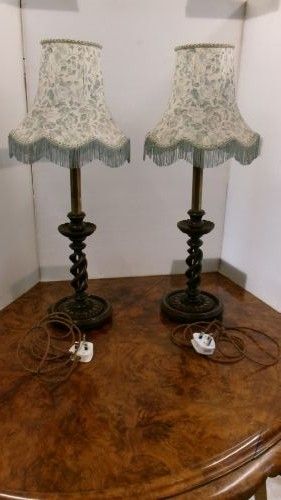


Fringe Shade Table Lamp
A fringe shade table lamp brings tactile warmth and diffused lighting to a room, using hanging textiles to soften the bulb's glow.
Fringe Shade Table Lamp
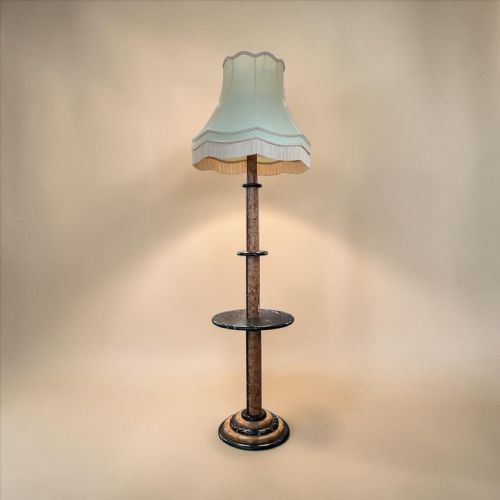
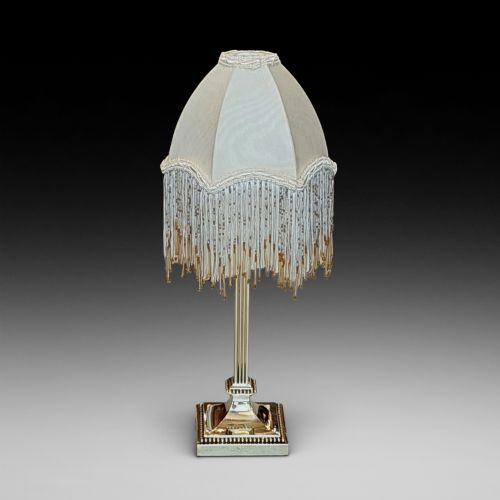
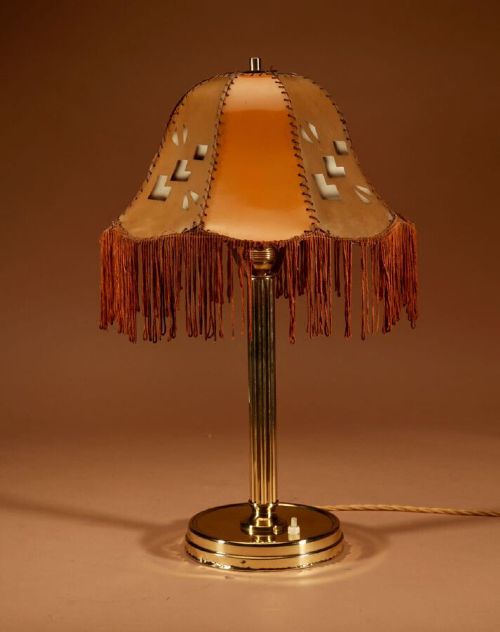
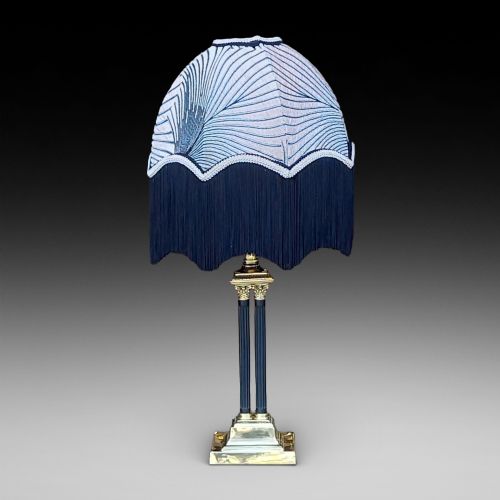
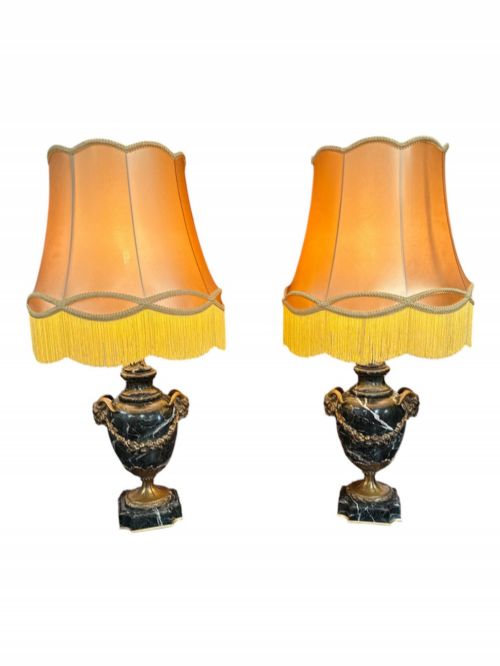
When searching for a fringe shade table lamp, buyers encounter lighting pieces built from traditional bases paired with textile components. The selections span periods from the Victorian era through the 1920s, incorporating styles like Art Deco, Art Nouveau, and Neoclassical Revival.
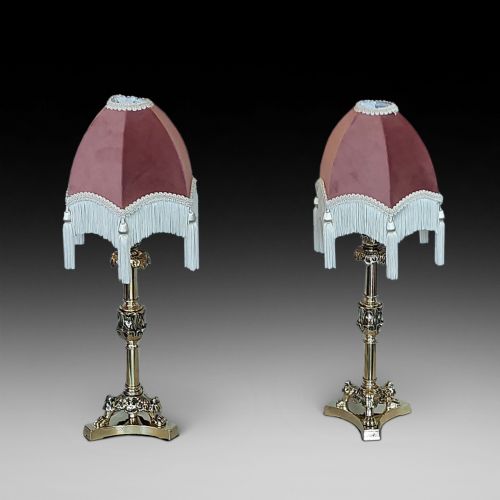
The physical forms include standard lamps, desk lamps, and converted oil lamps or candlesticks. Bases emerge in brass, marble, glass, porcelain, and various woods, topped with fabric shades that often feature silk and glass beads.
Materials and construction methods
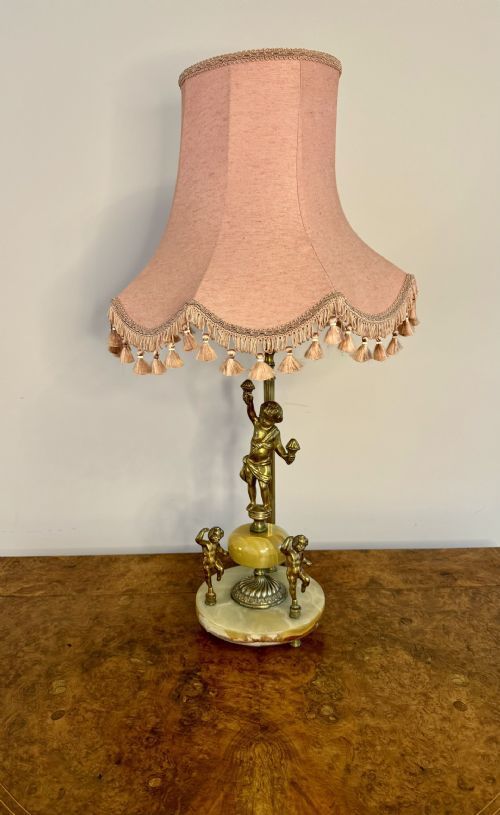
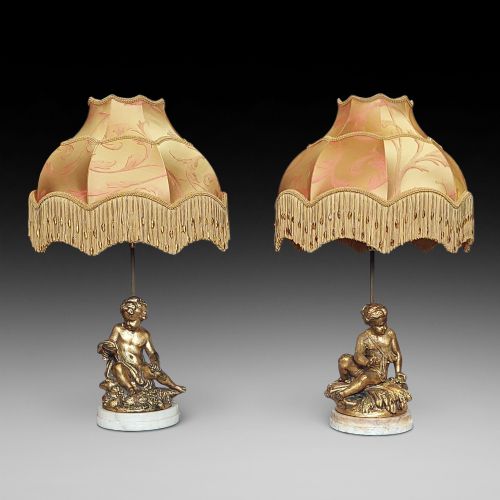
Metal components utilise brass, gilt bronze, or ormolu, frequently cast into classical columns or figural statuettes. Stonework utilises marble, onyx, and alabaster for heavy, stable structural bases.
Shades incorporate woven fabrics and silk, augmented with hanging fringes and glass beads. Converted pieces repurpose older oil lamps and candlesticks into electric fittings.
Illuminated figures of Minerva accompanied by stags stand ready to supervise the reading corner.
Assessing quality in construction
Quality rests in the weight of the metal casting and the precision of the stonework. Solid brass and heavy marble bases provide superior stability compared to lighter spelter alternatives.
Detailing in the figural work and the execution of applied gilding define the superior examples. Hand-carved elements and intricate beading on the shades indicate higher workshop standards.
The Fringe Shade Table Lamp Glossary
- Ormolu
- Gilded bronze applied to ornamental metalwork. This technique creates a rich golden finish on decorative mounts.
- Spelter
- A zinc alloy used as a substitute for bronze. It appears frequently in cast figural bases.
- Corinthian column
- A classical architectural order featuring ornate capitals decorated with acanthus leaves. It forms a common motif for metal lamp stems.
- Alabaster
- A fine-grained stone used for carved bases. It transmits light gently when thin.
- Cold painted bronze
- Bronze sculpture finished with paint applied without heat. This method produces detailed polychrome finishes on figural pieces.
Fringe Shade Table Lamp: Frequently Asked Questions
What periods do these lamps come from?
The pieces originate across the Victorian and Edwardian eras, extending into the 1920s.
Design influences range from classical revival styles to Art Deco and Art Nouveau.
Were these lamps originally electric?
Many examples began life as oil lamps, candlesticks, or gas fittings.
Craftsmen later converted these items to accept electrical wiring.
What materials make up the bases?
Bases employ cast brass, gilt bronze, marble, onyx, alabaster, and carved wood.
Heavier examples utilise solid stone or metal columns for support.
How do I identify a Neoclassical design?
Neoclassical pieces draw upon classical Greek and Roman architectural motifs.
Common indicators include column structures, urn forms, and symmetrical detailing.