
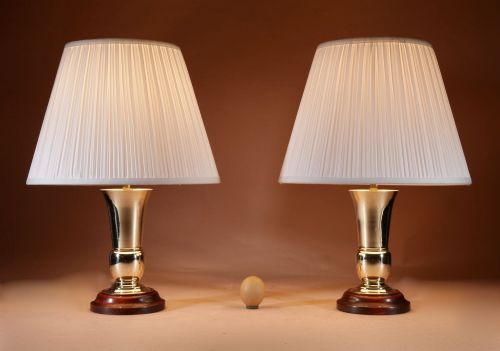
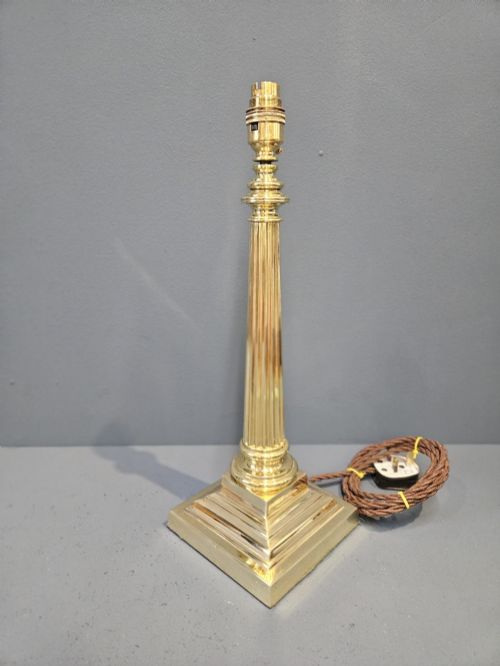
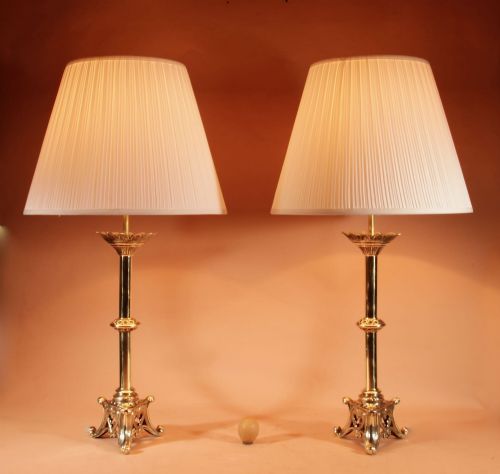
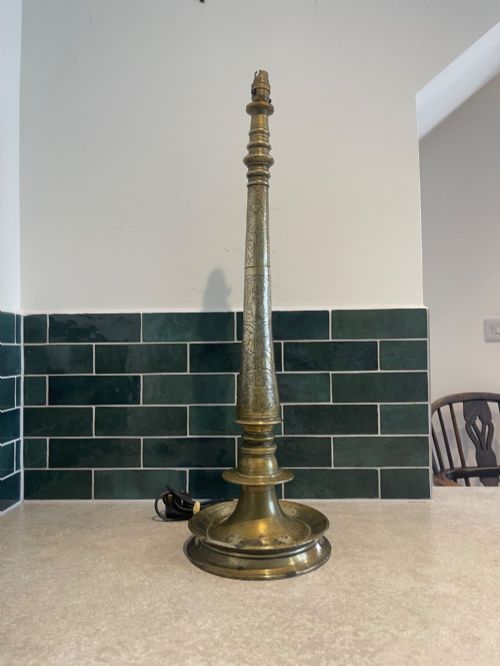
Brass Column Desk Lamp
A brass column desk lamp brings architectural order and warm illumination to a workspace, drawing on classical forms that span the nineteenth and early twentieth centuries.
Brass Column Desk Lamp
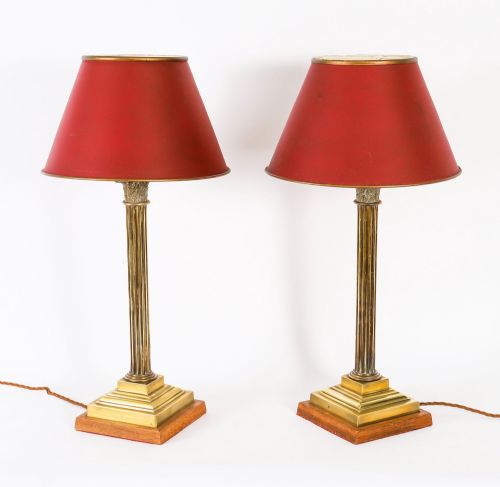
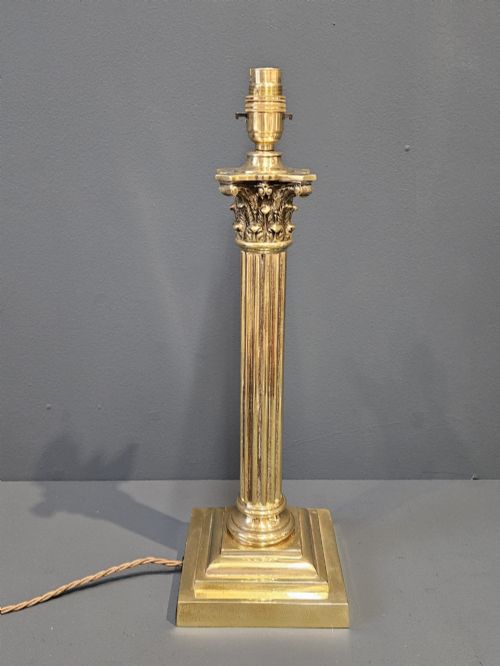
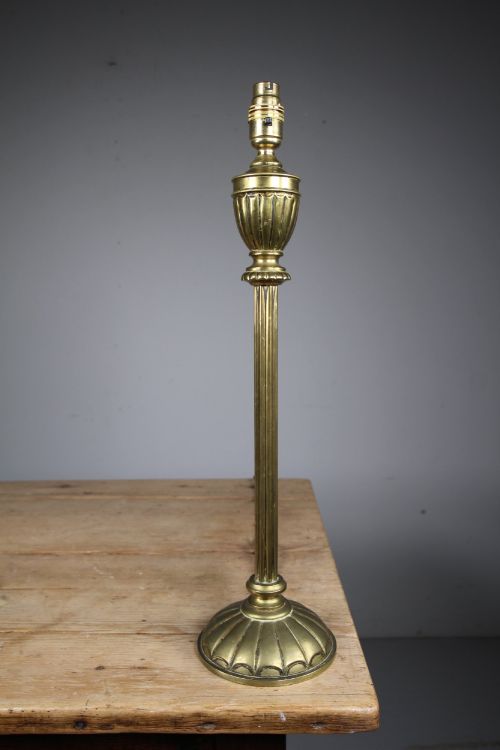
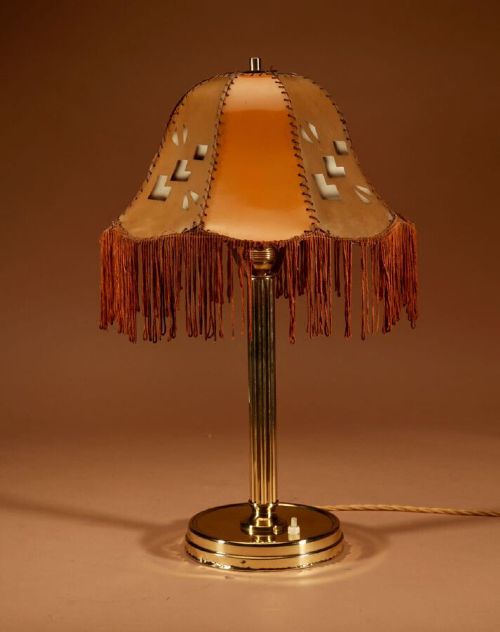
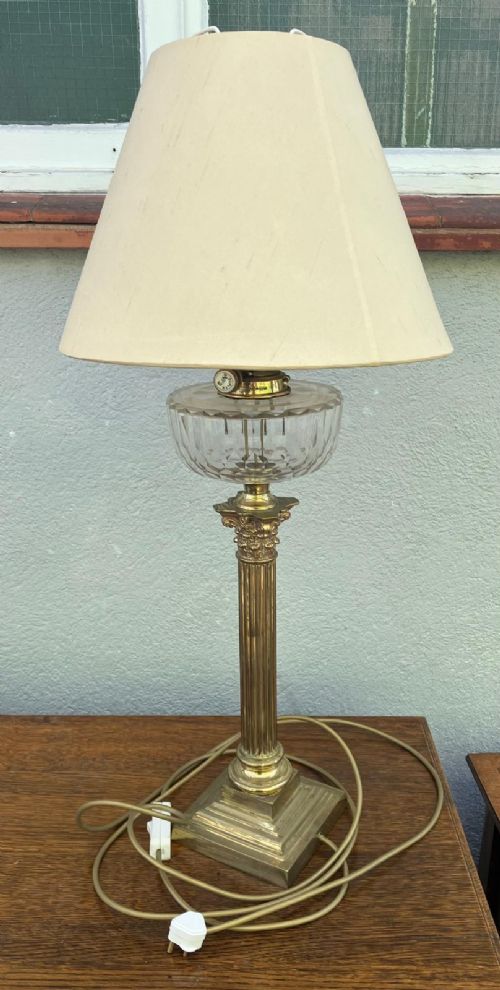
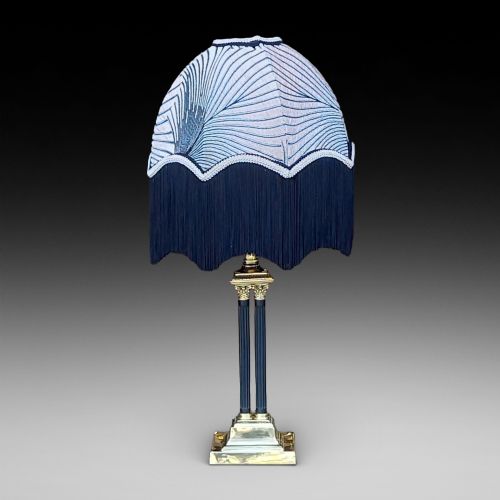
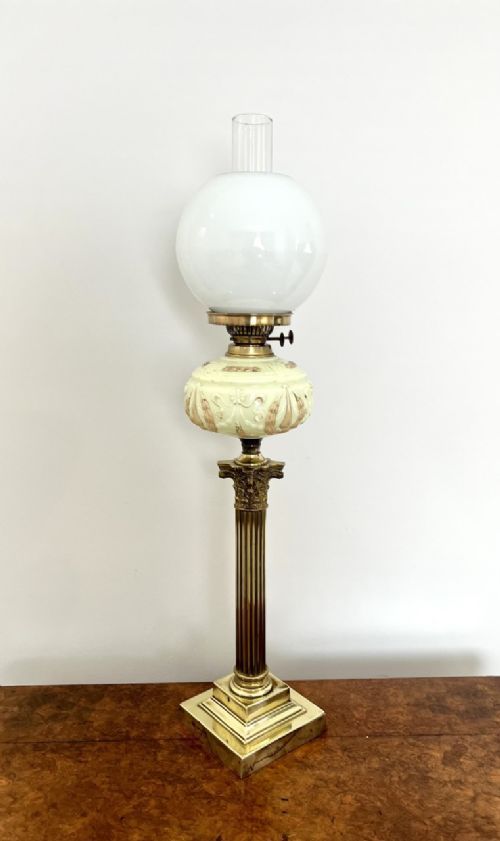
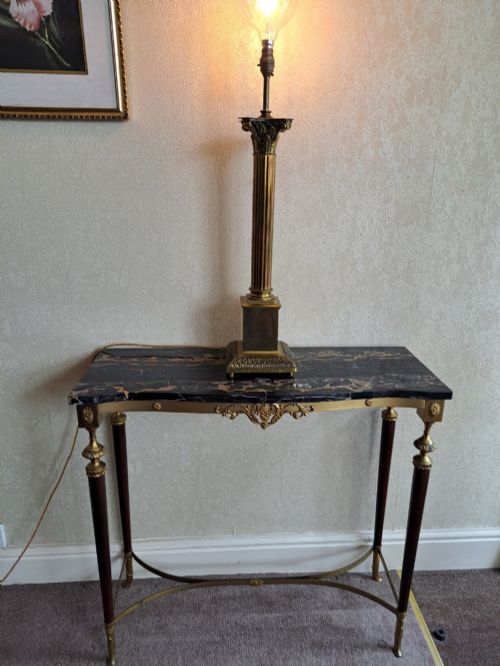
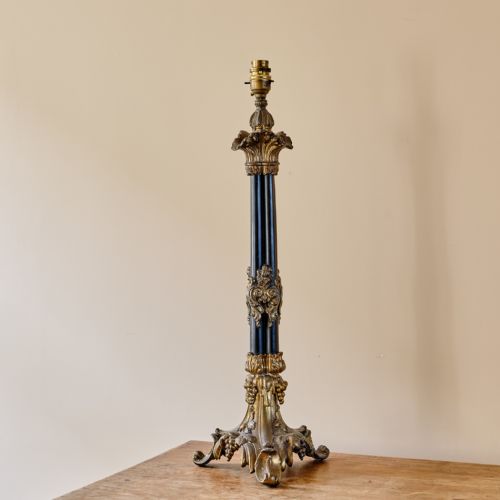
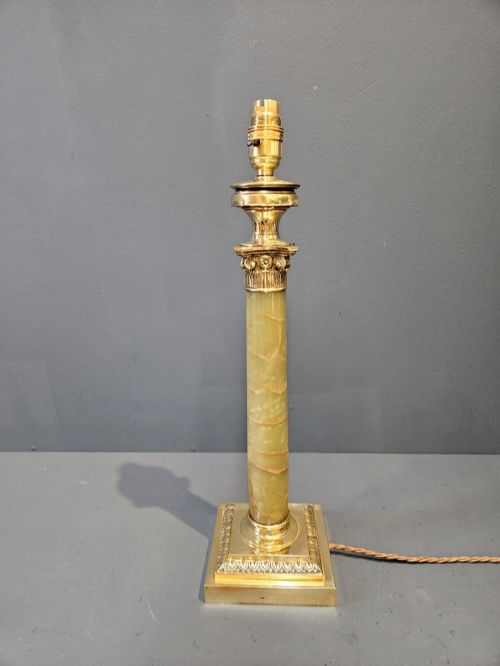
A brass column desk lamp takes its design cues from classical architecture, utilising fluted or reeded shafts topped with Corinthian, Doric or ionic capitals. These pieces function primarily as heavy table lamps, oil lamps or converted candlesticks designed to sit stably upon a desk or writing table.
The most common examples encountered on this page date from the Victorian and Edwardian periods, alongside pieces from around nineteen hundred to nineteen twenty. Makers frequently adopted styles such as Neoclassical, French Empire and Gothic Revival to give these metal light fittings a formal presence.
While many retain their original proportions as table lamps or oil lamps, others began life as candlesticks before conversion. The column format ensures weight and balance, making them practical for task lighting while maintaining a formal decorative scheme.
How they were made
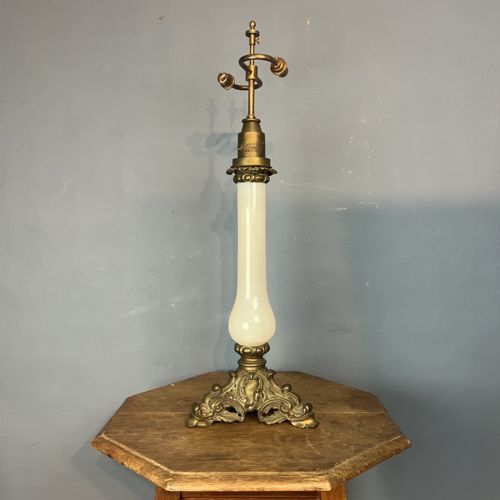
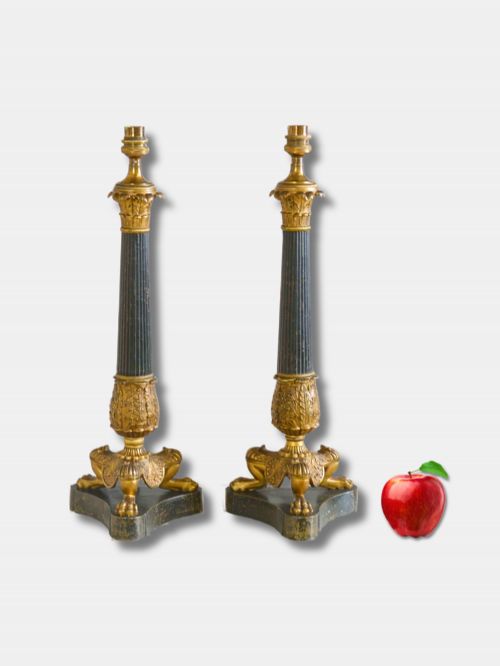
Makers utilised cast and spun brass, often combining the metal with secondary materials such as marble, opaline glass, ceramic or gilt bronze to add visual weight and contrast. Ormolu and patinated copper also appear in specific French and Arts and Crafts pieces.
Columns were cast in sections or turned on a lathe, featuring fine detail work on the capitals and stepped bases. Components were threaded together or soldered, and many incorporate heavy weighted bases to support the vertical shaft.
Some heavy brass columns hide lion paw feet beneath their bases, ready to sprint across the desk.
What varies in quality
Quality rests in the crispness of the casting on the column capitals and the density of the brass used in the base. Fine cast examples display sharp acanthus leaves and well-defined fluting, whereas simpler productions show softer edges and lighter gauge metal.
The integration of mixed media dictates the standard of the piece, particularly where marble, opaline glass or gilt bronze are employed. Superior examples balance heavy proportions with refined detailing, while simpler items rely entirely on plain spun brass.
The Brass Column Desk Lamp Glossary
- Corinthian
- An architectural column capital decorated with ornate acanthus leaves. This style appears frequently on nineteenth-century brass table lamps.
- Ormolu
- Finely ground high-carat gold-mercury amalgam applied to a bronze object. It provides a bright, durable golden finish on French column lamps.
- Opaline glass
- A pale, translucent white glass used for lamp shades. It diffuses light evenly across a desk workspace.
- Reeded
- A decorative work comprising parallel convex mouldings raised against the surface. It provides texture to the vertical shaft of a desk lamp.
Brass Column Desk Lamp: Frequently Asked Questions
Are these lamps safe to use today?
Many older lamps require rewiring to meet modern electrical standards before daily use. Buyers should check the internal wiring and consult a qualified electrician.
Original fittings can sometimes be retained, but modern flex and safe plug connections ensure the piece is fit for a contemporary desk.
How do I date a brass column lamp?
Dating relies on stylistic clues such as the form of the capital, the composition of the base, and manufacturing methods like casting marks. Victorian and Edwardian examples often show distinct aesthetic preferences.
Comparing the weight, metal finish, and any patent stamps helps narrow the decade of production between eighteen eighty and nineteen twenty.
Where should I place a column lamp?
These tall metal lamps suit studies, libraries, and large desks where their vertical proportion commands attention. Their height allows light to spread across a wide workspace.
Pairing them with a traditional opaline or fabric shade completes the desk setup while keeping the brass column as the visual centrepiece.
What maintenance do brass lamps need?
Regular dusting with a soft cloth keeps the metal surface clear of debris. Avoid harsh chemical polishes that strip away the natural patination built up over decades.
Leaving the aged finish intact preserves the historical character of Victorian and Edwardian examples found in the collection.