

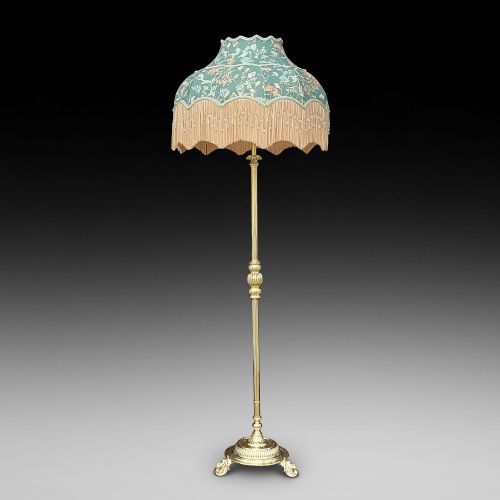
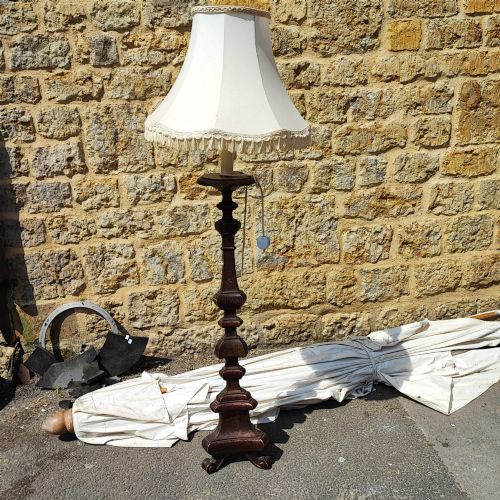
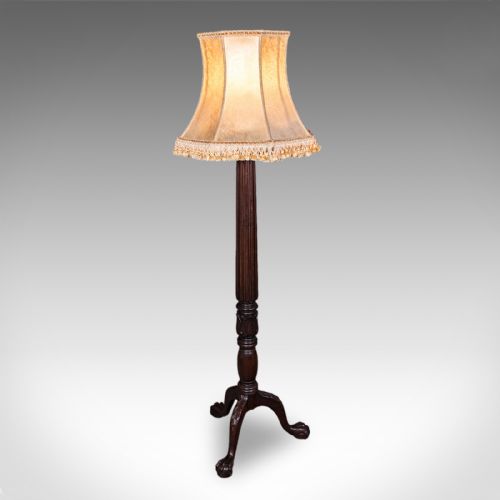
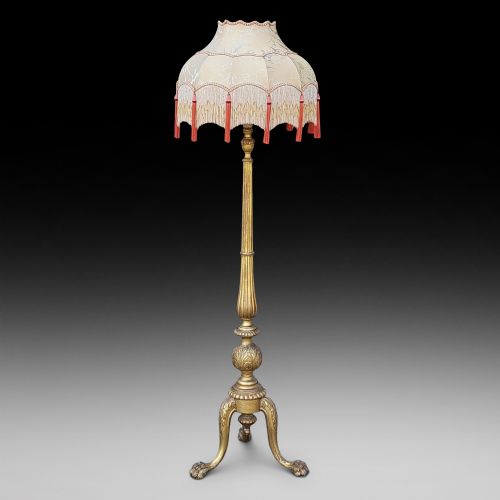


Fringe Shade Standard Lamp
A fringe shade standard lamp brings layered period texture and height to a room, offering warm illumination through brass, carved wood, and fabric.
Fringe Shade Standard Lamp
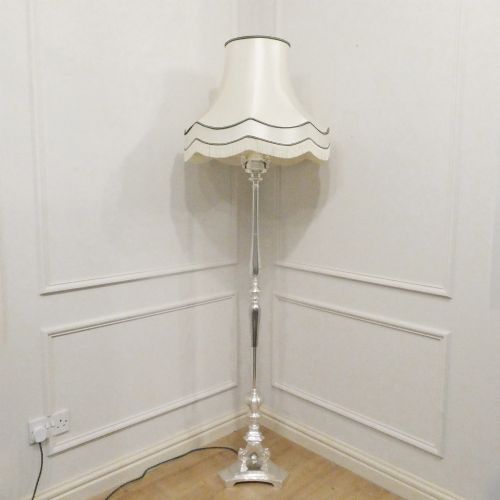
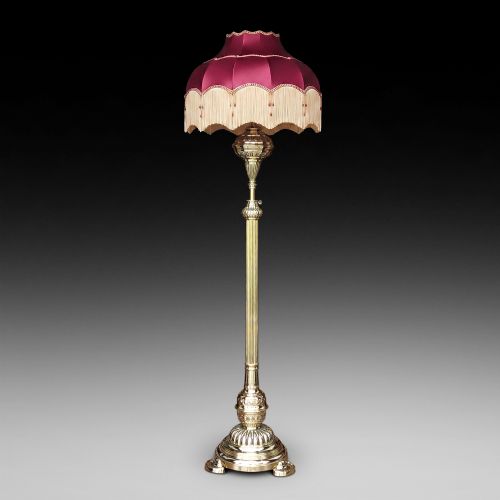
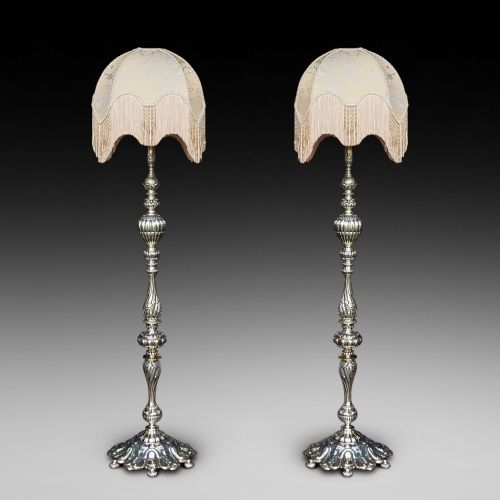
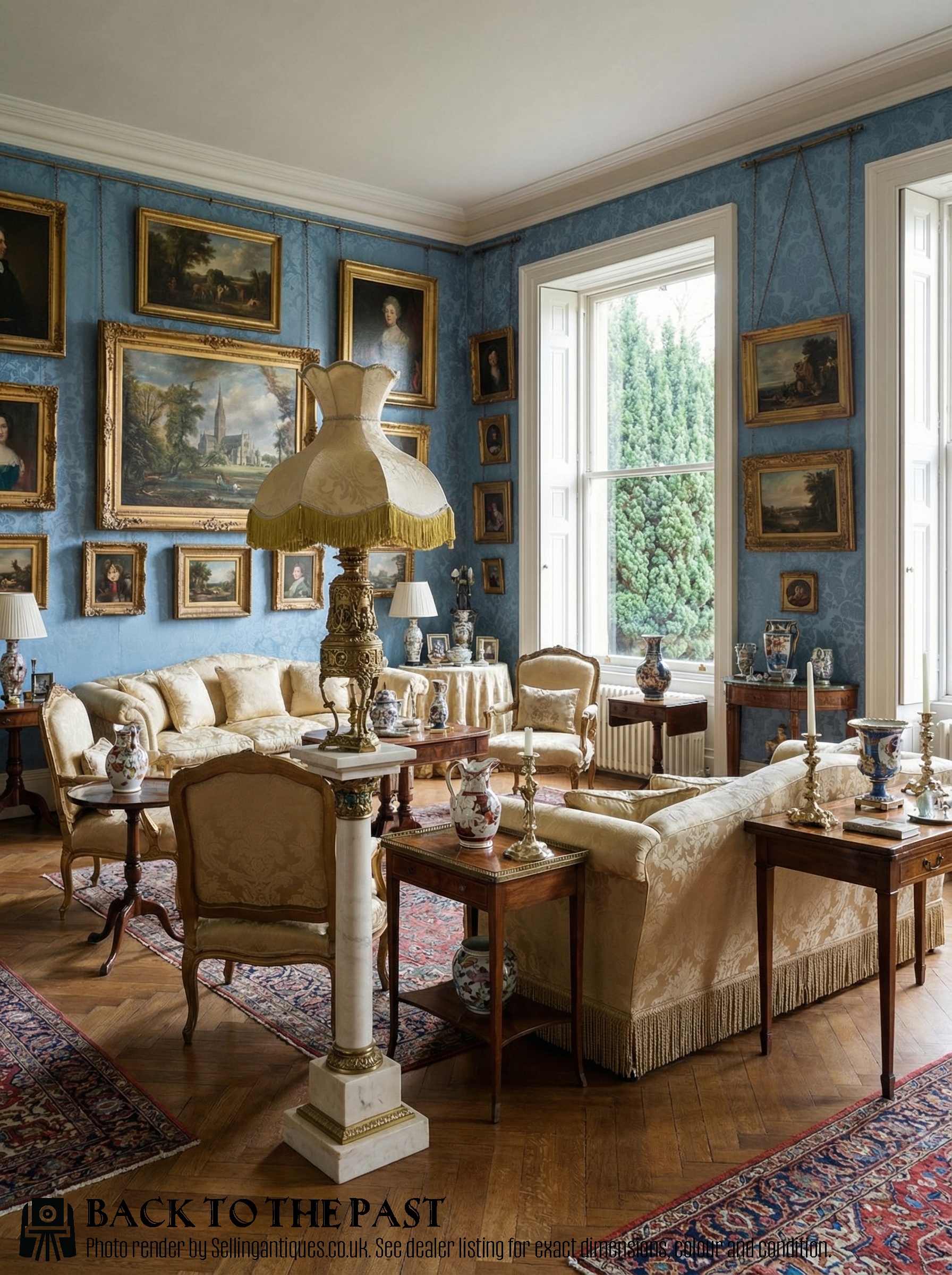
A fringe shade standard lamp stands tall as a primary floor light, combining a slender vertical shaft with an expansive decorative shade. You will encounter these pieces most frequently in brass, carved mahogany, and giltwood configurations spanning the Victorian, Edwardian, and Art Deco eras.
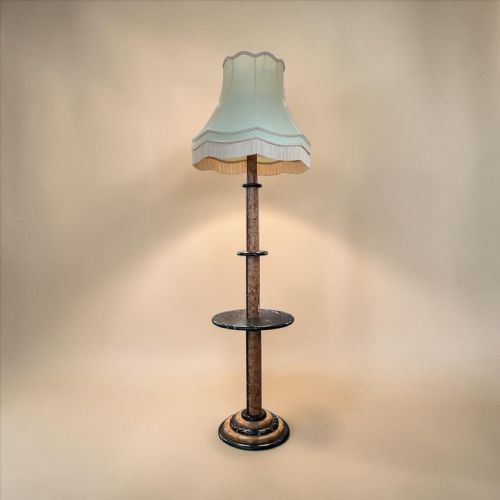
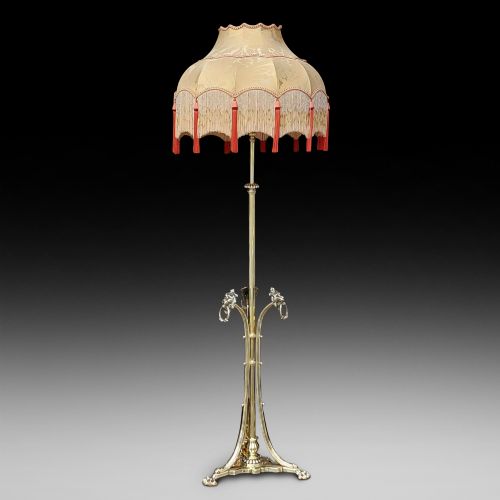
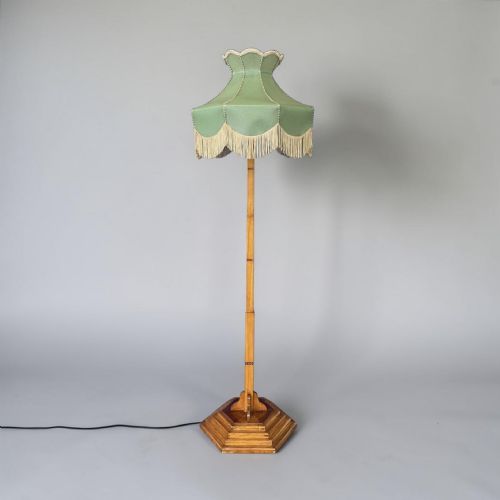
The vertical supports range from simple turned beech columns and heavy marble bases to telescopic brass stems designed for adjustable height. Many examples adapt earlier oil lamp mechanisms or incorporate neoclassical column designs and arts and crafts simplicity.
Makers utilised rich surface finishes, including black lacquer with chinoiserie detailing, gilt bronze, and wrought iron. The accompanying shades incorporate fabric and fringe elements to diffuse light across the room.
How they were made
Makers constructed the vertical shafts using turned mahogany, beech, cast brass, and carved giltwood, often mounting them onto heavy marble, onyx, or cast metal bases for stability. Telescopic mechanisms and adjustable brass collars allowed users to alter the height of the standard lamp as needed.
Surfaces received intricate treatments including hand-carved ornamentation, neoclassical gilt motifs, black lacquer with chinoiserie decoration, and floral openwork casting. Fabric shades paired with textile fringes completed the construction, softening the light emitted from the burner or bulb.
Listings span the Victorian, Edwardian, and Art Deco periods, utilising brass, mahogany, giltwood, marble, and fabric.
What varies in quality
The distinction between standard examples and finer pieces lies in the crispness of the casting, the depth of the wood carving, and the weight of the base materials. Solid brass components and heavy marble or onyx columns provide greater structural integrity than lighter metal alloys and simple turned wood.
Execution of decorative styles dictates overall refinement, such as hand-applied chinoiserie lacquer or finely chased neoclassical giltwood details versus plain finishes. Original adjustable telescopic fittings and intact period wiring hardware elevate the historical integrity of the floor lamp.
Hinks of B'ham·Messenger
The Fringe Shade Standard Lamp Glossary
- Standard Lamp
- A tall floor lamp designed to stand upright independently in a room. This term appears frequently alongside floor light and floor lamp.
- Telescopic
- A shaft design featuring nested tubes that allow the overall height of the lamp to adjust. This mechanism appears on many brass and oil lamp adaptations.
- Chinoiserie
- European decorative style reflecting Chinese artistic traditions, typically executed in lacquered finishes. This style appears on select Edwardian floor lamps.
- Corinthian
- A classical architectural column order characterised by ornate capitals decorated with acanthus leaves. This column style frequently forms the central shaft of brass standard lamps.
Fringe Shade Standard Lamp: Frequently Asked Questions
What is a fringe shade standard lamp?
A fringe shade standard lamp is a tall floor-standing light fixture that combines a vertical support column with a decorative fabric shade trimmed in fringe.
These pieces provide both ambient room illumination and vertical decorative presence, drawing on styles from the Victorian period through to the Art Deco era.
How do I date a standard lamp?
Dating relies on examining the materials, manufacturing techniques, and stylistic influences evident in the base and column.
Victorian and Edwardian examples often feature heavy brass, telescopic oil lamp conversions, or carved mahogany, while later 1930s pieces lean towards streamlined art deco or turned beech forms.
Were these originally oil lamps?
Many standard lamps from the late nineteenth century were originally constructed as burning oil lamps before undergoing conversion to electricity.
Evidence of this past use often remains visible in the adjustable brass burner mechanisms and telescopic stems preserved on Victorian models.