

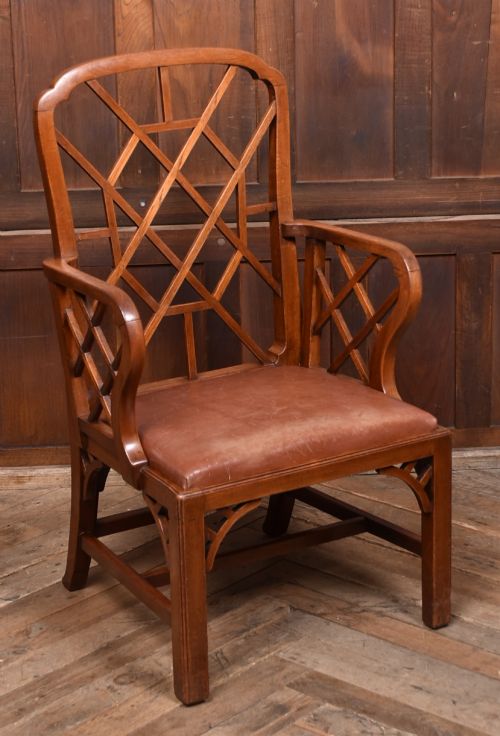


Fretwork Carved Armchair
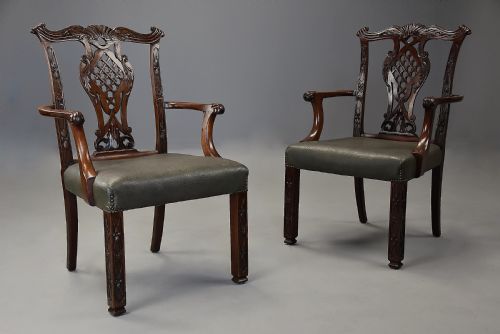
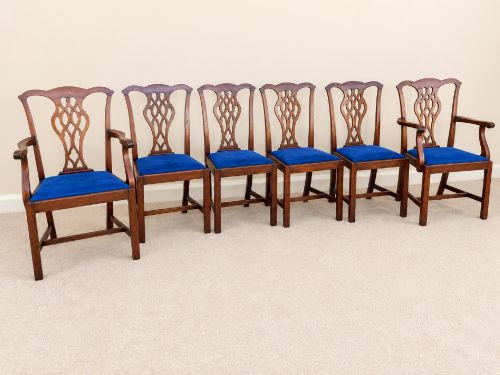
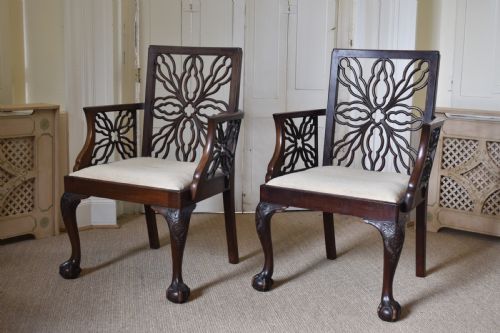
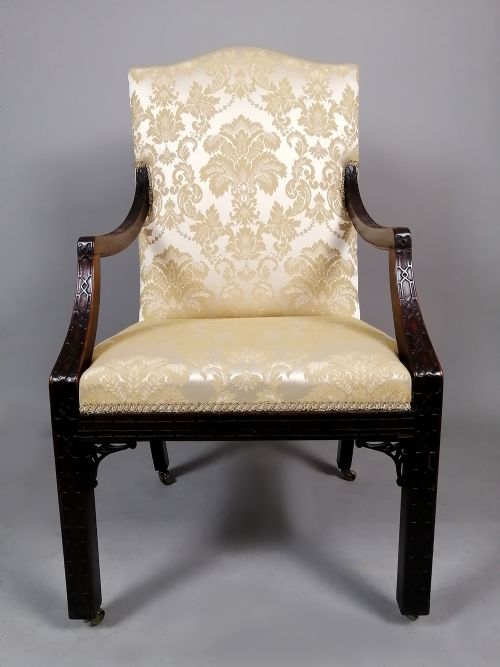
These fretwork carved armchair examples combine intricate pierced timber framing with robust seating, offering both visual lightness and solid historical presence.
Fretwork Carved Armchair
A fretwork carved armchair represents a sophisticated seating form defined by pierced wooden lattice designs applied to splats, arms, or stretchers. When exploring this selection, buyers frequently encounter mahogany and hardwood pieces drawing upon 18th-century Georgian and Chippendale traditions.
The inventory on this page spans several distinct eras, notably featuring 18th-century originals alongside 19th-century interpretations and later revival pieces. Forms range from library chairs and open armchairs to cockpen and Gainsborough chairs.
Originating from British cabinet-making workshops influenced by Chinese and Gothic design vocabularies, these chairs bring structured elegance to domestic interiors. They serve equally well as functional desk seating or decorative corner statements.
How they were made
Cabinet-makers relied heavily on dense tropical hardwoods like mahogany and Chinese hardwood to achieve crisp, intricate fretwork without splintering. These timbers provided the structural integrity required to support complex pierced lattice patterns while maintaining slender frame profiles.
Upholstered elements frequently utilised damask, leather, brass detailing, and woven cane to complement the carved woodwork. Traditional joinery techniques secured the components firmly together, ensuring the open arms and carved backs withstood regular daily use.
Fretwork Carved Armchair Retail Price Guide 2026
Typical asking prices for fretwork carved armchair among the pieces listed under this phrase on Sellingantiques today, from the lower quarter to the upper quarter. They describe what is for sale here now, not the wider market.
Some chairs incorporate subtle masonic symbols into their carved fretwork, quietly signaling fraternal loyalties to those who knew where to look.
What varies in quality
The refinement of the pierced carving dictates the upper tiers of quality, where undercutting creates deep shadow and sharp geometric precision. Lesser examples display softer edges and shallower detailing that lack the crisp definition seen in premier workshop productions.
Proportion and wood selection also separate standard utility chairs from exceptional cabinet-making, particularly in the balance of the arm supports and the grain continuity across the crest rail. Original timber patination and minimal structural alteration further elevate the standing of a piece.
Thomas Chippendale·Robert Manwaring
The Fretwork Carved Armchair Glossary
- Fretwork
- Openwork ornamentation carved or pierced from a flat board to resemble lattice or geometric lace. This technique defines the decorative character of the chair backs and stretchers.
- Cockpen
- A Chinese-inspired chair style featuring geometric lattice woodwork derived from traditional East Asian architectural screens. It remains distinct for its square proportions and airy aesthetic.
- Gainsborough armchair
- A wide-seated, upholstered armchair with open padded arms and mahogany legs, popular during the mid-Georgian period. These pieces combine comfort with formal architectural dignity.
- Splat
- The vertical central strip of wood in the back of a chair, which in these examples carries the intricate pierced carving. It provides essential lumbar support while displaying the maker's decorative skill.
Fretwork Carved Armchair: Frequently Asked Questions
How do I date a chair?
Dating involves examining the timber species, secondary woods, joinery methods, and the specific style of the carved fretwork. 18th-century pieces often exhibit hand-cut joinery and dense, aged mahogany patination, whereas later 19th-century revivals may show standardised machine assistance or different secondary woods.
Comparing the chair's proportions and decorative motifs against documented period designs helps narrow down its era of production. Consulting construction details beneath the seat or behind upholstery lines also reveals period-specific assembly practices.
Where were these chairs used?
Historically, these chairs occupied principal rooms such as libraries, parlours, and formal dining spaces where owners entertained guests or conducted business. Their refined appearance suited spaces intended to project taste and social standing.
Today, they integrate well into studies, drawing rooms, or bedrooms as accent seating. Their distinctive carved backs ensure they look striking even when viewed from behind against a wall.
How do I care for mahogany?
Mahogany woodwork requires stable indoor humidity levels and protection from direct sunlight to prevent the timber from drying out or fading. Dusting regularly with a soft, dry cloth preserves the polished surface without building up chemical residues.
Conditioning the wood periodically with appropriate natural waxes helps maintain its deep lustre. Avoid placing these chairs near direct heat sources or air vents which can cause the joints to loosen.