




French Wrought Iron Rack
A French wrought iron rack brings robust utility and striking linear form to a room, offering sturdy shelving or hanging space rooted in practical trade.

French Wrought Iron Rack
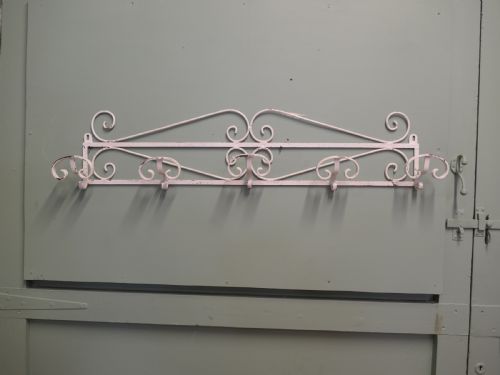
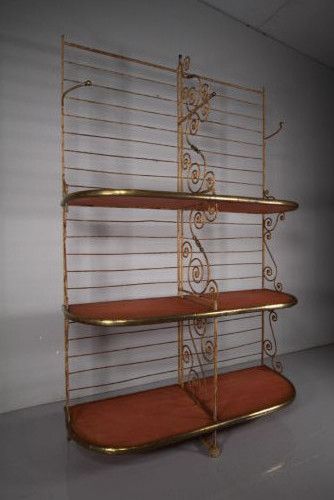
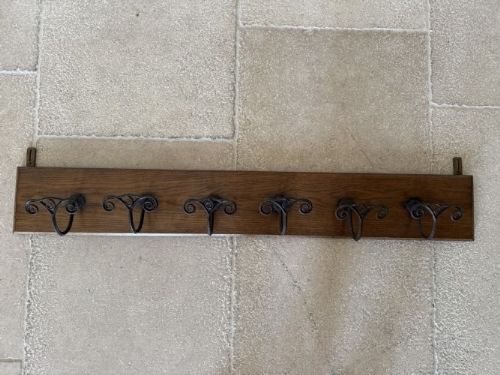
A french wrought iron rack serves various utilitarian purposes across different domestic and commercial settings, appearing most frequently on this page as bakers racks, patisserie racks, and coat racks. These pieces originate from distinct periods spanning the nineteenth century through the Art Deco era of the nineteen-thirties, reflecting practical origins in French shops and chateaux.
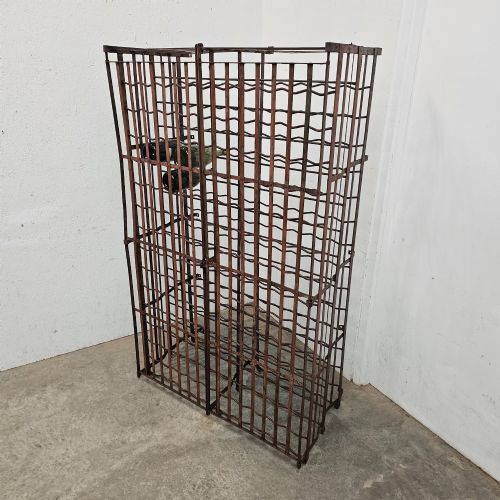
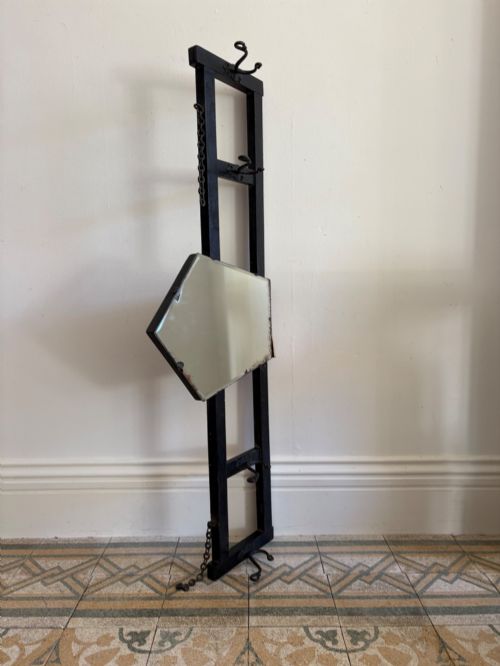
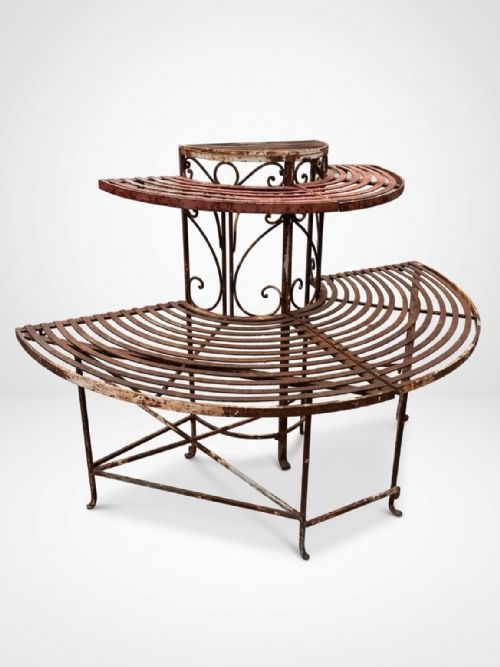
Buyers encounter forms ranging from large multi-tiered boulangerie displays and saucepan racks to lockable wine cages and plant stands. The construction adapts to specific tasks, such as hanging hooks on saucepan racks or integrated mirrors on hall stands and coat racks.
Stylistic influences vary from nineteenth century French and provincial designs to French industrial and Art Deco aesthetics. Pieces often incorporate regional characteristics, such as Parisian workshop stamps or robust architectural frames designed for heavy daily use.
Materials and construction methods
The primary structural material across these listings is wrought iron, frequently combined with supplementary elements like steel, brass, and oak. Artisans forged and shaped the metal by hand, creating rigid frames capable of supporting heavy loads in bakeries and kitchens.
Surface treatments recorded in the evidence include original paint, white painted finishes, and patinated metal surfaces that show the passage of time. Certain items incorporate functional additions such as mirrored glass panels, glass inserts, and wooden shelving components to complement the iron framework.
French Wrought Iron Rack Retail Price Guide 2026
Typical asking prices for french wrought iron rack among the pieces listed under this phrase on Sellingantiques today, from the lower quarter to the upper quarter. They describe what is for sale here now, not the wider market.
Materials recorded on this page include wrought iron, brass, steel, oak, paint, painted metal, glass, and mirrored glass.
Distinctions in quality
Quality in a french wrought iron rack rests upon the finesse of the forging, the integrity of the original joints, and the presence of maker stamps or workshop attributions. Pieces bearing provenance from known makers or specific Parisian foundries exhibit superior hand-worked detailing in scrolls and structural brackets.
Dubois of Lyon
The French Wrought Iron Rack Glossary
- Boulangerie rack
- A large shelving unit traditionally used in French bakeries for cooling and displaying bread. These tall structures feature multiple open tiers made of iron and sometimes wood.
- Patisserie rack
- A display and storage unit designed for French pastry shops. They share similarities with baker racks but often present lighter framework suited for delicate goods.
- Hall stand
- A piece of furniture combining coat hooks, a hat shelf, and frequently a mirror or umbrella stand. They anchor entranceways with a combination of ironwork and storage capacity.
- Wine cage
- A secure, lockable storage enclosure designed to hold bottles of wine or champagne. These heavy iron structures feature grid doors and robust fastening mechanisms.
- Étagere
- An open piece of furniture with multiple levels for displaying objects. In ironwork, these units provide sturdy open shelving for domestic display.
French Wrought Iron Rack: Frequently Asked Questions
What is a french wrought iron rack used for?
These racks served practical commercial and domestic functions in French life, operating as baker's displays, saucepan holders, wine storage cages, and hallway coat stands. Their robust metal construction was engineered to bear heavy loads of bread, kitchenware, or garments.
Today, buyers repurpose these pieces in modern interiors as statement kitchen shelving, plant stands, or hallway storage units. The open metal framework provides visible storage while adding industrial or antique character to a room.
How do I tell nineteenth century pieces from Art Deco pieces?
Nineteenth century pieces typically display traditional scrollwork, heavier structural framing, and associations with bakeries or chateaux. They lean towards ornate provincial or classic French industrial forms.
Art Deco pieces, dating around nineteen-thirty, feature cleaner geometric lines, stylised motifs, and often incorporate mirrors or hat shelves. The transition from organic curves to streamlined metalwork marks the shift between these eras.
Are these racks suitable for modern kitchens?
Bakers racks and saucepan racks integrate smoothly into contemporary kitchens by offering vertical storage for cookware, dishware, and provisions. Their durable iron and steel construction easily handles modern culinary weight.
Buyers should measure available floor space and ceiling height carefully, as many antique pieces - such as multi-tiered boulangerie units - arrive in substantial dimensions. Ensure the depth of the shelves matches the intended items you plan to display.