


French Wrought Iron Garden Table
A French wrought iron garden table brings enduring continental charm to a terrace or conservatory, offering a sturdy surface designed to weather the seasons with grace.
French Wrought Iron Garden Table
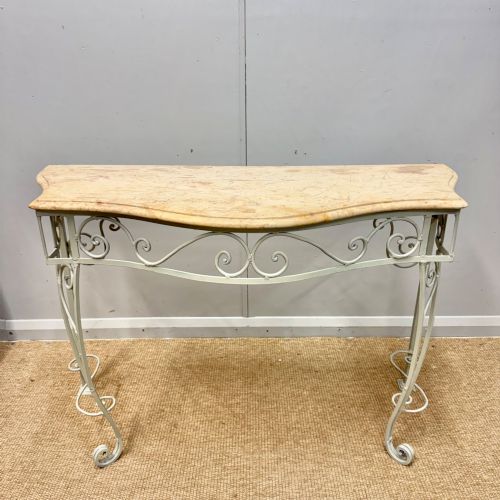
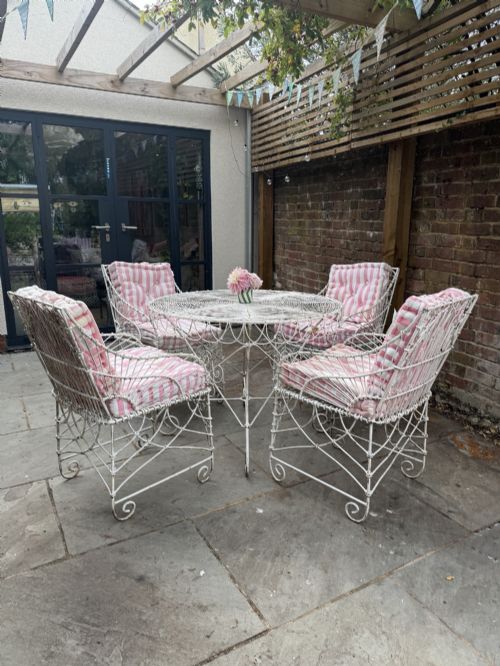
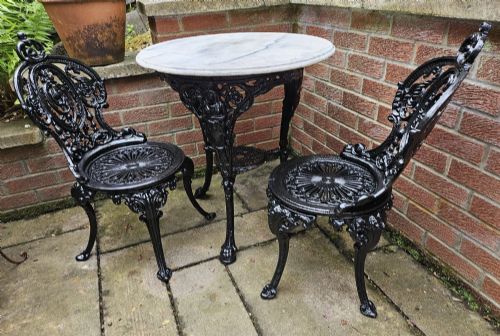
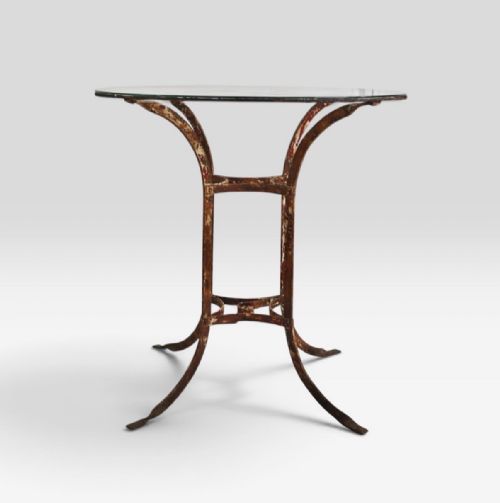
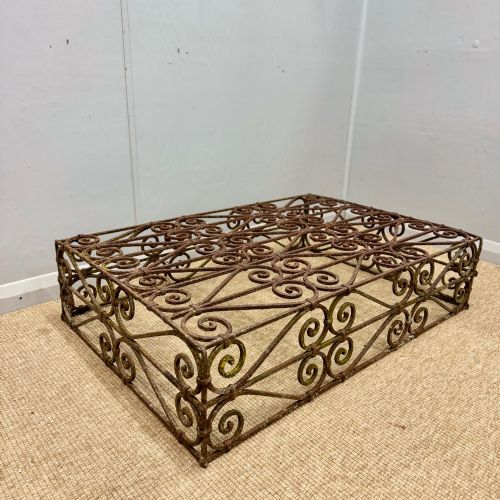
When you search for a french wrought iron garden table, you encounter practical outdoor furniture originating from French country settings, chateaux, and provincial gardens. These tables span several decades, appearing in forms from compact bistro tables and low coffee tables to console tables and larger dining sets.
The selection frequently includes pieces paired with matching chairs, folding metalwork designs, and examples featuring contrasting tops of marble, zinc, or wood. Dating ranges from the late nineteenth century through the Edwardian era and into the 1920s and 1930s.
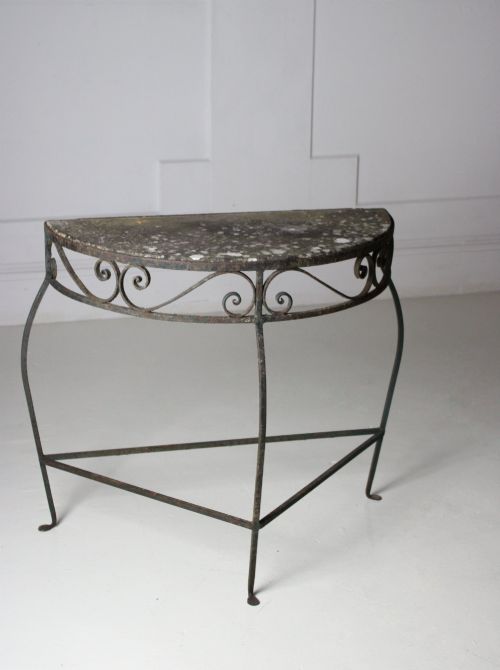
While many retain their original painted surfaces, others show the dark, patinated ironwork characteristic of early twentieth-century French production. You will also find related garden forms such as wirework plant stands and side tables sharing similar utilitarian roots.
How they were made
Blacksmiths and metalworkers shaped these pieces primarily using wrought iron and cast iron, often combining forged scrollwork with solid structural frames. Strapp work and wirework techniques appear frequently, utilising pliable metal strands to create supportive, geometric patterns.
Table surfaces frequently incorporate alternative materials such as white marble, zinc, wood, or glass, secured within metal rims to withstand outdoor use. Protective layers of paint were routinely applied to guard against rust, contributing to the layered patinas seen today.
Many folding chairs retain enough flexibility to snap open with a satisfying clatter, just as they did outside Parisian cafes a century ago.
What varies in quality
The distinction between standard utility items and finer examples lies in the dexterity of the forged metalwork and the harmony of proportions. Heavier gauge iron and intricate hand-hammered scrollwork indicate superior construction intended for wealthier estates or formal gardens.
The selection of the top material also defines the tier of a piece, with fitted marble slabs or zinc inserts elevating the sophistication well beyond basic slatted metal. Original, undisturbed paint surfaces with authentic weathering command greater appreciation than later repainting efforts.
The French Wrought Iron Garden Table Glossary
- Wrought iron
- A tough, malleable form of iron that can be heated and hammered into decorative scrolls and sturdy structural supports. It differs from cast iron by containing less carbon and possessing a fibrous structure.
- Strapp work
- A decorative technique utilising flat metal strips riveted or welded into interlaced geometric or strap-like patterns. This method provides robust support while maintaining a visually light, open appearance.
- Bistro set
- A small table accompanied by two matching chairs, traditionally utilised outside Parisian cafes and small courtyards. These sets are valued for their compact footprint and folding capabilities.
- Console table
- A narrow table designed to stand against a wall, frequently topped with marble or wood. In garden and conservatory settings, these pieces served as functional display surfaces for plants.
- Patina
- The surface sheen and colour variation developed through age, oxidation, and years of exposure to the elements. A genuine patina offers visual depth that cannot be artificially replicated.
French Wrought Iron Garden Table: Frequently Asked Questions
How do I protect my table outdoors?
Keep the metal treated with appropriate protective coatings and store the furniture undercover during harsh winter weather to prevent excessive moisture damage.
For pieces with marble or wood tops, ensure water does not pool in crevices and use breathable covers if left outside year-round.
Are these tables completely weather-resistant?
Most iron garden furniture is built to endure outdoor conditions, but historical pieces benefit from sensible care against continuous dampness.
Tables featuring marble or wood elements require more sheltering than solid ironwork to preserve their secondary materials.
How do I date a French metal table?
Examine the construction methods, such as hand-forged joints versus machine welding, alongside the style of the ironwork and any surviving paint layers.
Late nineteenth-century examples often display heavier cast components, whereas 1920s pieces frequently introduce folding mechanisms and lighter tubular frames.
Can these tables be used indoors?
These pieces transition easily into interior spaces, serving as striking kitchen dining spots, conservatory consoles, or hallway side tables.
Their slender profiles and contrasting stone or wood surfaces suit both traditional country houses and modern industrial interiors.