

French Wood Nightstand
A French wood nightstand brings continental elegance to a bedroom, offering practical surface space alongside period character.
French Wood Nightstand
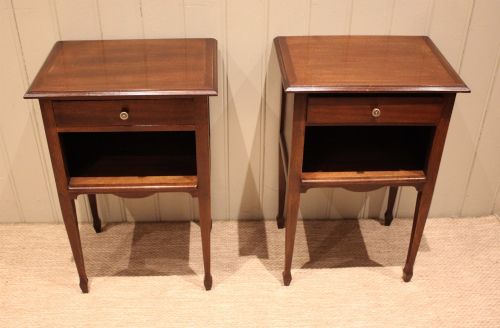
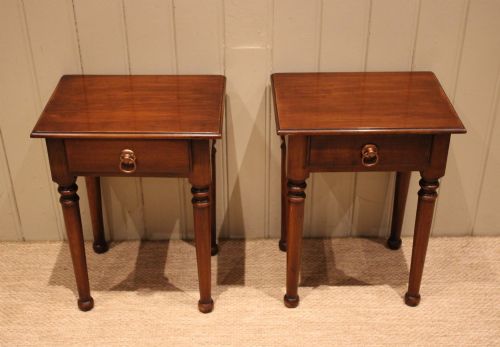
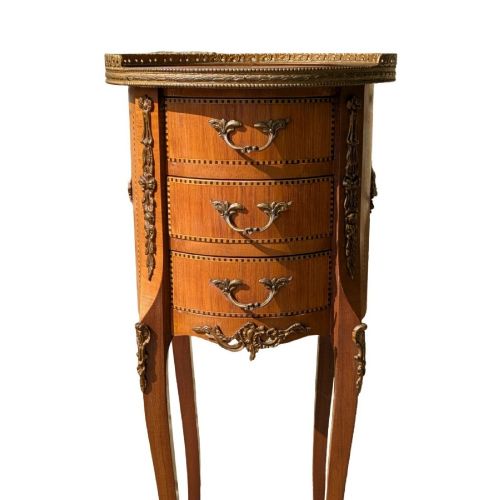
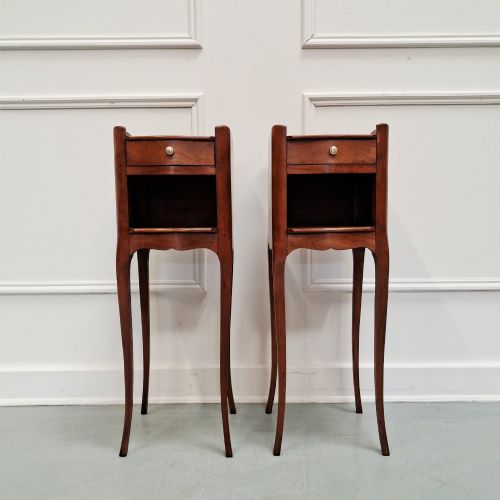
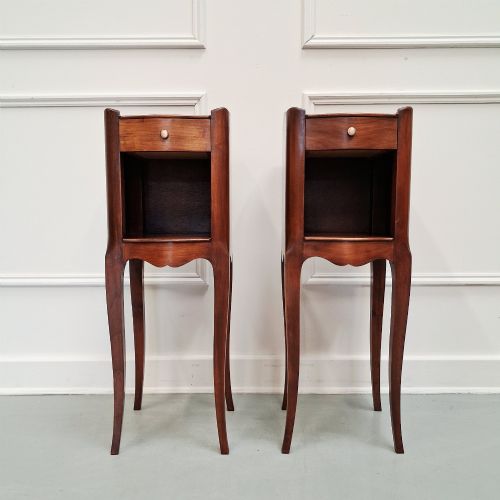
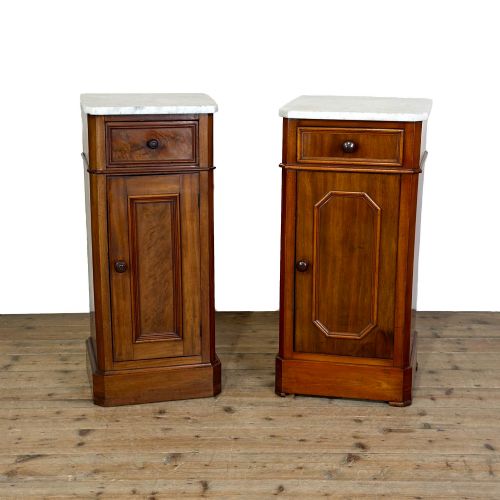
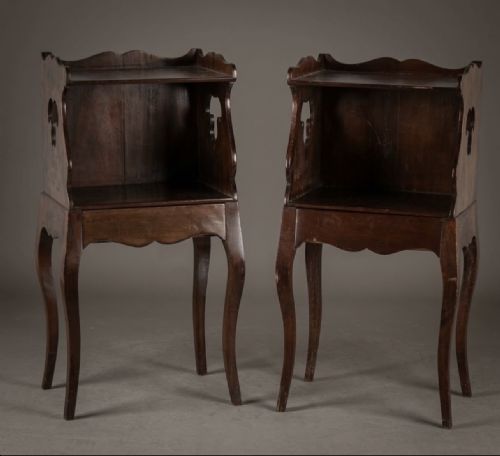
A French wood nightstand is typically encountered here as a bedside cabinet, bedside table, or small side cabinet originating from the nineteenth and early twentieth centuries. These pieces encompass various forms including circular cabinets, rectangular chests of drawers, and open bedside tables designed to sit beside a bed.
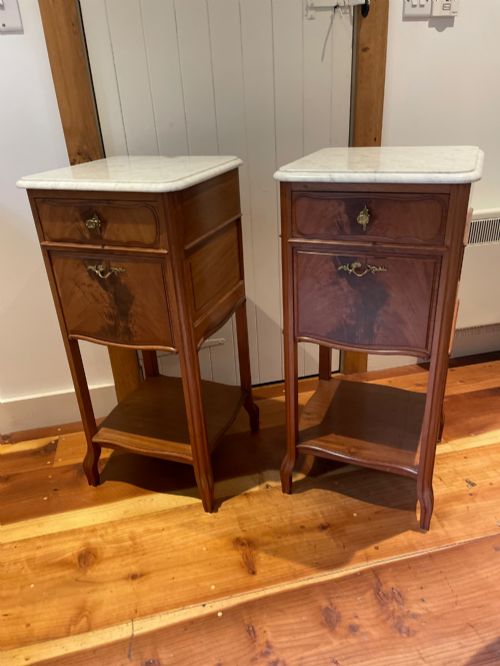
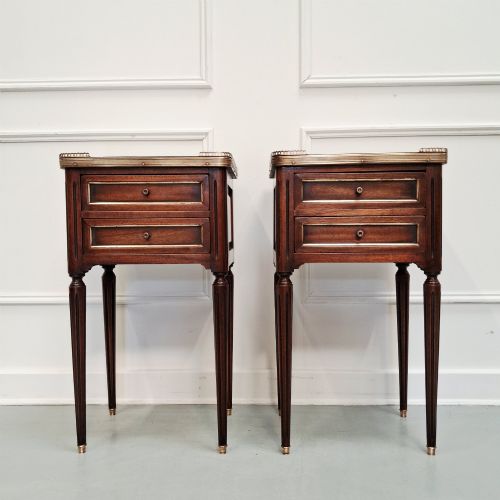
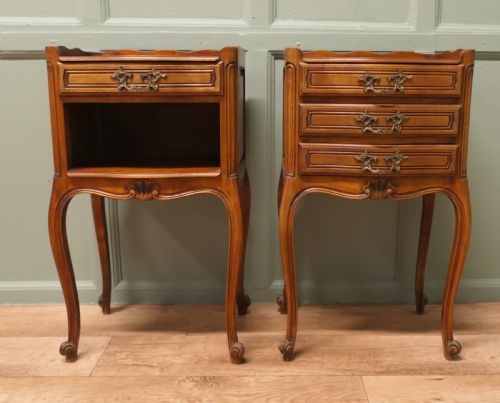
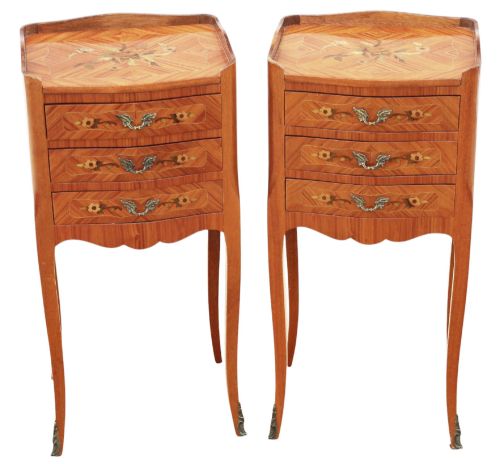
The selection frequently includes pairs of matching cabinets, originating from periods such as the Victorian era and the nineteen-thirties. Stylistic influences span from French Provincial and Neoclassical to Louis XV and Louis XVI revivals, displaying considerable regional and chronological variety.
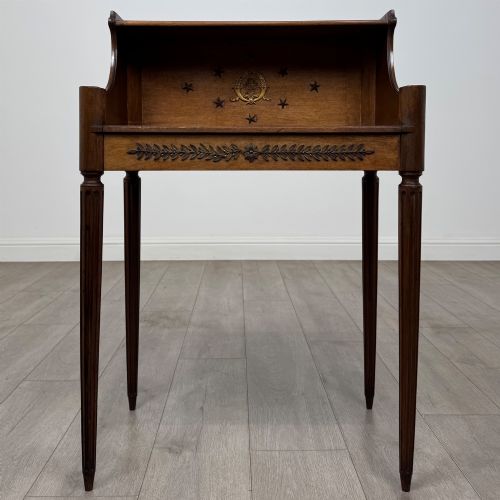
Makers utilised diverse structural forms, ranging from tall end tables to drop-leaf tables and kidney-shaped bedside tables. Buyers selecting a French wood nightstand encounter everything from simple painted finishes to elaborate veneered surfaces.
How they were made
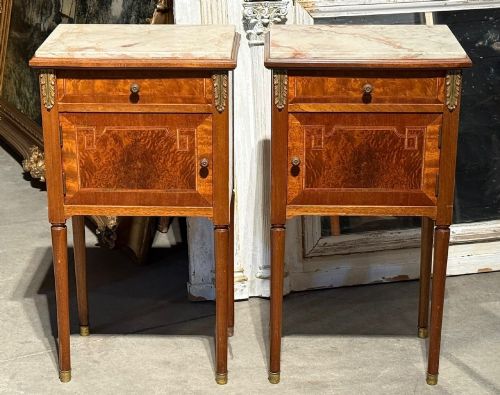
Construction relies heavily on timbers such as walnut, mahogany, satinwood, kingwood, rosewood, cherry wood, and oak, often applied as veneers over a supportive wood core. Marquetry and parquetry patterns demonstrate precise woodworking techniques, arranging contrasting wood grains in geometric or floral designs.
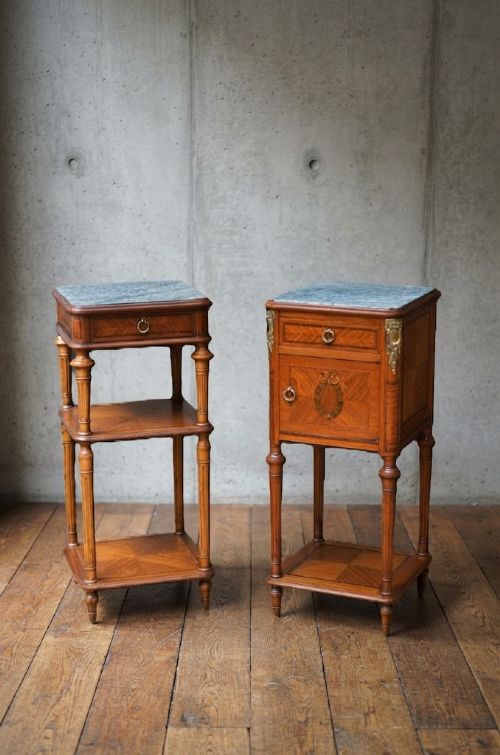
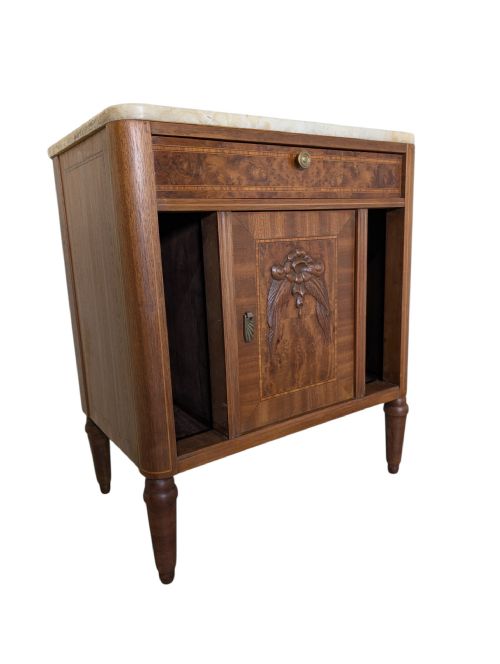
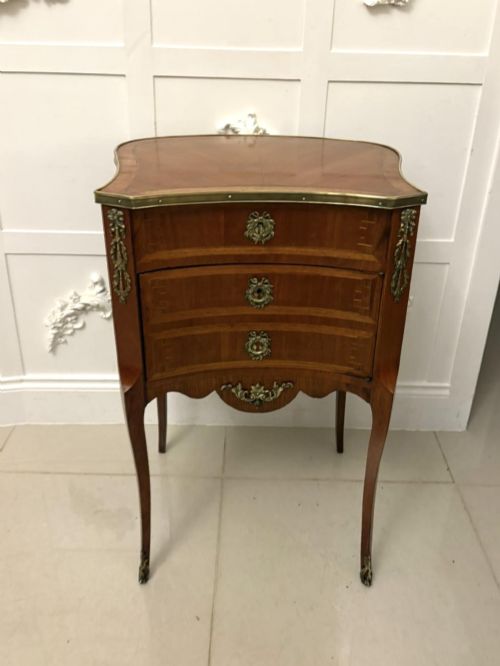
Many cabinets incorporate polished marble tops, frequently paired with decorative cast brass or ormolu mounts, galleries, and drawer pulls. Faux bamboo turning and painted finishes represent alternative decorative treatments applied to the wood structure during the nineteenth and twentieth centuries.
French Wood Nightstand Retail Price Guide 2026
Typical asking prices for french wood nightstand among the pieces listed under this phrase on Sellingantiques today, from the lower quarter to the upper quarter. They describe what is for sale here now, not the wider market.
Cabinet makers combined walnut, mahogany, and exotic veneers with marble tops, brass galleries, and ormolu mounts.
What varies in quality
Quality rests significantly on the precision of the timber matching and the intricacy of the parquetry or marquetry inlay. Pieces exhibiting finely figured burr veneers or complex geometric parquetry patterns reflect higher levels of cabinet-making skill.
The refinement of ancillary materials separates standard production from superior examples. Heavy cast ormolu mounts, well-fitted marble tops, and intact brass galleries indicate greater investment in the original manufacture of the cabinet.
Francois Linke
The French Wood Nightstand Glossary
- Marquetry
- Decorative veneer work forming pictorial or organic patterns using various coloured woods. This technique requires meticulous cutting and fitting of thin wood sections onto a solid substrate.
- Parquetry
- Geometric wood inlay forming repeating patterns such as squares or lozenges. It provides a structured decorative surface on tabletops and cabinet doors.
- Ormolu
- Gilt bronze mounts applied to furniture for decorative accent. The finish involves applying finely ground gold to a bronze base.
- Kingwood
- A dense, richly grained timber imported from Brazil, prized for cabinet-making. It displays dark violet and brown tones with striking figures.
- Chevet
- A French term for a small bedside table or cabinet. These pieces often contain a small cupboard space above an open shelf or drawer.
French Wood Nightstand: Frequently Asked Questions
What is a french wood nightstand?
A french wood nightstand is a small bedside cabinet or table originating from nineteenth or early twentieth-century France and surrounding regions. These pieces provide compact storage with cupboards, drawers, or open surfaces next to a bed.
They appear in numerous revival styles, incorporating decorative wood veneers, marble tops, and brass hardware. Each piece reflects the domestic furniture standards of its specific decade of production.
How do I style a bedside table?
Bedside tables accommodate functional items like reading lamps, books, and small personal objects while complementing the surrounding bedroom decor. Pairing matching cabinets creates symmetry on either side of a bed frame.
Contrasting the timber tone of the nightstand with surrounding furniture adds visual depth to a room. Placing decorative objects on marble or wooden surfaces highlights the natural grain and finish of the piece.
Are these tables sold in pairs?
Many listings feature matched pairs of bedside cabinets, which reflects how they were originally manufactured for domestic bedrooms. Finding a pair allows for balanced interior placement on both sides of a bed.
Single tables also appear frequently, serving as versatile accent pieces or lamp tables in various rooms. Individual tables offer flexibility when matching sets are unnecessary.
What materials were used?
Cabinet makers utilised a wide selection of hardwoods and exotic timbers including walnut, mahogany, satinwood, kingwood, rosewood, and cherry wood. Solid woods often served as frames for decorative veneers and parquetry patterns.
Additional materials include polished marble for table tops and cast brass or ormolu for handles, galleries, and decorative mounts. Some pieces feature painted surfaces or simulated bamboo turnings.
How do I date these cabinets?
Dating relies on stylistic clues, construction methods, and prevailing design movements associated with specific periods like the Victorian era or the nineteen-thirties. Louis XV and Louis XVI revival styles indicate nineteenth or early twentieth-century interpretations of earlier French aesthetics.
Materials and hardware also offer chronological markers, such as the distinct veneers and simpler geometric lines typical of early twentieth-century production. Comparing structural details helps narrow the decade of origin.