


French Walnut Linen Press
A french walnut linen press provides substantial storage through large doors, offering buyers traditional cabinetwork built from rich timber.
French Walnut Linen Press
A french walnut linen press brings substantial wooden storage into a room, often taking the form of an armoire or large cabinet. When searching for a french walnut linen press, buyers encounter pieces spanning multiple centuries, from the seventeenth century through to the twentieth century.
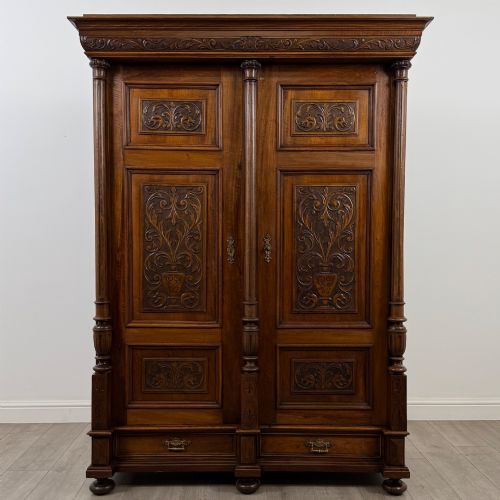
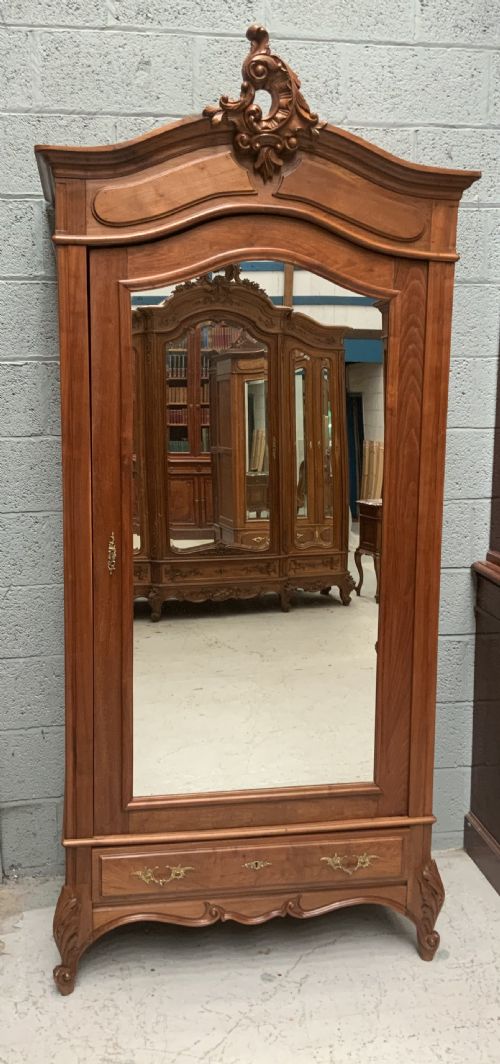
The material palette is dominated by walnut and burr walnut, frequently shaped into tall single or double door configurations. Styles range from French provincial and Rococo revival to Louis XVI revival and French Breton.
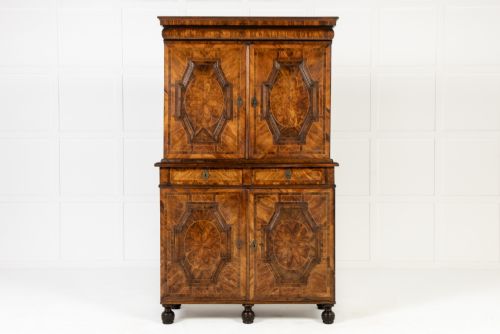
Many examples arrive with carved details or painted finishes, reflecting regional workshops across France such as Burgundy. Cabinets on chests and cupboards also appear among the selections, providing varied internal arrangements for storage.
How they were made
Cabinetmakers utilised solid walnut and burr walnut timbers, often selecting highly figured grains for the primary door panels and facades. Construction relied on traditional joinery methods to build heavy carcases that could house large volumes of textiles.
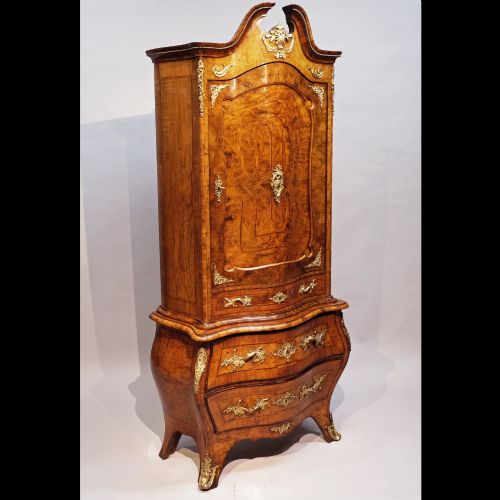
Metal components such as brass, iron, ormolu, gilded bronze, and steel provided hinges, escutcheons, and decorative mounts. Carved ornamentation was worked directly into the timber by hand, defining styles from provincial work to ornate revival pieces.
Styles recorded across the pieces include French provincial, Rococo revival, Louis XVI revival, and Breton designs.
What varies in quality
The standard of a piece rests on the selection of the timber and the depth of the carving. Rich burr walnut veneers and well-figured solid walnut create a stronger visual presence than plain timber surfaces.
Hardware and mounts also separate simpler regional pieces from ambitious workshop productions. Cast ormolu or gilded bronze mounts demonstrate higher craftsmanship than standard iron or brass fittings.
The French Walnut Linen Press Glossary
- Armoire
- A large wardrobe or cupboard used primarily for storing clothes and linen. These tall pieces typically feature one or two doors opening to reveal shelves or hanging space.
- Burr walnut
- A prized timber cut from the abnormal growth of a walnut tree, yielding swirling grain patterns. Cabinetmakers used these decorative veneers on prominent exterior surfaces.
- Ormolu
- Gilded bronze used for decorative mounts and hardware on fine furniture. The technique involves applying a gold amalgam to a bronze base.
- Parquetry
- Geometric wood mosaic work used for surface decoration on furniture panels. Artisans arranged contrasting timber veneers to create repeating patterns.
French Walnut Linen Press: Frequently Asked Questions
What is a french walnut linen press used for?
These large wooden cabinets provide deep shelving and hanging space for garments, bedding, and household textiles. Their substantial doors keep contents protected while adding a prominent wooden presence to a room.
Historically designed for domestic storage, they function today as wardrobe spaces or linen cupboards in bedrooms and hallways.
How do I date a french walnut linen press?
Dating relies on examining the construction methods, hardware types, and stylistic carvings present on the cabinet. Pieces range from seventeenth-century works to twentieth-century revivals.
Specific design indicators include the presence of Rococo revival curves or provincial regional details such as Breton motifs.
Are these cabinets difficult to move?
Due to their heavy solid walnut construction and large dimensions, these cabinets require careful handling during transport. Many period armoires were built to be dismantled into sections for easier movement through rooms.
Checking how the carcase and doors dismantle helps determine the logistics of placing one in a home.
What styles are available for these pieces?
The selection includes French provincial, Rococo revival, Louis XVI revival, and French Breton styles. Each style brings distinct carved ornamentation and architectural lines.
Surface treatments also vary, ranging from natural waxed walnut and burr veneers to painted finishes.