



French Walnut Etagere
A french walnut etagere brings tiered display space and rich timber grain to a room, offering open shelving for small treasures.
French Walnut Etagere
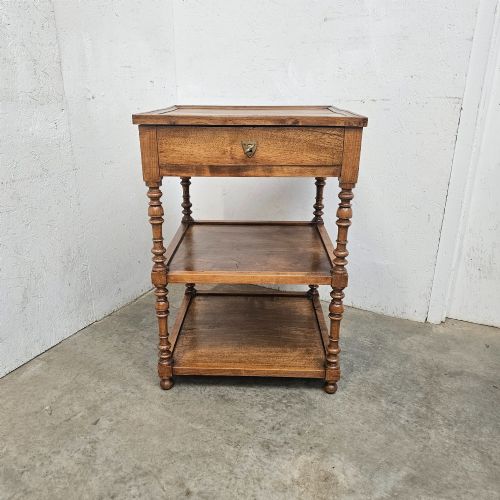
When you search for a french walnut etagere, you encounter tiered open shelving units designed for display and decorative storage. These pieces range from compact two-tier occasional tables to taller multi-level structures with serpentine or galleried shelves.
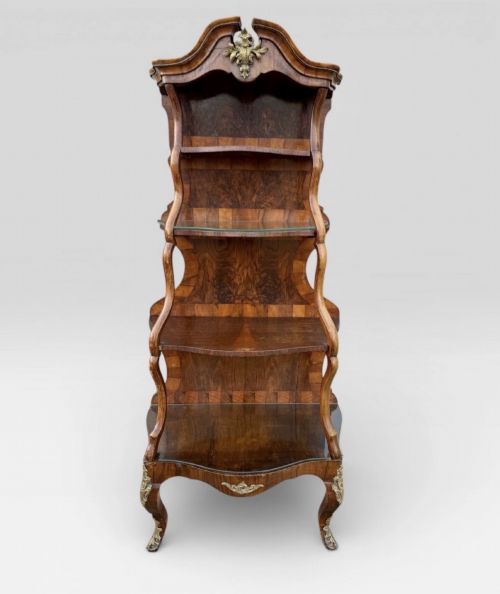
The versions you meet most frequently on this page date from the nineteenth century and the Victorian era, often displaying Louis XV style curves or French Rococo revival details. Walnut forms the primary carcass, frequently enhanced with marquetry inlay or mounts of brass and ormolu.
Many examples function as side tables, bookcases, or specialised display stands, reflecting the varied domestic uses of the period. Makers utilised the tiered format to create light, vertical furniture that conserved floor space while showcasing porcelain, books, and curiosities.
Assessing quality and craftsmanship
The distinction between standard pieces and the finest examples rests on the complexity of the marquetry and the crispness of the bronze or ormolu mounts. Finer etageres feature deeply figured walnut veneers and meticulously executed floral inlay that extends across multiple tiers.
Structural refinement also determines quality, seen in the delicacy of turned wooden columns, the precision of brass galleries, and the overall balance of the tiered design. Pieces retaining their original fire-gilt mounts and unblemished polished surfaces occupy the upper tier of the range.
Listings feature etageres spanning the nineteenth century through the 1930s, incorporating materials such as ormolu, brass, glass, and marquetry veneer.
Gabriel Viardot·Donald Ross
The French Walnut Etagere Glossary
- Etagere
- A piece of furniture consisting of a set of open shelves for displaying small objects. This tiered form became popular in nineteenth-century French interiors.
- Marquetry
- Decorative veneer work where pieces of wood are fitted together to form pictorial or geometric designs. Craftsmen applied this technique to the shelf surfaces and tops.
- Ormolu
- Gilt bronze mounts applied to furniture for decorative effect. These metal ornaments frequently edge the shelves or adorn the legs.
- Galleries
- Low pierced or solid metal rails fitted around the edges of shelves to prevent items from sliding off. They appear in brass or gilt metal on refined examples.
- Cabriole
- A furniture leg that curves outward and then tapers inward, inspired by the shape of an animal's leg. This form characterises Louis XV style pieces.
French Walnut Etagere: Frequently Asked Questions
What is a french walnut etagere used for?
These pieces served historically for displaying porcelain, small silver, and decorative ornaments in drawing rooms and parlours.
Today, they function well in modern interiors as open display units for books, plants, and collections, adding vertical interest to empty corners.
How do I date a french walnut etagere?
Dating relies on observing stylistic markers such as Victorian proportions, Edwardian marquetry details, or specific revival influences like Louis XV curves. Construction methods, including the type of veneer and metal mounts, also help place a piece within the nineteenth or early twentieth century.
Cabinetmakers of the period often left stylistic clues through turned legs, serpentine shelves, and the complexity of the floral inlay work.
Are all etageres made of solid walnut?
Most examples utilise a combination of solid walnut for the structural framework and walnut veneer for the flat shelf surfaces. This construction allowed craftsmen to create stable furniture while displaying rich grain patterns.
Secondary timbers like satinwood and kingwood frequently appear within the marquetry panels, adding contrast to the primary walnut body.
How do I care for antique walnut furniture?
Protect the wood and delicate marquetry by placing the piece away from direct sunlight and sudden temperature changes. Regular dusting with a soft, dry cloth preserves the French polish and metal mounts.
Avoid liquid cleaners and wax buildup, which can cloud the antique finish and damage exposed veneer edges.