
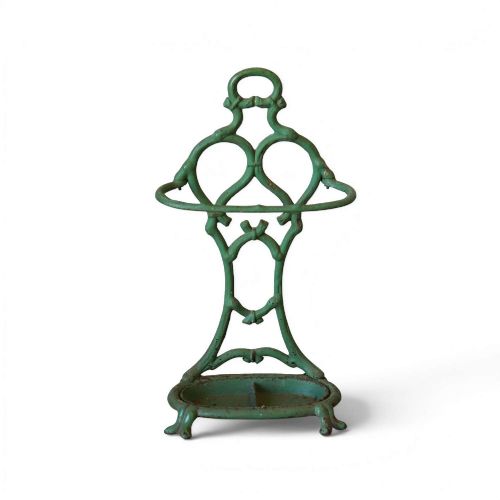


French Umbrella Stand
A French umbrella stand brings practical hallway storage and distinctive metalwork into the home.
French Umbrella Stand
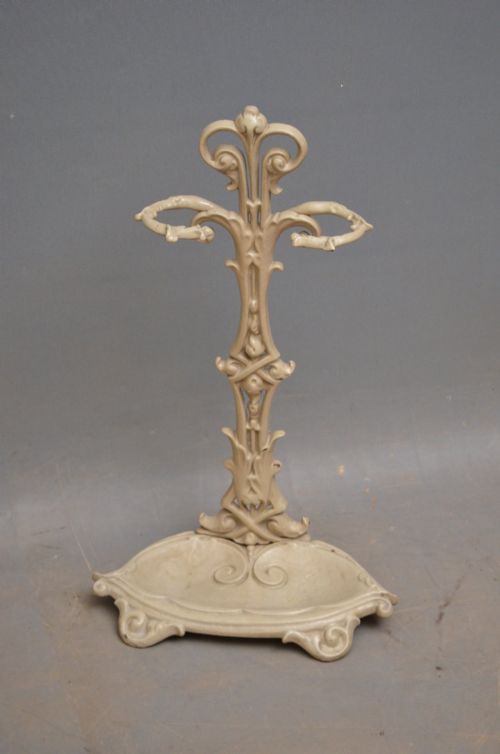
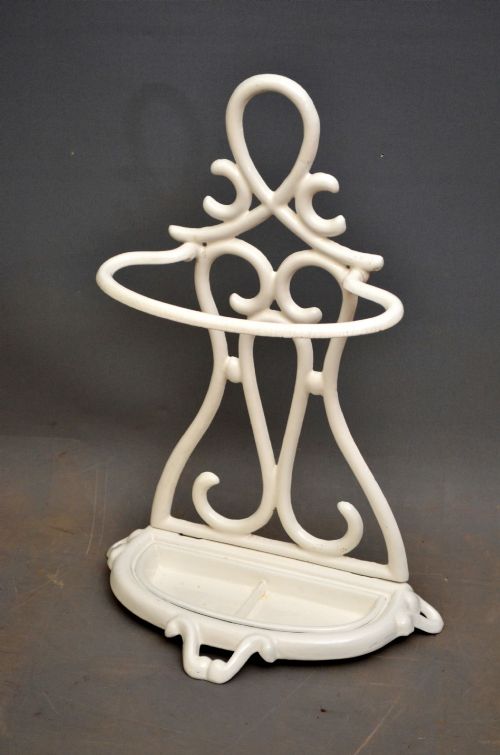
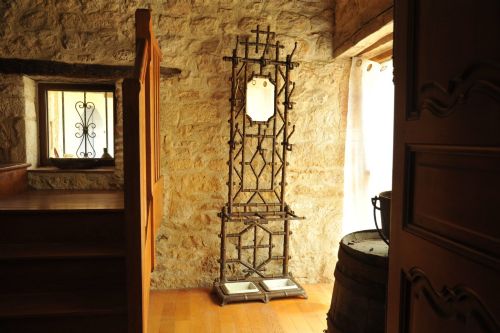
When you search for a french umbrella stand, you encounter pieces designed to hold walking sticks, canes and wet umbrellas in hallways and entranceways. The selection ranges from robust metal hall furniture that combines coat hooks and mirrors with umbrella trays to dedicated standalone vessels.
Cast iron examples dominate the available selection, often taking organic forms influenced by the Art Nouveau style or mimicking natural bamboo. Alongside these metal receptacles, you find larger hall stands and repurposed agricultural vessels such as grape hods utilised for umbrella storage.
What varies in quality
The distinction between standard utility items and finer pieces lies in the crispness of the casting and the ambition of the design. Cast iron stands with detailed figural work, such as storks or foxes, demonstrate superior foundry skill compared to plain geometric grilles.
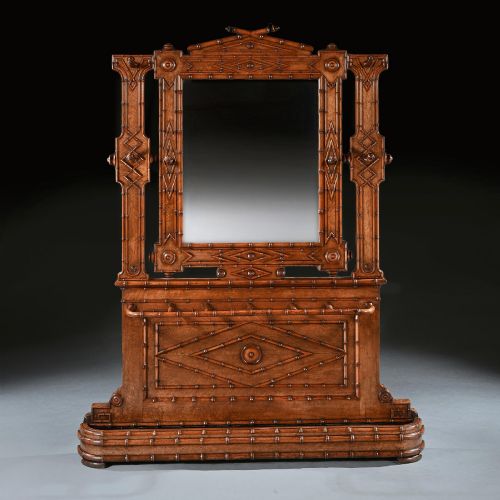
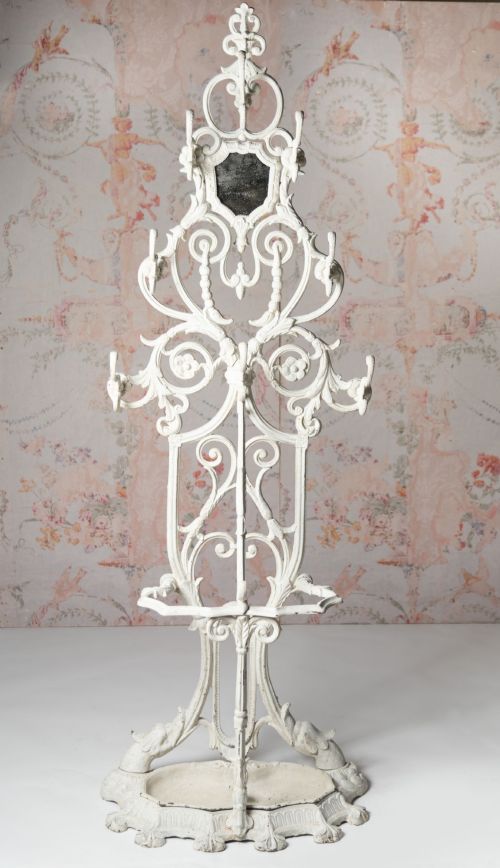
Complexity of form and material combination also dictate quality, as seen in hall stands that integrate mirrors, turned woodwork and matching metal drip trays. Original surface treatments, whether patinated bronze, applied enamel or hammered copper textures, retain greater visual depth than later repainted finishes.
Listings feature periods spanning from the late nineteenth century through to the Art Deco era of the 1930s.
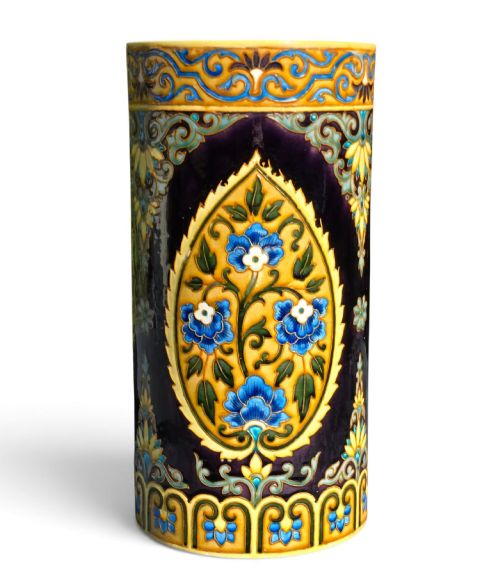
Théodore Deck
The French Umbrella Stand Glossary
- Faux bamboo
- A stylistic treatment where wood or metal is carved and painted to imitate the segmented stems of natural bamboo. This technique gained popularity during the late nineteenth century under the influence of Japonisme.
- Hotte
- A traditional French backpack or hod used during the grape harvest, sometimes repurposed as a tall container for walking sticks and umbrellas. These zinc or metal carriers introduce rustic utility to hallway spaces.
- Hall stand
- A multi-functional piece of furniture combining coat hooks, a hat rack, a mirror and a base tray for wet umbrellas. These tall units anchor entrance halls and maximise storage in narrow domestic spaces.
- Japonisme
- A European artistic movement inspired by Japanese art and design, visible in nineteenth-century decorative objects through asymmetry, flora and fauna motifs, and simulated bamboo forms.
- Art Nouveau
- A turn-of-the-century design style characterised by fluid, organic lines, asymmetrical plant motifs and whip-like curves. This aesthetic heavily influenced the metal framework of cast iron and brass umbrella stands.
French Umbrella Stand: Frequently Asked Questions
How do I use an antique umbrella stand?
Place the stand in a hallway or entranceway to hold walking sticks, canes and umbrellas. Ensure you use a suitable inner liner or saucer if the base lacks an original metal drip tray to catch residual rainwater.
Position the piece away from direct damp sources to preserve painted metal surfaces and wooden elements. These stands function as practical storage while adding period character to domestic thresholds.
Were these stands only used for umbrellas?
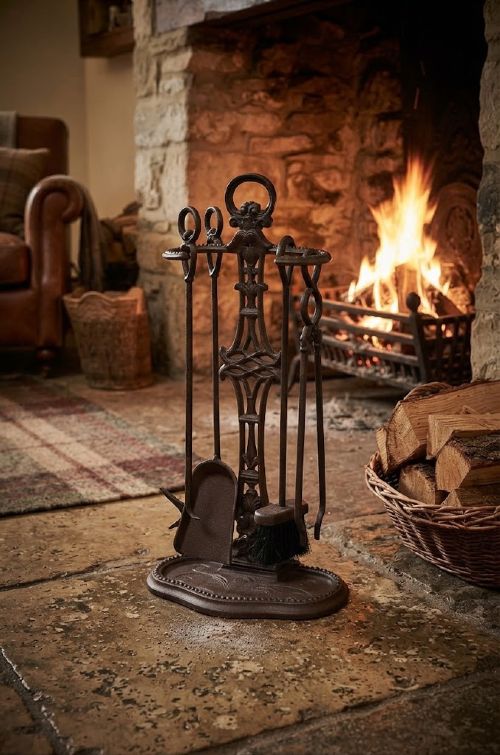
Many examples served multiple purposes in nineteenth-century hallways, accommodating riding crops, walking sticks, parasols and fire irons. Some designs integrated umbrella compartments directly into larger hall furniture featuring mirrors and coat hooks.
Agricultural hods originally designed for grape harvesting also found secondary use as umbrella holders due to their deep metal construction.
How do I identify Art Nouveau pieces?
Look for flowing, asymmetrical lines inspired by plant stems, flowers and natural tendrils in the metalwork. Cast iron and brass examples from this period often avoid straight geometry in favour of whiplash curves and botanical forms.
Makers embraced organic shapes that mimic the structure of climbing plants, water lilies or bamboo stalks.
What materials are most common?
Cast iron is the most prevalent material, offering the weight and stability required for heavy walking sticks and wet umbrellas. Brass, copper and zinc also appear frequently, often hammered or shaped into decorative vessels.
Wooden frames utilising birdseye maple or ebonised timbers support combination hall stands that feature integrated metal drip pans.