
French Style Walnut Table
A french style walnut table brings continental curve and figured grain into a room, spanning forms from bedside chests to large dining pieces.
French Style Walnut Table
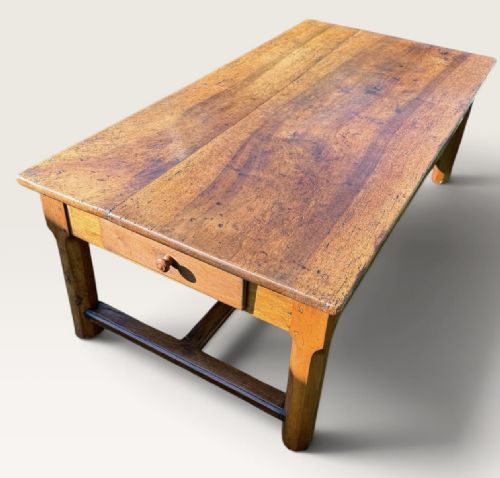
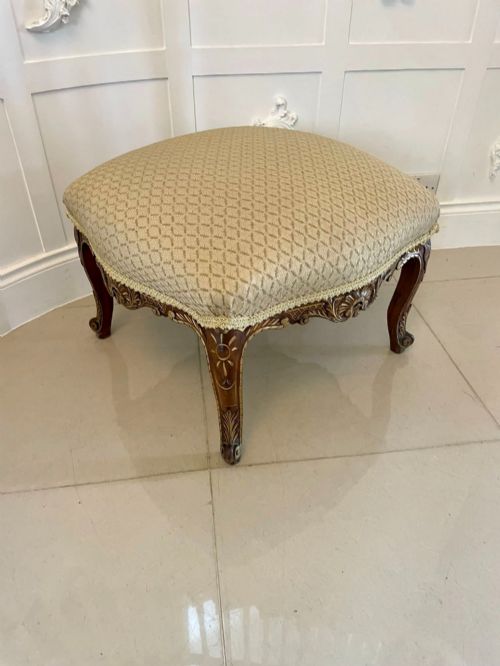
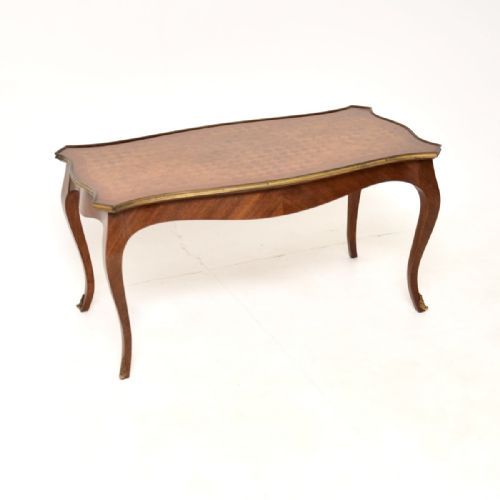
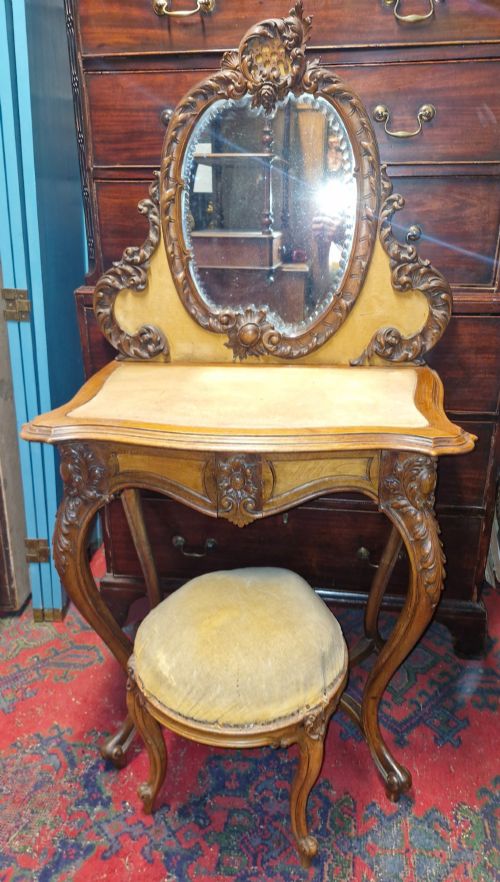
A french style walnut table encompasses a diverse group of nineteenth and early twentieth century domestic surfaces, including coffee tables, writing desks, and centre tables. Buyers seeking these items encounter distinct continental forms shaped by Louis XV and Louis XVI revivals.
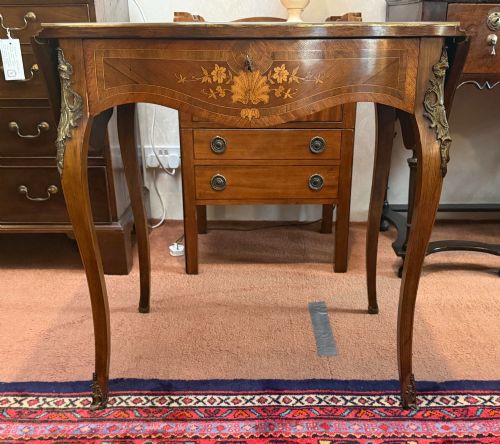
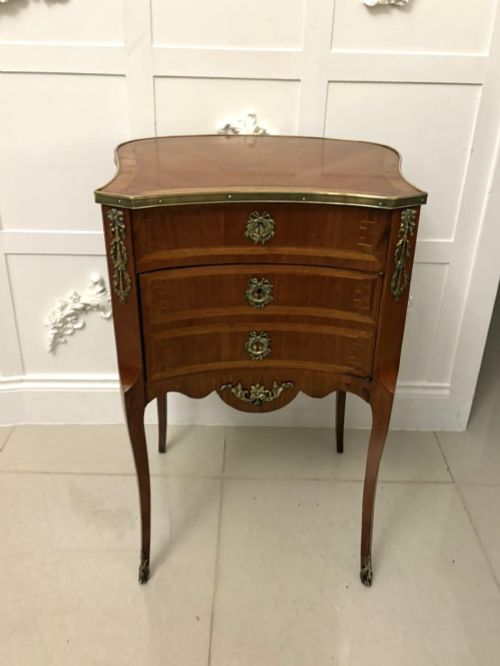
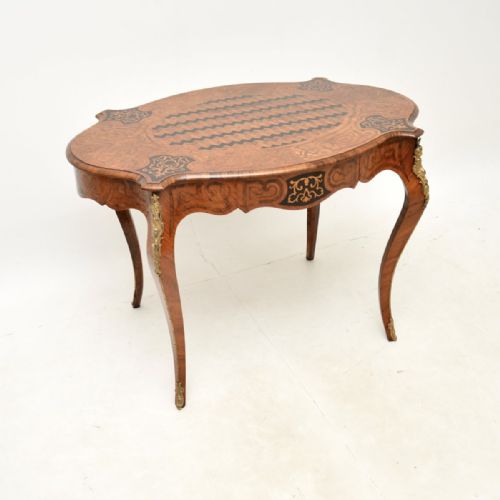
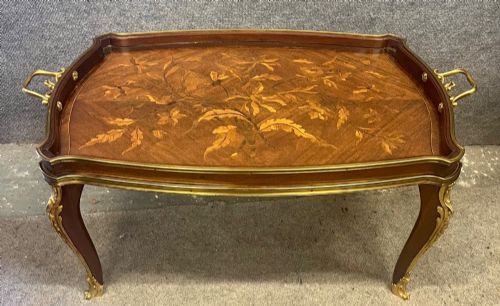
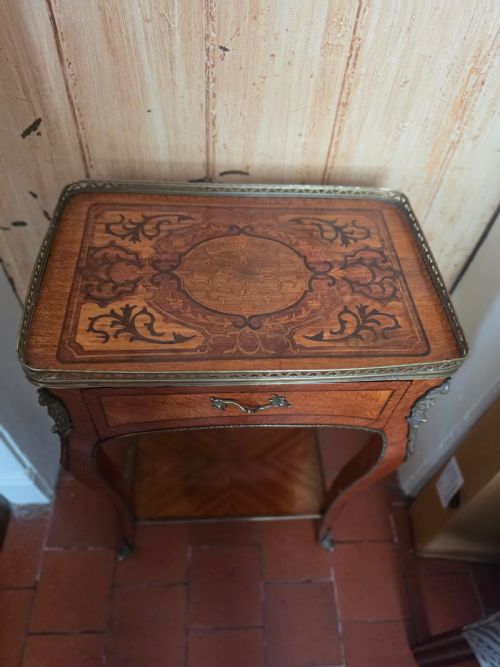
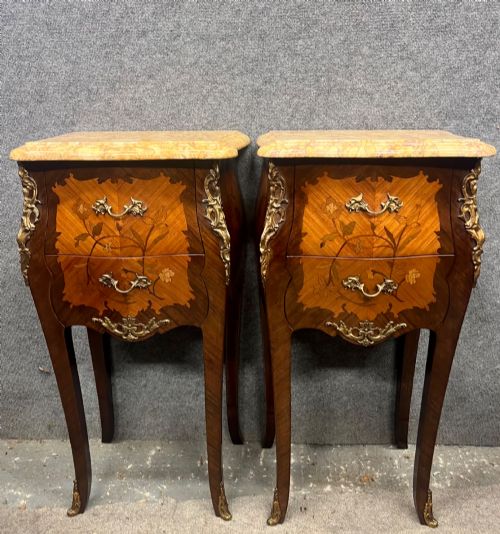
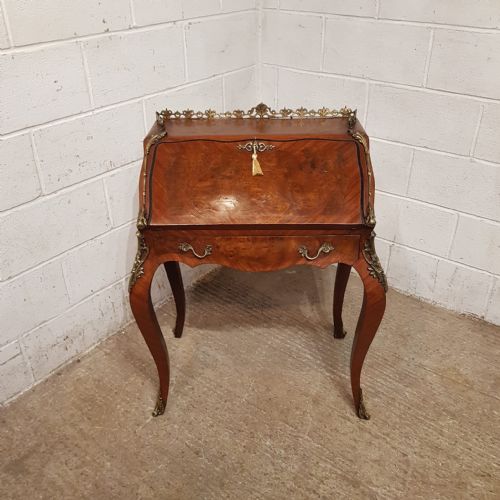
The material palette leans heavily on walnut and burr walnut, frequently paired with marquetry inlay and brass mounts. Side tables, bedside chests, and larger bureau plat desks dominate the selection across Victorian and later periods.
Materials and construction
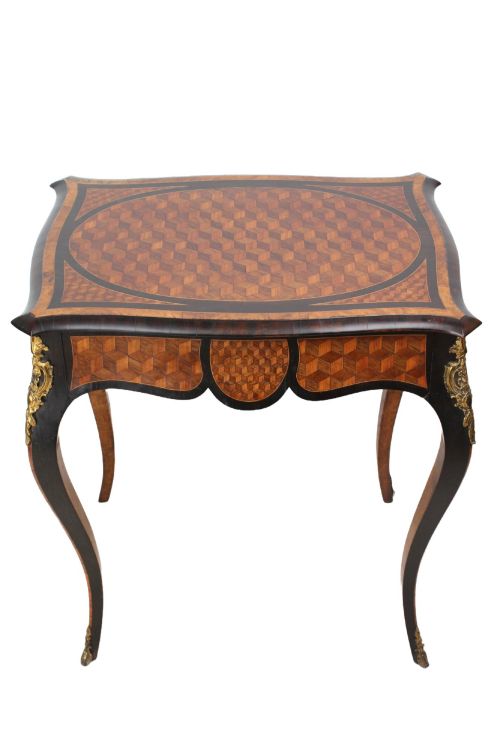
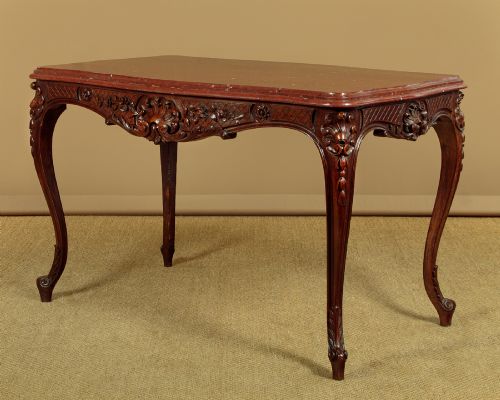
Cabinet makers utilised solid walnut and decorative burr walnut veneers over secondary timbers, often applying intricate parquetry and marquetry patterns in contrasting woods like kingswood and fruitwood. Surfaces frequently incorporate rouge marble tops, inset leather writing panels, and cast ormolu mounts.
Structural framing relies on traditional joinery to support curved cabriole legs and serpentine edges. Brass and ormolu mounts are secured to corners and aprons, while drawers feature hand-cut dovetailing.
Listings feature walnut alongside exotic timbers like kingswood, rosewood, and amboyna across nineteenth and twentieth century pieces.
Distinguishing quality
The standard of a french style walnut table depends upon the dexterity of the marquetry work and the crispness of the carved or cast mounts. Finer examples display meticulous grain matching in the burr walnut veneer and precise hand-chased detail on the ormolu.
Construction depth separates standard production from superior craftsmanship, visible in the weight of the marble inserts and the fluidity of the cabriole leg profiles. Secondary timbers and interior drawer construction also indicate the original workshop tier.
JAS Shoolbred·Tehan·L.Martin of Paris
The French Style Walnut Table Glossary
- Marquetry
- Decorative veneer patterns arranged in pictorial or geometric designs. Craftsmen cut contrasting thin sheets of wood to fit flush into a background veneer.
- Ormolu
- Gilded bronze mounts applied to furniture edges, feet, and aprons. This decorative technique originated in French cabinet making to accent serpentine lines.
- Burr walnut
- Sourced from a tree growth or burl, this wood yields highly swirled and mottled grain patterns. It commands attention on table tops and cabinet fronts.
- Cabriole leg
- A furniture leg featuring a double curve, bowing outward at the top and inward near the foot. This profile is central to Louis XV revival design.
French Style Walnut Table: Frequently Asked Questions
How do I identify a Louis XV style table?
Look for asymmetrical scrollwork, flowing cabriole legs, and serpentine aprons that mimic eighteenth century French aesthetics. These elements create a lighter, more organic silhouette than earlier geometric designs.
Walnut and burr walnut veneers combined with floral marquetry further signal this specific continental revival lineage.
What is a bureau plat desk?
A bureau plat is a freestanding writing table with drawers built into the frieze beneath the top. They were designed to sit in the centre of a room rather than against a wall.
Many examples feature leather inset writing surfaces and gilt brass or ormolu mounts along the edges.
Are marble tops original to these tables?
Marble inserts, such as rouge marble, frequently appear on bedside cabinets, commodes, and serving pieces from the nineteenth and early twentieth centuries. They provided a durable, heat-resistant surface for washing equipment or drinks.
Inspect the seating rebate beneath the stone to ensure the marble matches the age and proportions of the wooden frame.
How do I care for a walnut table?
Keep walnut furniture away from direct sunlight and heat sources to prevent the burr veneer from drying out or splitting. Dust regularly with a dry cloth and apply a quality beeswax sparingly to nourish the grain.
Avoid placing damp glasses directly on polished wood or marble surfaces to protect the historical finish.