
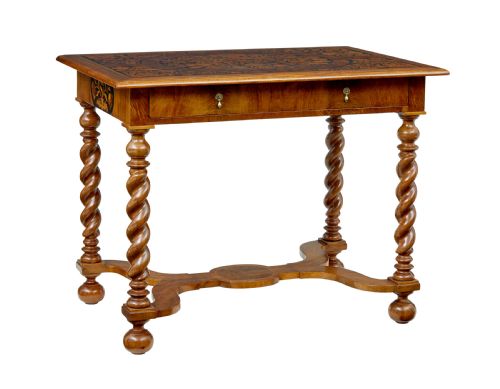
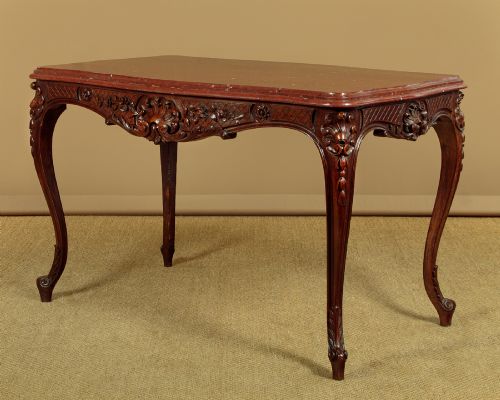
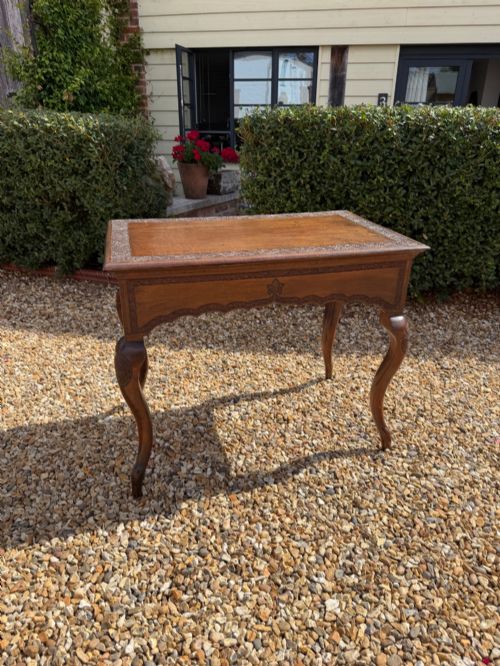


Ornate Walnut Side Table
An ornate walnut side table brings rich timber grain and sculptural carving into a room, offering both surface space and distinct period character.
Ornate Walnut Side Table
An ornate walnut side table encompasses various forms including console tables, centre tables, occasional tables, and bedside tables spanning from the late seventeenth century through the early twentieth century. Buyers seeking this phrase encounter pieces shaped by Victorian, Rococo Revival, Louis XV, Baroque, and Art Deco aesthetics, often featuring decorative timber work and rich finishes.
The selection on this page demonstrates significant stylistic breadth, moving from carved Italian pier lamp tables and French writing desks to English occasional tables and Kashmiri creations. These domestic pieces served diverse functions in period interiors, acting as display surfaces, lamp tables, or decorative consoles against walls and in hallways.
Materials and construction
Cabinet makers utilised solid walnut and figured burr walnut veneers over secondary timbers, exploiting the rich, dark grain of the wood for visual impact. Carved walnut elements provided sculptural depth, particularly on Victorian Rococo revival and Baroque frames where complex floral and scroll motifs were hand-carved directly into the timber.
Mounts and tops introduced contrasting textures through the incorporation of rouge marble, cast ormolu, and brass details. Marquetry inlay appeared on selected French surfaces, while specialist workshops combined silver plate and metal components in domestic lighting and occasional furniture.
Several tables were designed specifically to hold bedside water jugs or glowing oil lamps before electricity tamed the dark.
Distinctions in craftsmanship
The standard of carving determines much of the visual success in these tables, moving from stiff, mechanical repetition to fluid, deeply undercut hand-chiselled foliage and scrolls. Finer examples display meticulous attention to timber selection, aligning burr walnut veneers to create balanced symmetrical grain patterns across the top.
The integration of secondary materials such as fitted marble slabs and chased ormolu mounts separates standard production from exceptional pieces. Superior construction shows precision in jointing and structural stability, ensuring that tables bearing heavy stone or metal elements remain robust over centuries.
The Ornate Walnut Side Table Glossary
- Burr walnut
- A prized timber veneer sliced from abnormal growths on walnut trees, yielding intricate, swirling grain patterns. It was frequently utilised on the primary display surfaces of nineteenth-century furniture.
- Ormolu
- Gilded bronze mounts applied to furniture edges and legs, characteristic of French Louis XV style and revival pieces. This decorative technique added metallic brilliance to wooden frames.
- Marquetry
- The art of applying small pieces of veneer to a structure to form decorative patterns and pictures. French and continental workshops employed this technique on occasional and centre tables.
- Console table
- A table designed to stand against a wall, traditionally fixed with brackets or supported by front legs. These pieces often featured ornate carving and marble tops suitable for formal display.
Ornate Walnut Side Table: Frequently Asked Questions
Where should I place a walnut console table?
These tables suit hallways, living rooms, and dining spaces where their decorative timber and carved details can be appreciated without causing obstruction. Placing them against a primary wall allows them to function as surface display areas for lamps and decorative objects.
Because many examples feature finished backs or refined shaping, certain centre tables can also sit away from walls in open spaces. Consider the traffic flow in your room and the height of the piece relative to surrounding furniture.
How do I care for antique walnut furniture?
Maintain walnut surfaces by dusting regularly with a soft, dry cloth and avoiding silicone-based polishes that build up over time. Natural wax applied sparingly preserves the sheen of the timber without sealing the grain permanently.
Keep wooden tables away from direct heat sources and strong sunlight, which can dry out the timber and fade the rich colour of the walnut. Consistent indoor humidity prevents the cracking of veneers and movement in solid structural elements.
What distinguishes Rococo Revival tables?
Rococo Revival pieces draw inspiration from mid-eighteenth-century French design, featuring asymmetric C-scrolls, naturalistic floral carving, and cabriole legs. These elements give the furniture a dynamic, flowing silhouette that contrasts with earlier rectilinear styles.
Carving on these tables is typically deep and exuberant, often incorporating shell motifs and pierced aprons. The style saw a major resurgence during the nineteenth century across English and continental workshops.