



French Style Trinket Box
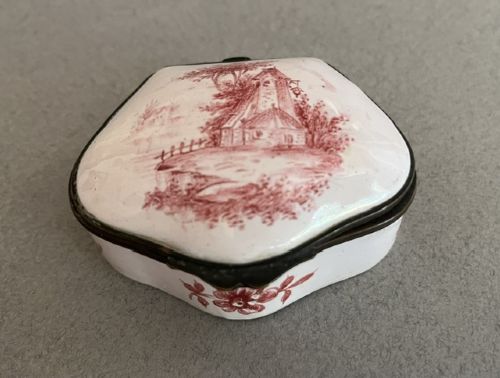
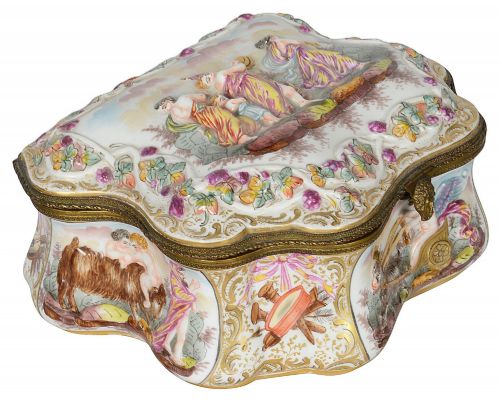
These French style trinket box pieces combine porcelain, brass, and ormolu into small containers made for holding personal items.
French Style Trinket Box
Buyers seeking a French style trinket box encounter various small decorative containers dating from the eighteenth century through to the early twentieth century. The selection includes porcelain jewellery caskets, round boxes with gilt detailing, and glass and enamelled vessels.
Most examples originate from the nineteenth century, reflecting periods such as Victorian, French Second Empire, and French Empire. Forms range from simple pill boxes to larger lidded bowls, display tables, and sarcophagus shaped boxes.
Materials and construction
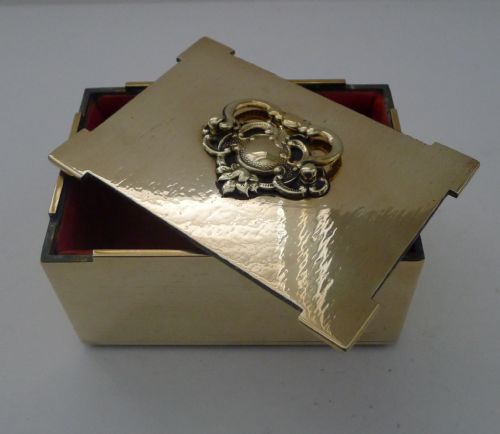
Construction relies heavily on porcelain, brass, ormolu, and glass, often combined with enamel and gold leaf detailing. Metal mounts frame porcelain bodies, while other pieces utilise cast brass, vermeil silver, or kingwood.
Surface decoration involves hand painting, cobalt blue glazes, and raised gold detailing applied to porcelain surfaces. Ormolu and gilt metal provide structural frames and decorative mounts across the nineteenth century items.
Listings feature porcelain, brass, enamel, ormolu, and glass across eighteenth, nineteenth, and early twentieth century items.
Evaluating the pieces
Quality differences appear in the precision of the metal mounts, the weight and cast of the brass or ormolu, and the finesse of the hand painted porcelain details. Pieces featuring combination materials such as glass and enamelled porcelain or integrated marble show greater complexity.
The refinement of the surface decoration, including raised gold work and hand painted portraits, distinguishes standard production containers from finer decorative caskets.
Lund Of Cornhill·Jean-Baptiste Isabey·Sevres
The French Style Trinket Box Glossary
- Ormolu
- Gilded bronze or brass used for mounts and decorative fittings on furniture and boxes. It provides a bright metallic finish that frames porcelain and wood panels.
- Faience
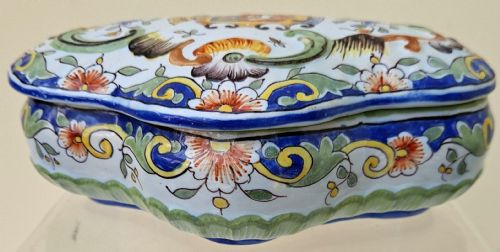
- Tin-glazed earthenware produced in France. Items like the Desvres and Rouen boxes demonstrate this ceramic technique.
- Bijouterie table
- A small display table with a glass top designed for showing jewellery and small decorative objects. These pieces often feature inlaid wood.
- Vermeil
- Sterling silver plated with gold. This material appears on covered bowls within the selection.
- Boulle
- A form of marquetry using brass and tortoiseshell inlaid into wood. Pieces using this technique date to the nineteenth century.
French Style Trinket Box: Frequently Asked Questions
What were French style trinket boxes used for?
These boxes served as desktop or dressing table containers for small valuables, pills, snuff, and jewellery.
Their decorative nature also allowed them to function purely as display objects in period interiors.
How do I identify a nineteenth century box?
Look at the combination of materials, such as ormolu mounts paired with porcelain or glass.
Construction methods and distinct stylistic revivals like Rococo or Second Empire point to this era.
Are these boxes made of solid gold?
Most metal elements consist of brass, ormolu, gilt metal, or vermeil rather than solid gold.
Gold leaf and raised gold detailing are typically applied as surface enrichment over porcelain or base metals.
How should I clean porcelain and brass boxes?
Dust surfaces gently with a soft cloth to protect hand painted details and gilt finishes.
Avoid harsh liquid cleaners that can damage fragile enamel, glass, and ormolu patination.