





Enamelled Vanity Box
When you search for an enamelled vanity box, you step into a world of dressing table jars, powder compacts and trinket pots made from the eighteenth century to the mid-twentieth century.
Enamelled Vanity Box
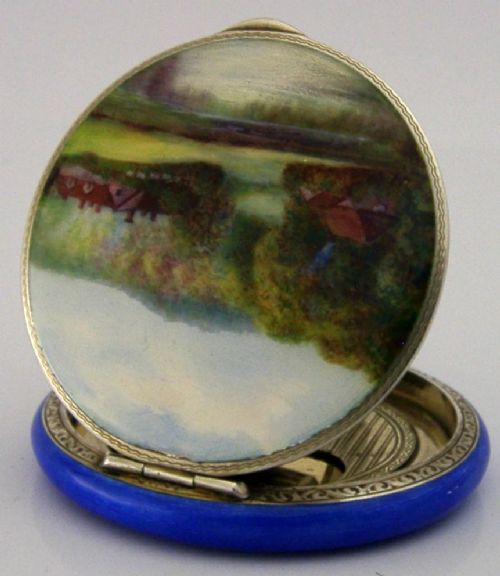
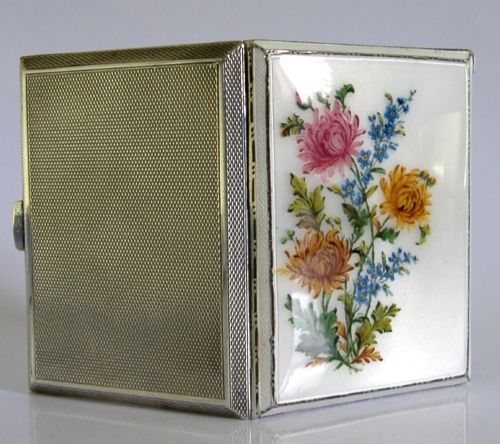
An enamelled vanity box encompasses dressing table jars, powder compacts, trinket boxes, pill boxes and cigarette cases gathered from the eighteenth to the mid-twentieth century. The pieces you encounter most often on this page belong to the Edwardian era and the Art Deco period, alongside Victorian and nineteenth-century examples.
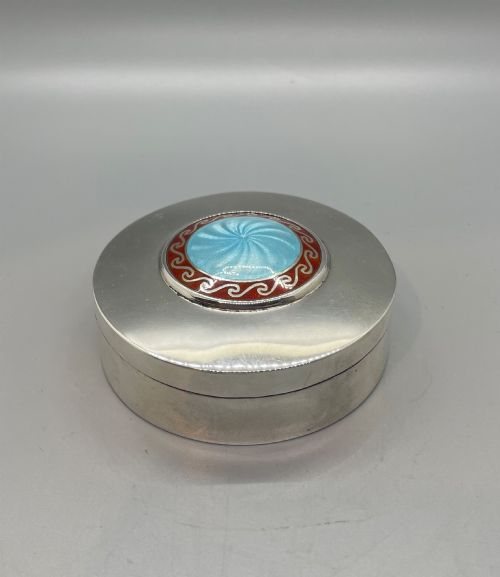
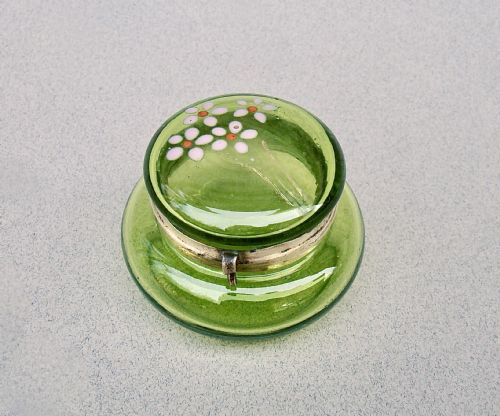
Makers housed these pieces on dressing tables or carried them for personal grooming, using them to hold rouge, powder, pills or small trinkets. The forms range from small pill boxes to large cut glass dressing table jars with fitted silver lids.
How they were made
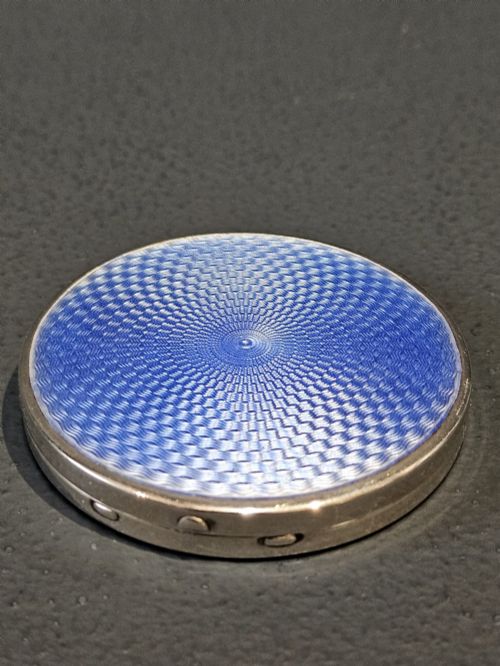
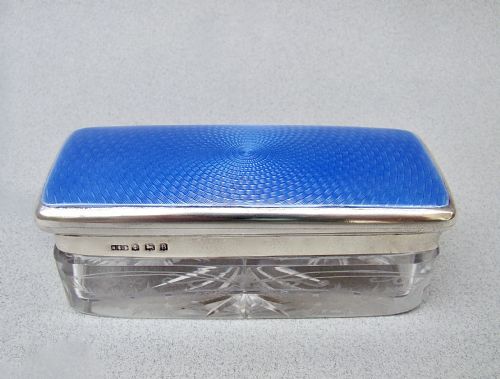
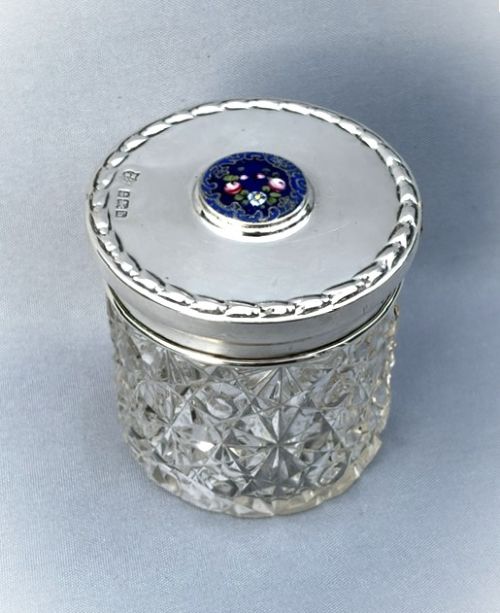
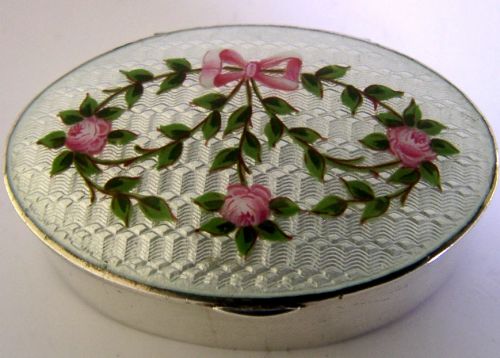
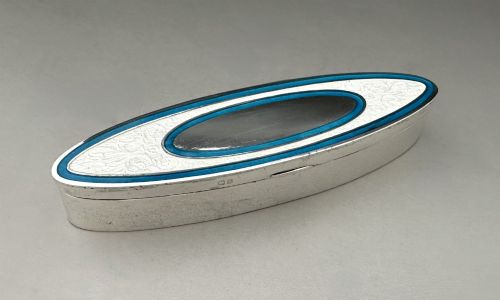
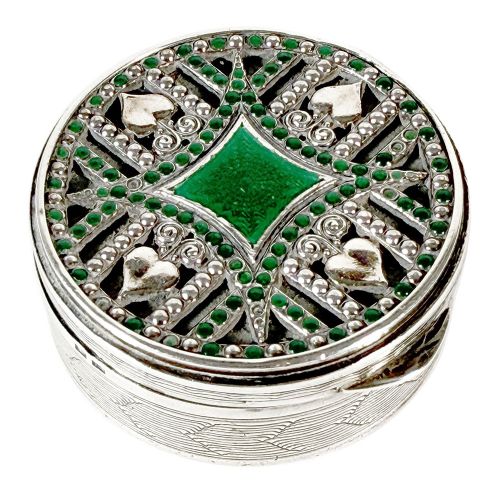
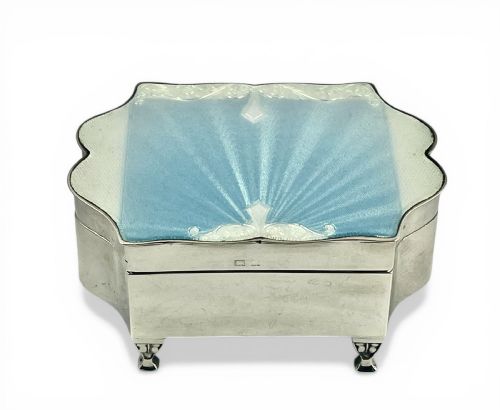
Craftsmen combined sterling silver, brass or chrome frames with cut glass, porcelain and various forms of enamel. Vitreous enamel and guilloche enamel provide the colourful surfaces seen across these objects, often applied over engine-turned metal grounds.
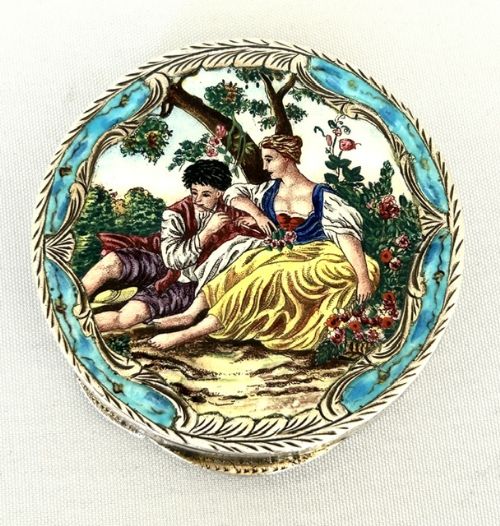
Many items feature hand-painted floral motifs, scenic views or chrysanthemums set directly into the enamel. Others incorporate Bristol blue glass, cranberry glass or Sevres porcelain mounted with silver lids and gilt detailing.
Enamelled Vanity Box Retail Price Guide 2026
Typical asking prices for enamelled vanity box among the pieces listed under this phrase on Sellingantiques today, from the lower quarter to the upper quarter. They describe what is for sale here now, not the wider market.
Listings feature items from the eighteenth century, Victorian period, Edwardian era, and Art Deco through the mid-century modern period.
What varies in quality
The distinction between tiers rests upon the precision of the guilloche engraving beneath the translucent enamel and the fineness of any hand-painted details. Crisp engine-turned patterns under smooth, even enamel layers separate standard production items from finer workshop pieces.
Maker marks and assay office stamps add clarity to the origin of silver mounts, while the weight and thickness of the glass or porcelain bodies dictate the substantial feel of the vessel.
Henry Clifford Davis·George Adam Scheid·Henry Matthews·Goldsmith's and Silversmith's Co.·Giuliano Spinelli Florence·Richard Hudnut
The Enamelled Vanity Box Glossary
- Guilloche enamel
- A decorative technique where a metal surface is machined with an intricate geometric pattern before translucent enamel is applied over the top. This allows the underlying engraving to show through the coloured glass layer.
- Vitreous enamel
- A material made by fusing powdered glass to a substrate by firing, usually at high temperatures. It creates a durable, glossy coloured coating on metal bases.
- Patch box
- A small lidded container used in the eighteenth and nineteenth century to store small fabric patches worn on the face to hide blemishes or signal social intent.
Enamelled Vanity Box: Frequently Asked Questions
What is an enamelled vanity box used for?
These containers held loose powder, rouge, pills, cigarettes or small personal trinkets on dressing tables or inside handbags. They served both functional grooming needs and decorative purposes in domestic spaces.
The variety of sizes reflects their specific uses, from tiny pill boxes to large dressing table jars designed to sit among silver brush sets.
How do I date an enamelled vanity box?
Dating relies heavily on hallmarks stamped onto the silver mounts, which indicate the assay office and year of production. Stylistic markers such as Art Deco geometric lines or Edwardian floral motifs also point to specific decades.
Comparing the manufacturing techniques and material combinations helps narrow down the period of manufacture when marks are absent.
What is the difference between guilloche and standard enamel?
Guilloche enamel involves laying translucent glass over an engine-turned metal background engraved with precise geometric patterns. Standard enamel sits on a flat or plain surface without the underlying machine engraving.
The engraved pattern creates a shimmering depth that shifts as the light moves across the surface of the piece.
How do I care for antique enamel?
Antique enamel requires gentle handling to protect the glass surface from impact and scratching. Cleaning should be done with a soft, dry cloth without harsh chemical dips that might damage the metal mounts or the enamel.
Keeping them away from direct sunlight and excessive moisture preserves the vibrant colours of the hand-painted or guilloche panels.