


French Style Sideboard
A french style sideboard brings continental elegance into a room through rich timber and ornate mounts.
French Style Sideboard
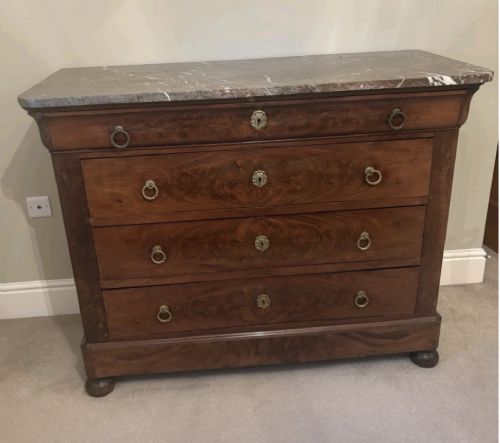
A french style sideboard encompasses a grand range of storage furniture originating from continental traditions and later nineteenth-century revivals. Buyers searching this phrase encounter ornate credenzas, commodes, and enfilades designed to anchor formal dining rooms and principal reception spaces.
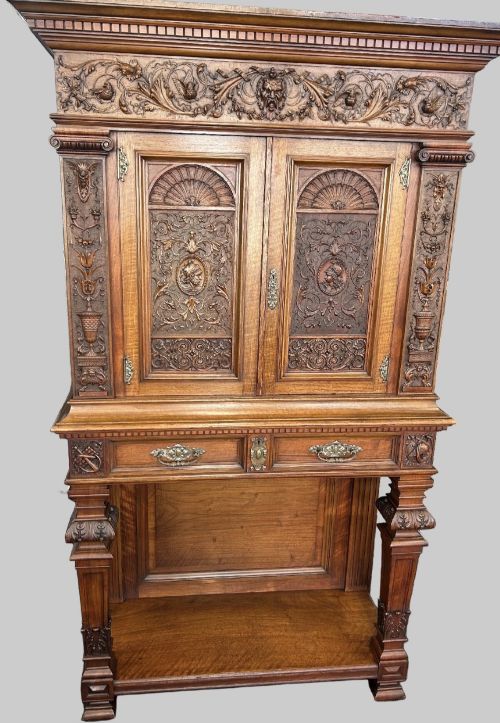
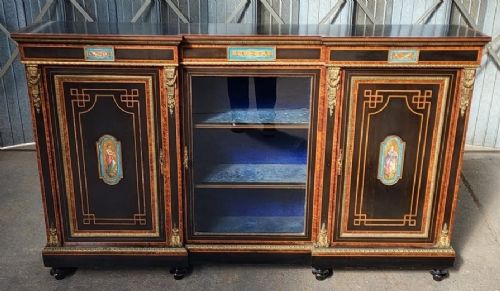
The pieces appearing here span the nineteenth century up to the mid twentieth century, crossing periods from Victorian revivals to Louis-inspired designs. Walnut, burr walnut, and oak dominate the forms, frequently paired with marble tops and decorative mounts.
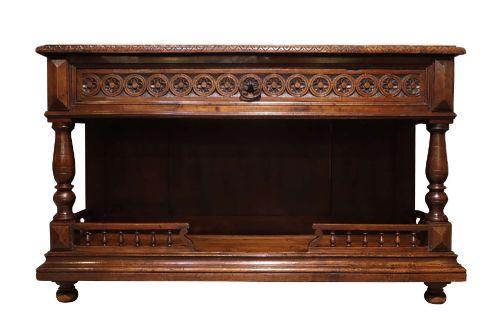
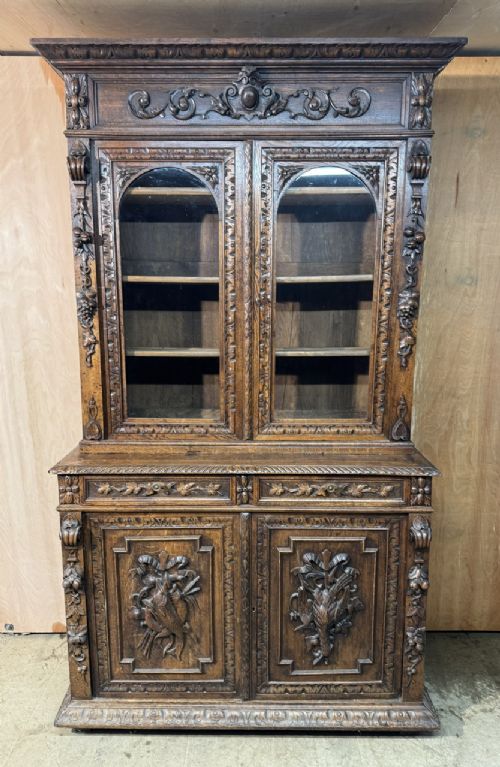
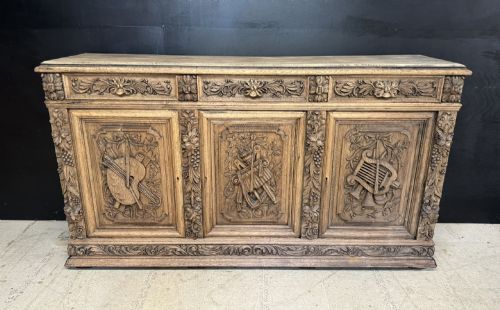
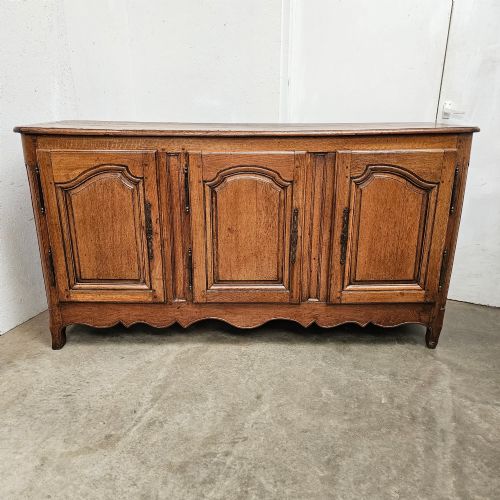
While traditional oak hunting cabinets and heavy sideboards represent the more rustic provincial output, refined credenzas and marquetry-inlaid commodes demonstrate the lighter, more decorative side of this furniture group. Buyers will find both British interpretations of French forms and genuine continental imports.
Materials and Construction
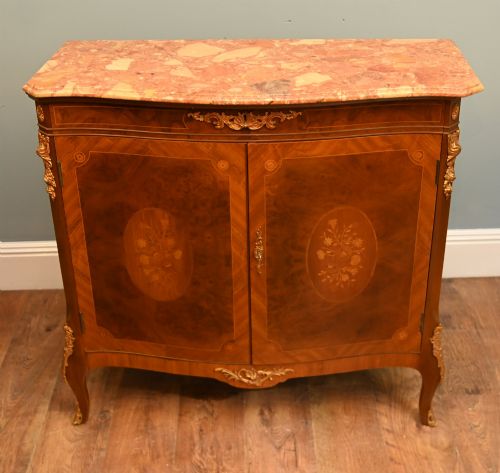
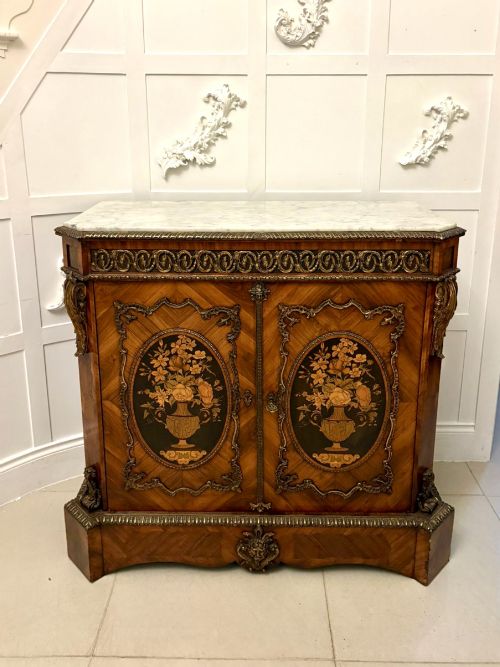
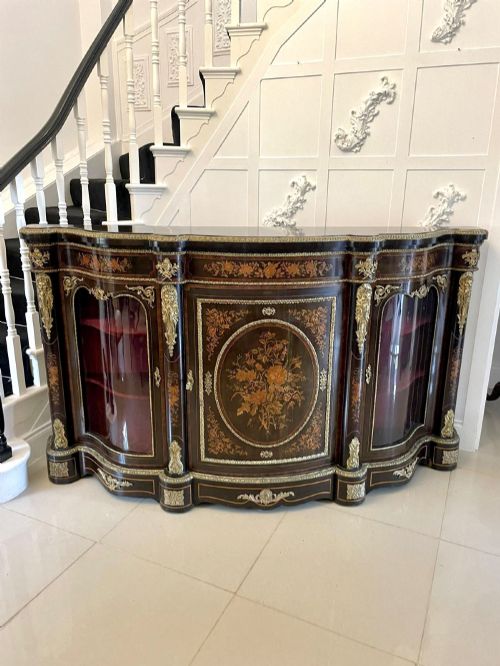
Cabinet makers utilised dense hardwoods such as walnut, oak, and kingwood as the structural foundation for these large storage pieces. Burr walnut veneers and intricate floral marquetry provide the decorative surface patterns that catch the light.
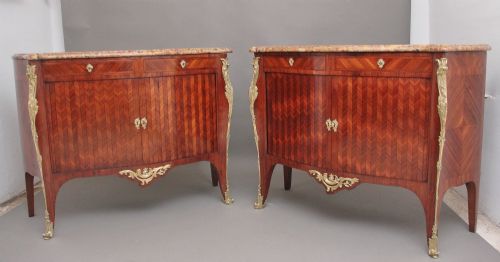
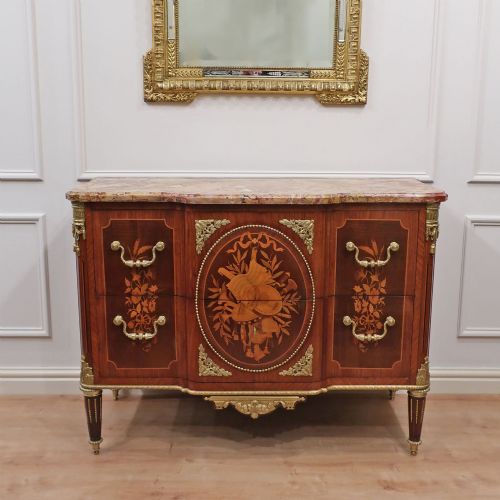
Gilded bronze and brass mounts, known as ormolu, frame the doors, corners, and aprons to accentuate the serpentine and breakfront contours. Polished marble slabs complete the tops of many commodes and credenzas, offering a cool, durable working surface.
Several cabinets conceal their contents behind rams-head mounts and intricate marquetry floral sprays.
Assessing Quality and Execution
The division between standard and exceptional pieces rests upon the precision of the marquetry inlay and the weight of the cast ormolu mounts. Finer examples display hand-chiselled detailing in the bronze work and seamless matching of veneer grains across drawer fronts and curved doors.
Structural integrity reveals itself in the drawer construction and the stability of marble tops fitted securely to carcases. Pieces bearing workshop signatures or attributed to known cabinet makers carry an elevated level of craftsmanship in their internal framing and dovetailing.
Henry Dasson·Weisweiler·Gillows·Maison Gagneau·Charles Dudouyt·Étienne Kohlmann
The French Style Sideboard Glossary
- Ormolu
- Gilded bronze mounts applied to the corners, feet, and friezes of cabinets. This decorative technique adds metallic contrast to dark timber surfaces.
- Credenza
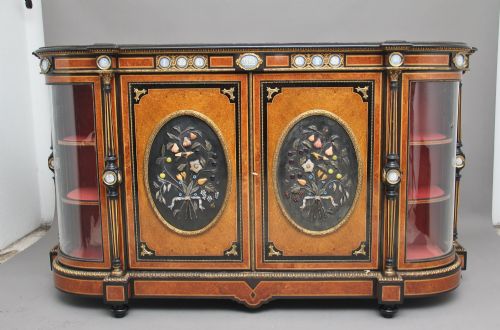
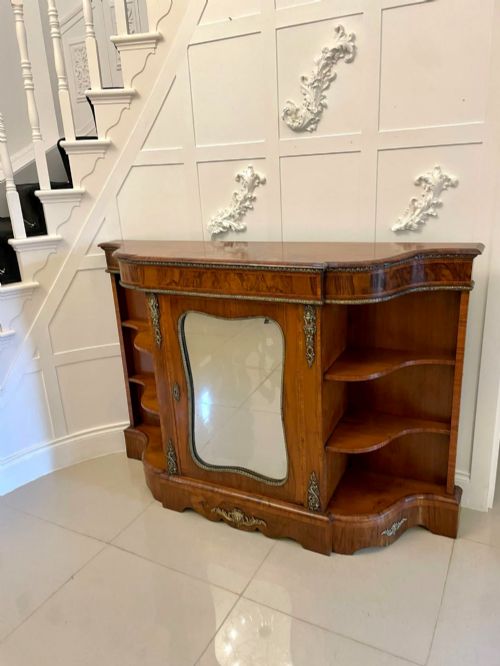
- A low-standing cabinet, frequently featuring glass-fronted side cupboards and central doors. This form often incorporates elaborate marquetry and ceramic plaque inserts.
- Commode
- A low chest of drawers, typically standing on short legs and topped with marble. French commodes often feature serpentine or bombe shapes.
- Enfilade
- A long sideboard or buffet featuring a series of adjoining cabinet doors. This form was traditionally used in grand dining rooms for serving food.
- Marquetry
- The art of applying small pieces of veneer to form decorative pictures and geometric patterns. Cabinet makers use contrasting timbers like walnut, tulipwood, and satinwood.
French Style Sideboard: Frequently Asked Questions
Where should a french style sideboard go?
These substantial cabinets suit dining rooms, grand hallways, or living spaces with high ceilings. Their finished backs and decorative fronts allow them to sit flush against main walls or act as focal room dividers.
Ensure adequate floor space is available for doors and drawers to open fully, particularly with serpentine or breakfront shapes that project further into the room.
How do I care for marble tops?
Wipe marble surfaces regularly with a soft, damp cloth and neutral soap to prevent staining from liquids. Avoid acidic cleaners, vinegar, or citrus products that can etch the polished stone.
Use protective coasters under glasses and heavy decorative objects to guard against scratches and surface rings on antique tops.
What is a credenza?
A credenza is a low-profile cabinet designed for storage and display, often featuring curved glass doors flanked by enclosed side compartments. Originating as a serving table, the form evolved into an elaborate reception room cabinet.
Victorian makers adapted the shape heavily, incorporating marquetry and ormolu mounts to match contemporary drawing-room tastes.
How do I spot a commode?
A commode is a low chest of drawers distinguished by decorative veneers, curved serpentine fronts, and fitted marble tops. They sit lower than standard tallboys and serve as prominent decorative anchor points.
Originating in France, the commode style was widely adopted across Europe during the eighteenth and nineteenth centuries.
What timber is most common?
Walnut and oak appear most frequently across these listings, providing strong structural frames for intricate veneer work. Burr walnut supplies rich, swirling grain patterns used on cabinet doors and tabletops.
Paired with kingwood, tulipwood, and satinwood, these timbers create striking contrasting panels within marquetry designs.