


French Style Lantern
A french style lantern brings architectural presence to a hallway, drawing the eye upwards with glass and metal.
French Style Lantern
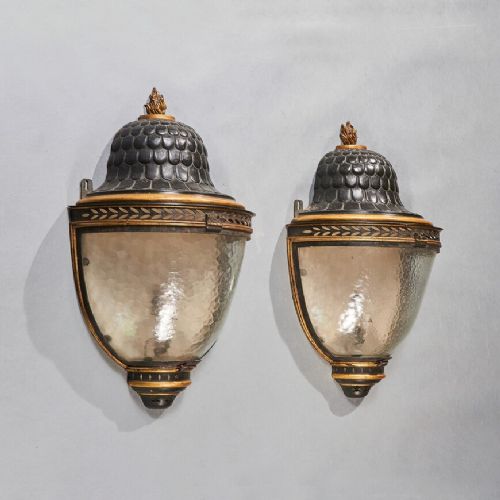
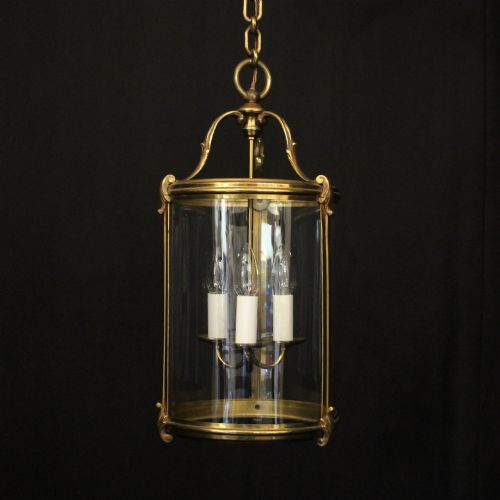
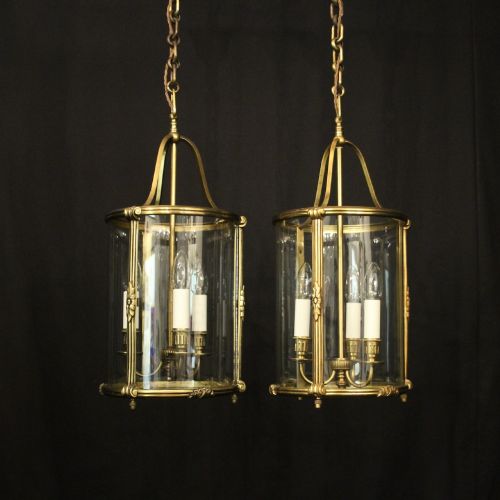
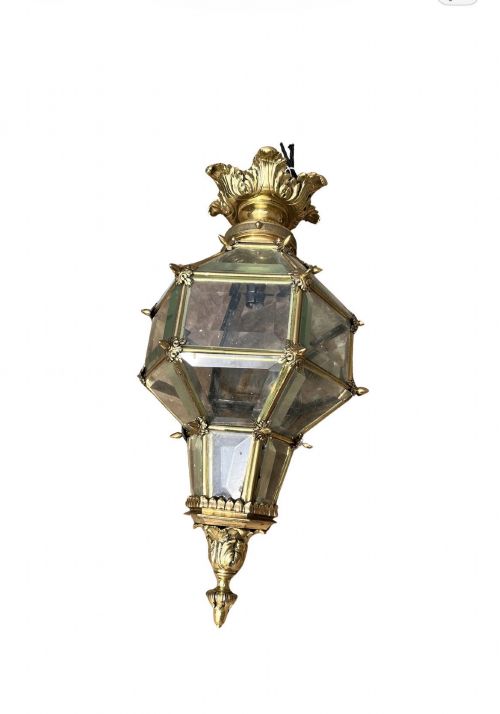
When you search for a french style lantern, you encounter ceiling fixtures, hanging pendants, and wall-mounted carriage lights designed to illuminate grand hallways and reception rooms. The pieces available here draw on historical decorative vocabulary, appearing most frequently in nineteenth-century and early twentieth-century interpretations.
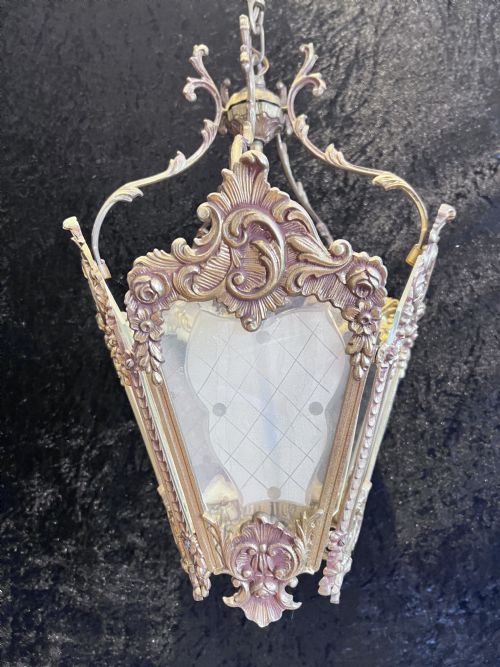
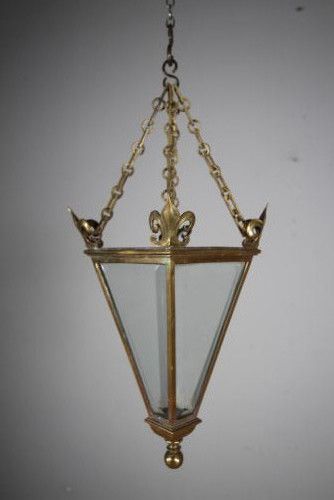
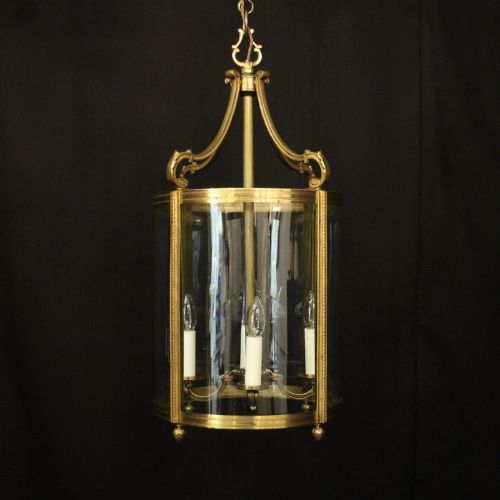
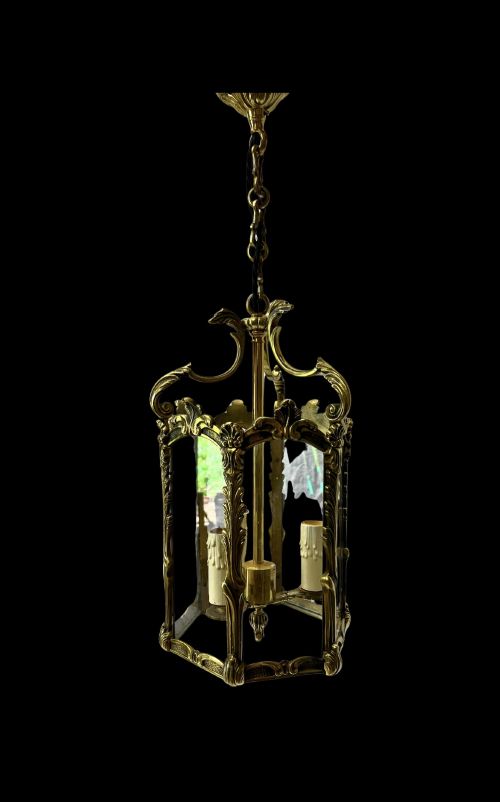
Makers adapted classical vocabulary into various specific silhouettes, ranging from simple hexagonal brass frames to elaborate convex hall lanterns with multiple internal lights. You will find items influenced by specific historical aesthetics, such as French Rococo, Louis XVI style, and the Palace of Versailles.
These fixtures serve primarily as overhead illumination while functioning as prominent interior focal points. They span compact single-light hall fixtures and exceptionally large multi-light bronze or steel constructions.
Materials and Construction
Workshops built these lanterns using sturdy metal frameworks of brass, gilt bronze, polished steel, and wrought iron to support panels of transparent, cut, opaline, or stained glass. Gilded finishes appear frequently, achieved through mercury gilding or gold leaf applied over bronze and brass.
Artisans incorporated decorative metalwork techniques such as repoussé and parcel-gilding to add surface detail to frames and brackets. Tole peinte and polychrome toleware introduced painted tin elements, offering a different textural contrast to polished metals and heavy glass panels.
Listings feature brass, gilt bronze, wrought iron, and glass across periods spanning from the Victorian era into the 1930s.
Evaluating Quality and Detail
The distinction between standard production and superior work lies in the crispness of the cast metal ornamentation and the weight of the bronze or brass framework. Finer examples display deeply chased mounts, intricate foliate scrollwork, and substantial glass elements that fit precisely into their structural rebates.
Hand-finished details, such as complex repoussé work on brackets and well-executed parcel gilding, indicate a higher grade of manufacture. The integrity of the original hanging mechanisms and the integration of multiple light fittings also distinguish ambitious pieces from simpler utility lights.
Perry And Co
The French Style Lantern Glossary
- Convex lantern
- A lighting fixture featuring curved glass panels that bulge outward, designed to disperse light more widely across a space. This shape often maximises illumination in narrow entrance halls.
- Ormolu
- Gilded bronze, where a finely ground gold-mercury amalgam is applied to a bronze base and heated to drive off the mercury. The technique yields a durable and rich metallic lustre.
- Tole peinte
- Painted tinplate or sheet metal used to create decorative light fixtures with colourful surface decoration. It provides a lighter alternative to cast bronze.
- Repoussé
- A metalworking technique where the artisan hammers the design from the reverse side to form raised relief patterns on the front. This method creates ornate textures on lanterns and brackets.
- Gilt bronze
- Bronze that has been coated with a layer of gold leaf or gold wash to impart a bright metallic finish. It resists tarnishing better than untreated base metals.
French Style Lantern: Frequently Asked Questions
Where should I hang a french style lantern?
These fixtures suit high-ceilinged entrance halls, landings, and large reception rooms where their architectural presence can be appreciated from multiple angles.
Ensure you hang the fixture at a height that allows comfortable clearance underneath, particularly above walking paths or staircases.
How do I date an antique lantern?
Dating relies on examining the metal casting techniques, the type of glass used, and the wiring or suspension loops.
Nineteenth-century examples often display hand-finished bronze casting and heavier glass panels, while later twentieth-century pieces show different assembly methods and lighter steel components.
Were these lanterns electrified originally?
Many older pieces were originally designed for candles or oil before being converted to electricity during later periods.
Conversions often occurred in the early twentieth century, meaning current wiring may need professional inspection and updating to meet modern safety standards.
What is the difference between brass and gilt bronze?
Brass is an alloy of copper and zinc, offering a bright golden hue that polishes up easily but can tarnish over time if unprotected.
Gilt bronze utilises a heavier bronze base covered in a gold finish, providing greater structural weight and a deeper, more enduring lustre.