



French Style Girandole Mirror
These french style girandole mirror pieces bring reflective candlelit elegance to a room, offering period charm and decorative wall lighting.
French Style Girandole Mirror
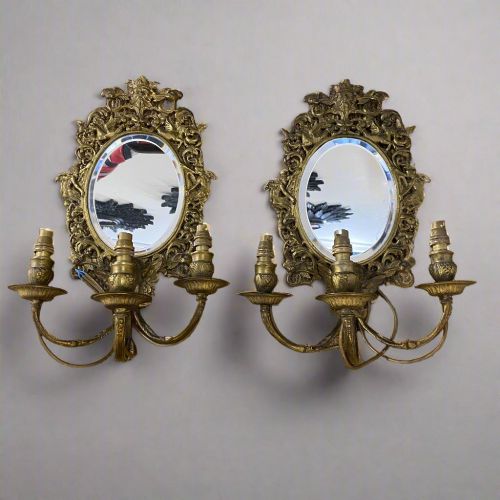
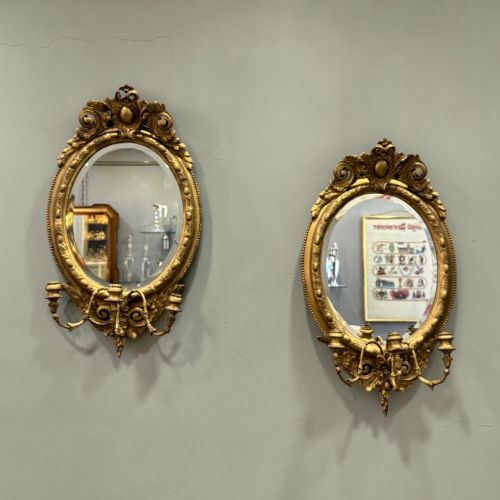
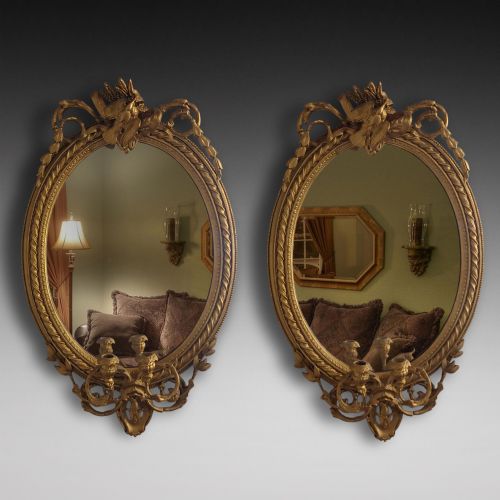
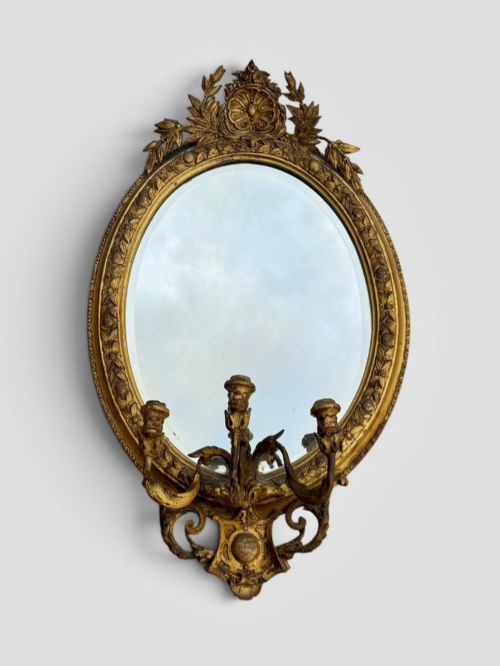
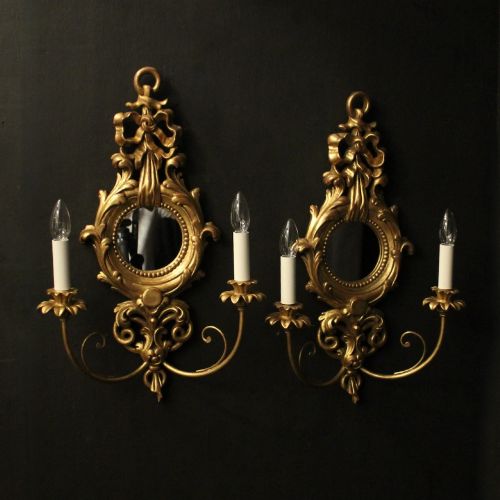
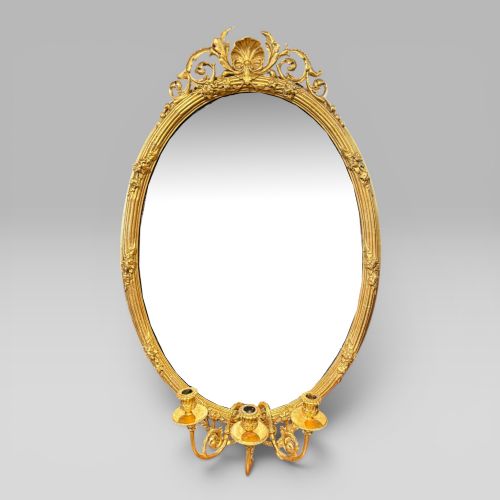
A french style girandole mirror combines a central looking glass with integrated candle arms, designed to multiply the flickering light of candles within a room. When buyers search for this phrase, they encounter decorative wall pieces originating from the Victorian era up through the early twentieth century.
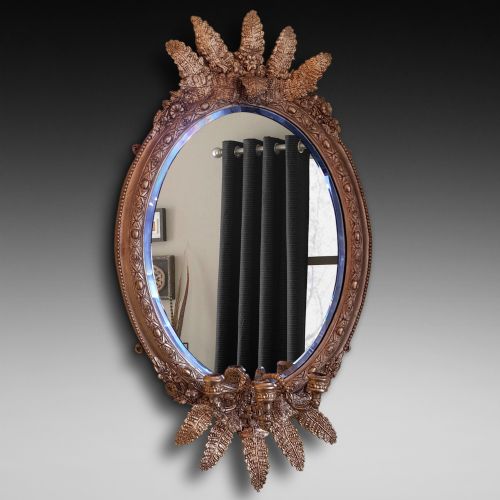
The selections on this page span several decades, including nineteenth-century examples and twentieth-century interpretations. Formats range from single pier mirrors to matched pairs of wall sconces and girandoles.
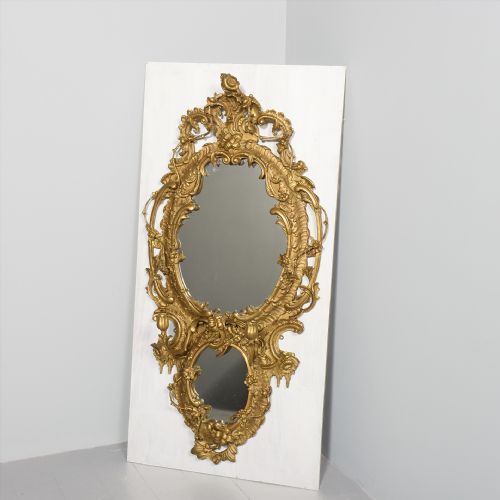
Stylistic influences lean heavily towards Rococo Revival, Louis XVI Revival, and French Chateau aesthetics. These designs deliver ornate detailing suitable for formal living spaces and drawing rooms.
How they were made
Craftsmen built these frames using carved wood, giltwood, or plaster reinforced with gesso, applying gold leaf or paint to the surfaces. Metal components, including brass and gilt metal, also appear in the construction of later pieces from the early twentieth century.
Mirrors utilise glass plates set into decorative surrounds, often accompanied by affixed metal or wooden arms designed to hold candles securely. Carved elements display traditional woodworking techniques alongside moulded plaster detailing.
French Style Girandole Mirror Retail Price Guide 2026
Typical asking prices for french style girandole mirror among the pieces listed under this phrase on Sellingantiques today, from the lower quarter to the upper quarter. They describe what is for sale here now, not the wider market.
Some nineteenth-century makers included rope twist details on their frames to confuse sailors visiting inland drawing rooms.
What varies in quality
Quality rests in the crispness of the carved ornamentation and the depth of the gilding applied to the frame. Finer examples display hand-carved wood details that retain their sharpness, whereas simpler pieces rely on moulded plaster and gesso.
The integrity of the glass and the stability of the candle arms dictate the overall execution. Well-preserved original gilding and robust joinery distinguish superior items from standard decorative alternatives.
The French Style Girandole Mirror Glossary
- Girandole
- A branched candleholder equipped with a reflecting mirror. This combination was originally designed to maximise illumination in candlelit rooms.
- Giltwood
- Wood that has been coated with a thin layer of gold leaf. It forms the lustrous surface seen on many period frames.
- Gesso
- A plaster-like mixture applied to wood surfaces to create a smooth base for gilding and relief carving. It allows for intricate decorative moulding.
- Pier mirror
- A tall mirror designed to hang on the wall between windows. These pieces often feature candle arms beneath the glass plate.
French Style Girandole Mirror: Frequently Asked Questions
What is a french style girandole mirror?
A french style girandole mirror is an ornamental wall glass that incorporates integrated candle holders, designed to reflect and amplify candle light.
These pieces draw on historical aesthetic movements like Rococo and Louis XVI Revival to create decorative focal points for interiors.
Where should I hang a girandole mirror?
These mirrors suit formal reception rooms, hallways, or above mantelpieces where their reflective surfaces and candle arms can be fully appreciated.
Placing them opposite a light source enhances the illumination effect they were originally built to provide.
How do I identify the period of these mirrors?
Dating relies on examining the framing materials, the composition of the gesso, and the style of the carving. Victorian and early twentieth-century pieces often display specific revival characteristics tied to their manufacturing era.
Backboards, fixings, and the characteristics of the mirror glass itself also offer clues to age.
Can I still use the candle arms?
The integrated arms were built to hold wax candles safely during earlier periods of domestic lighting. Modern use requires careful consideration of weight and flame safety if utilised with real candles.