
French Style Dressing Table
When choosing a french style dressing table, you seek the continental elegance and ornamental character defined by revival periods and classical lines.
French Style Dressing Table
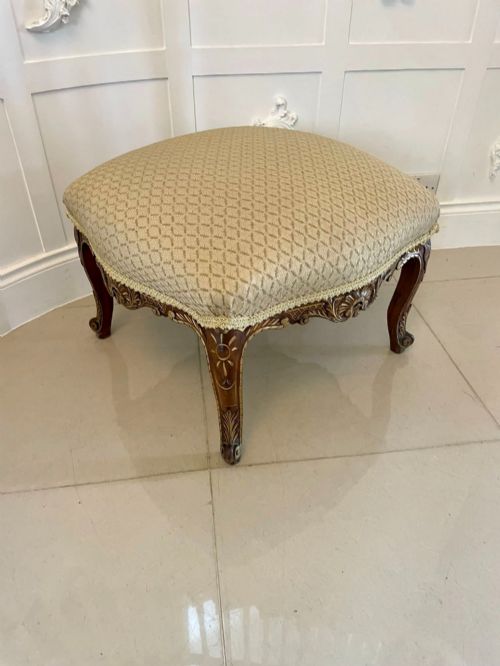
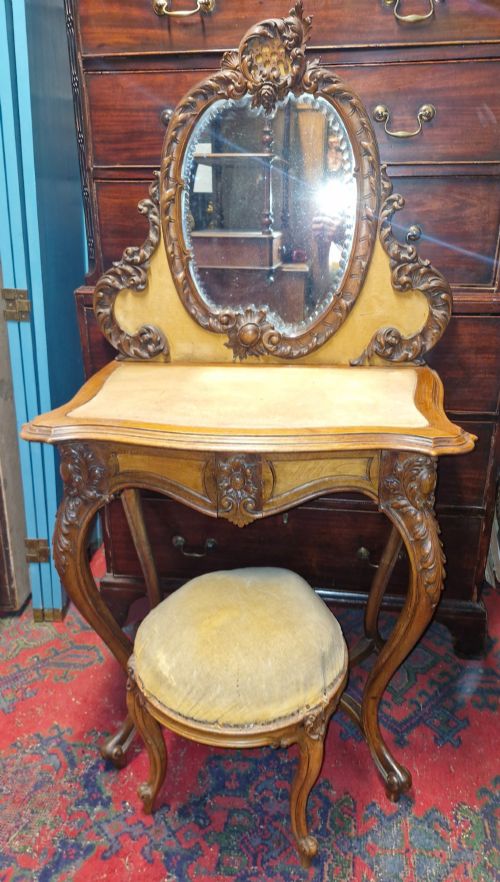
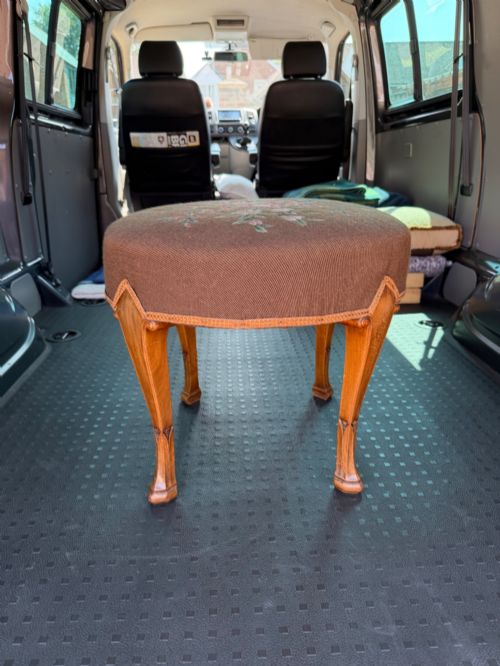
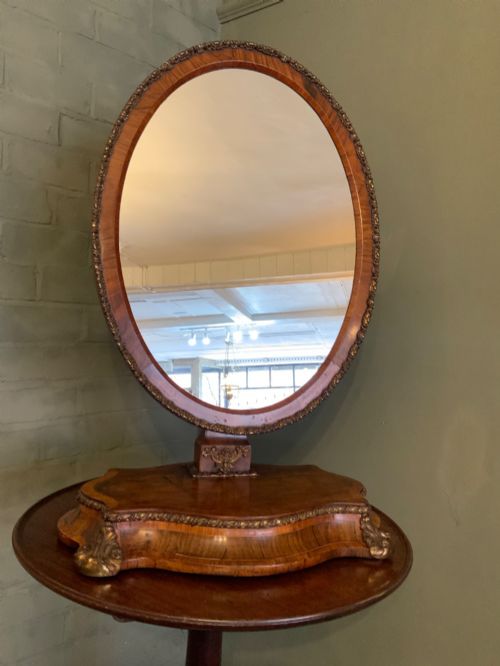
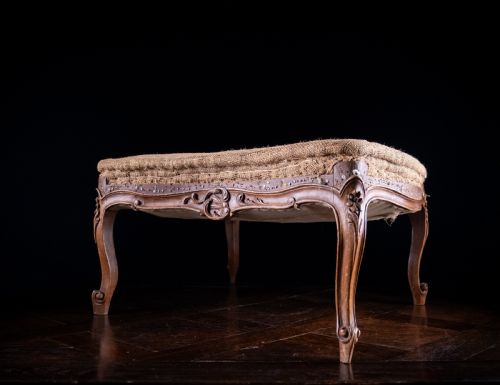
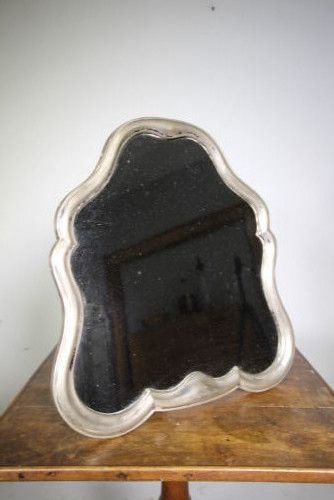
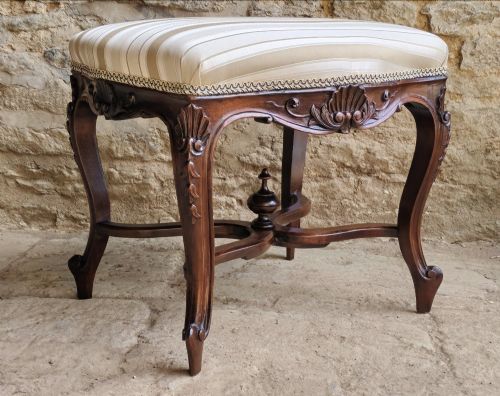
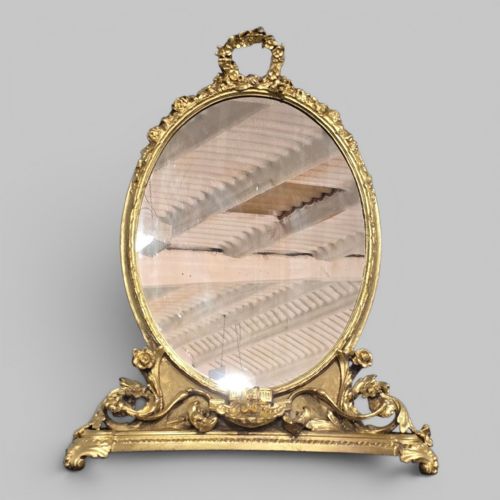
A french style dressing table brings continental form into the bedroom, frequently paired with matching stools or hinged mirrors. The selections span compact walnut poudresses to larger mahogany and tulipwood pieces echoing earlier royal courts.
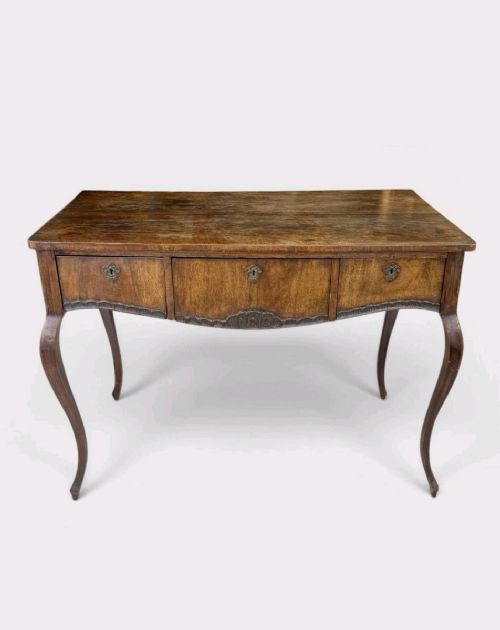
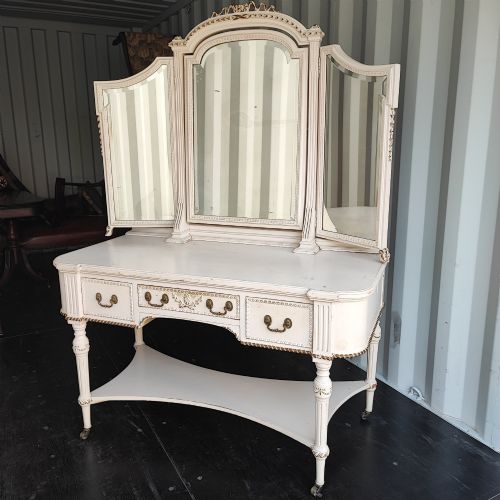
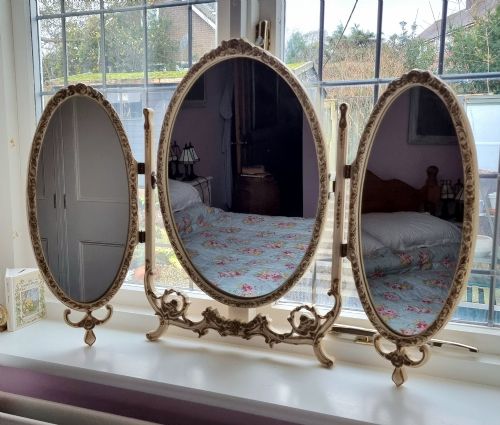
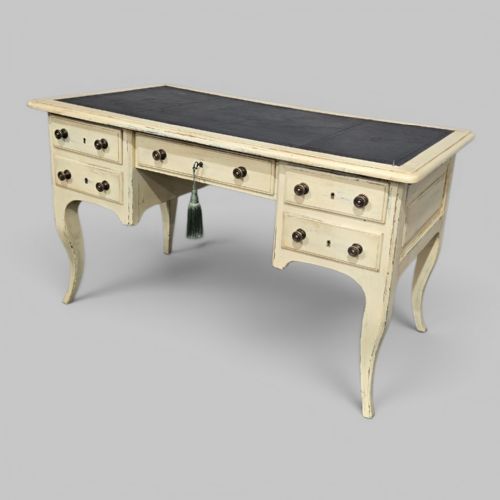
Louis XV and Louis XVI revivals dominate the offerings, identifiable through cabriole legs, delicate mounts, and painted or gilt finishes. Pieces often incorporate folding triptych mirrors or lift-up lids concealing partitioned compartments.
Related forms such as washstands, writing desks, and cheval mirrors share the same vocabulary of carving and applied brass work. Walnut, mahogany, and painted surfaces provide the primary visual weight across the nineteenth and early twentieth centuries.
How They Were Made
Cabinetmakers utilised hardwoods like mahogany, walnut, and oak as structural foundations, frequently applying veneers of tulipwood, satinwood, and kingwood to display varied grain patterns. Carved details in beech or giltwood define the ornamental flourishes on frames and legs.
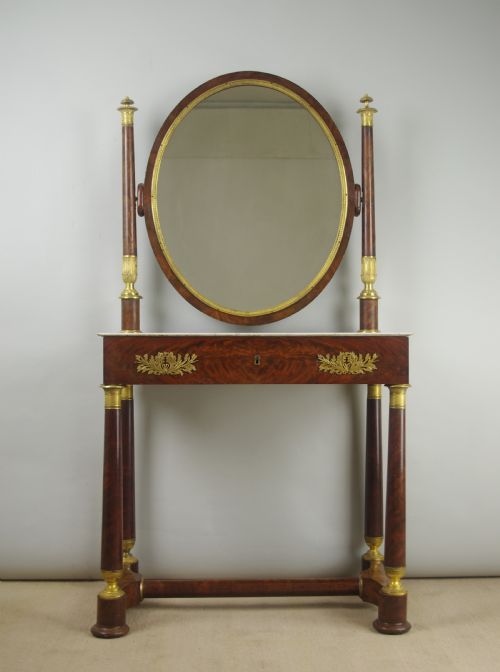
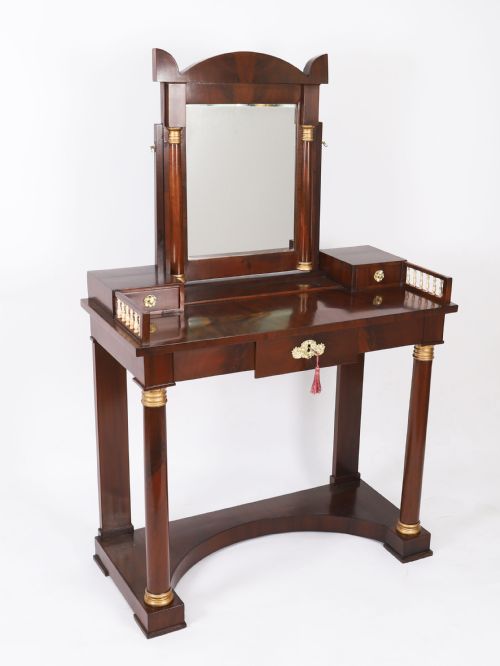
Ormolu mounts and brass hardware are cast and chased, accentuating structural lines and corners on Empire and Louis revival pieces. Glass forms the primary element in pivoting table mirrors and triple dressing frames.
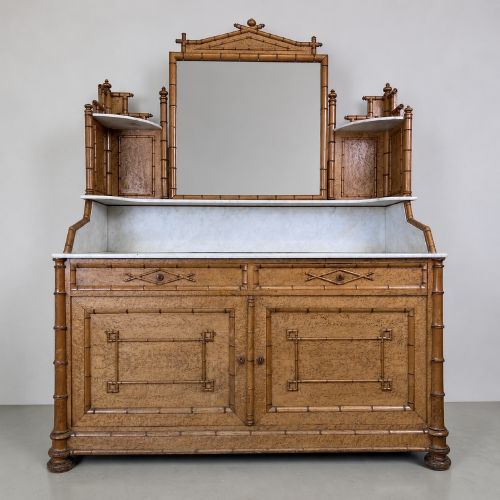
Painted finishes and faux-bamboo effects appear on lighter chambers pieces, alongside marble tops utilised on washstands and dressing cabinets for practical durability.
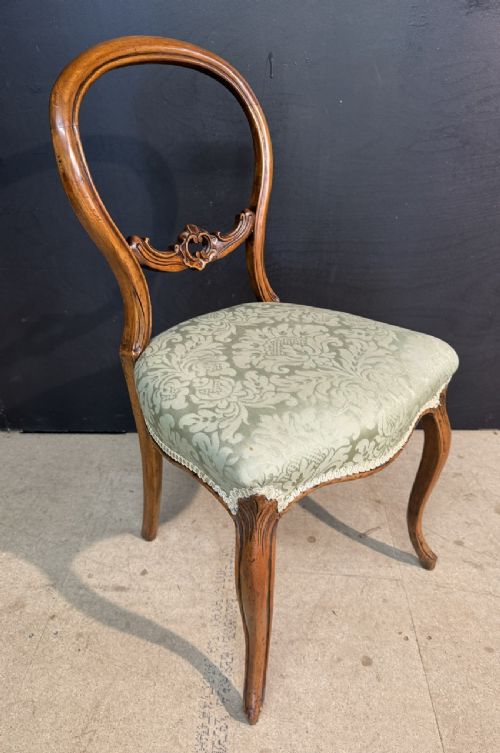
The archive includes specialised forms such as folding triptych mirrors, caned dressing chairs, and marble-topped washstands.
What Varies in Quality
The refinement of the carving separates standard production from exceptional examples, particularly in the hand-chiselled depth of ormolu mounts and the fluidity of cabriole legs. Crisp joinery in drawer construction and well-figured veneer matching indicate superior cabinetmaking.
The integration of original folding mirror frames and matching stools adds internal consistency to a suite. Surviving original glass, unbroken marble slabs, and intact gilt or painted surfaces preserve the intended aesthetic balance.
Maples of London and Paris
The French Style Dressing Table Glossary
- Ormolu
- Gilded bronze applied as decorative mounts on furniture. It provides metallic contrast against dark mahogany and walnut surfaces.
- Poudreuse
- A French vanity table equipped with a hinged top and internal compartments for cosmetics and grooming implements. These often feature folding mirrors.
- Cabriole leg
- A furniture leg that curves outward and then tapers inward with a pad or scroll foot. This shape derives from animal limbs and typifies Louis styles.
- Cheval glass
- A full-length mirror hung in a frame that permits it to swing at an angle. They appear frequently on dressing tables from the nineteenth century onward.
- Kingwood
- A dense, richly figured exotic wood utilised for decorative veneers. It displays dark violet-brown tones with lighter golden streaks.
French Style Dressing Table: Frequently Asked Questions
What defines a French style dressing table?
These pieces draw inspiration from historical royal periods, notably the reigns of Louis XV and Louis XVI, incorporating curved cabriole legs, elaborate wood veneers, and classical brass or ormolu mounts.
They frequently feature integrated mirrors, such as folding triptychs or oval swiveling plates, alongside specialised compartments for toiletries.
How do I distinguish Louis XV from Louis XVI styles?
Louis XV furniture relies on asymmetrical curves, flowing organic lines, and pronounced cabriole legs that embody the Rococo spirit.
Louis XVI pieces pivot toward neoclassical symmetry, featuring straight fluted legs, rectangular proportions, and geometric architectural details.
Were these tables made in pairs?
Dressing tables were generally produced as singular chamber items, though they were frequently accompanied by matching stools, washstands, or bedside cabinets.
Stools found in current collections often share identical wood types and carving motifs to complete a bedroom suite.
How should I care for marble tops?
Marble surfaces require regular dusting with a soft cloth and immediate cleaning of spills to prevent staining on porous stone varieties.
Avoid abrasive cleaners or acidic substances that can etch the polished finish of nineteenth-century tops.