
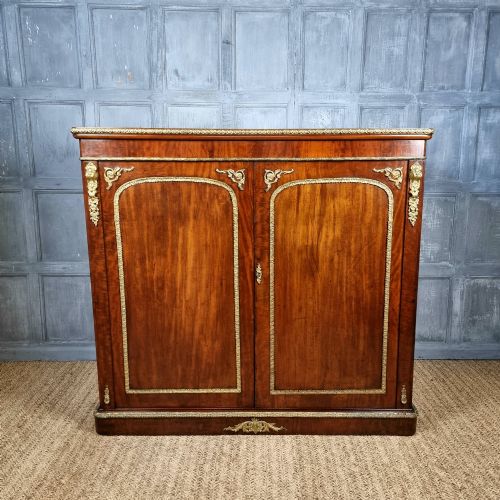


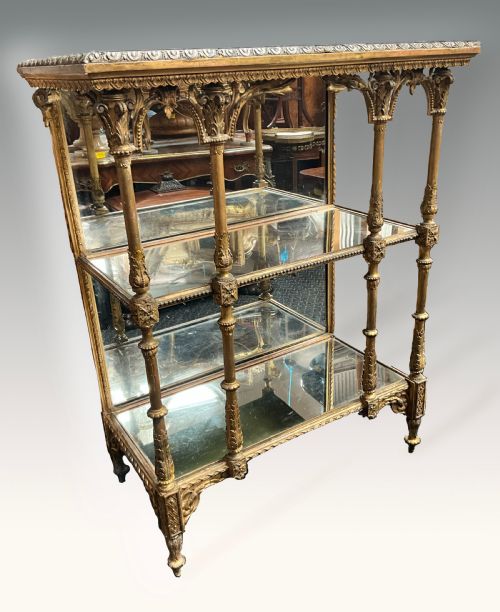


French Style Chiffonier
A french style chiffonier offers refined low storage for the salon or drawing room, combining practical shelving with display space in classic timber.
French Style Chiffonier
When you search for a french style chiffonier, you look at low standing cabinetry designed to hold linen, silver or books while providing a surface for decorative objects. The pieces appearing here span the nineteenth century and the early twentieth century, drawing on French Empire, Louis XVI and Napoleon III aesthetics.
Most examples you meet on this page take the form of side cabinets, credenzas and marble topped chests in rich timbers. They bridge the gap between heavy formal sideboards and lighter display furniture, suiting modern rooms that need architectural presence without excessive height.
How they were made
Cabinet makers built these pieces using solid frames of mahogany, walnut and rosewood, often applying burr walnut or exotic veneers to the main surfaces for dramatic grain patterns. Structural strength relied on traditional joinery while decorative impact came from contrasting inlay and polished timber finishes.
Many items incorporate heavy white or veined marble tops and cast brass orormolu mounts, reflecting the luxury tastes of the nineteenth century. Gilt wood, gesso and painted panels also appear on specific revival pieces to catch the light within a formal interior.
Listings feature mahogany, burr walnut, rosewood and marble, spanning the nineteenth century through to the nineteen thirties.
What varies in quality
The degree of refinement in the timber selection and the crispness of the brass or ormolu mounts dictate the standing of a piece. Better examples display careful bookmatching in burr walnut or mahogany veneers alongside finely chased metalwork rather than cast repeats.
Structural integrity, including the smooth running of drawers and the original fit of doors, separates standard utility furniture from exhibition grade items. The inclusion of intact marble slabs and original mirrored backs further elevates the stature of an individual cabinet.
Gillows
The French Style Chiffonier Glossary
- Ormolu
- Gilded bronze mounts applied to furniture for decorative contrast. The technique involves treating bronze with an amalgam of mercury and gold.
- Burr walnut
- Timber taken from a tree growth that produces swirling, highly decorative grain patterns. Cabinet makers prized this wood for veneering prominent surfaces.
- Credenza
- A sideboard or buffet cabinet used for storage and serving. Nineteenth century versions often incorporate glass doors and delicate brass mounts.
- Gesso
- A plaster mixture applied to wood surfaces as a base for gilding or painting. It allows artisans to carve intricate relief details before applying gold leaf.
French Style Chiffonier: Frequently Asked Questions
What is a french style chiffonier used for?
These cabinets provide convenient low storage for dining rooms or living spaces while offering a flat surface for lamps and ornaments. Their enclosed cupboards keep objects dust free.
Historically they held silverware, linens or writing materials close at hand. Today they function well as media consoles or statement side tables.
How do I identify a nineteenth century piece?
Look closely at the timber construction, drawer linings and backboards for signs of traditional hand tool work. Secondary woods like pine or oak often show age patination.
Stylistic cues such as French Empire mounts, marble slabs and Louis XVI revival details point directly to nineteenth century workshop practices.
Are marble tops original to these cabinets?
Marble tops frequently appear on French Empire and Napoleon III side cabinets to provide a durable and luxurious surface. Most remain original to the piece.
When inspecting a marble top, check the edge profile and the way it seats on the wooden frame to confirm it belongs to the cabinet.
How do I care for burr walnut and mahogany?
Keep wooden cabinets away from direct sunlight and steady heat sources to prevent the burr walnut and mahogany veneers from drying out or cracking. Dust them regularly with a soft dry cloth.
Apply a traditional beeswax polish sparingly to nourish the timber and maintain the polished surface without building up excessive residue.