


French Style Brass Lantern
These french style brass lantern pieces bring ornate European illumination into an interior, offering classic hanging and wall-mounted forms for hallways and reception spaces.
French Style Brass Lantern
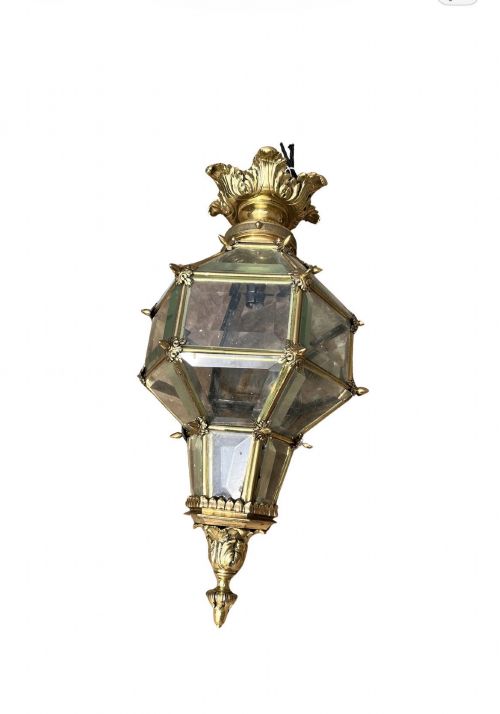
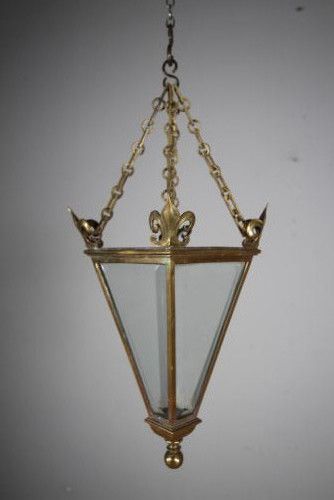
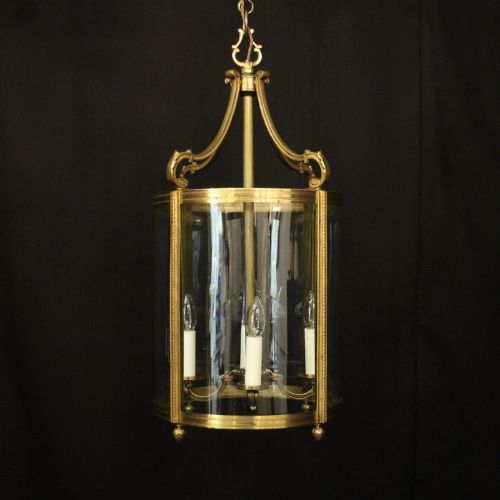
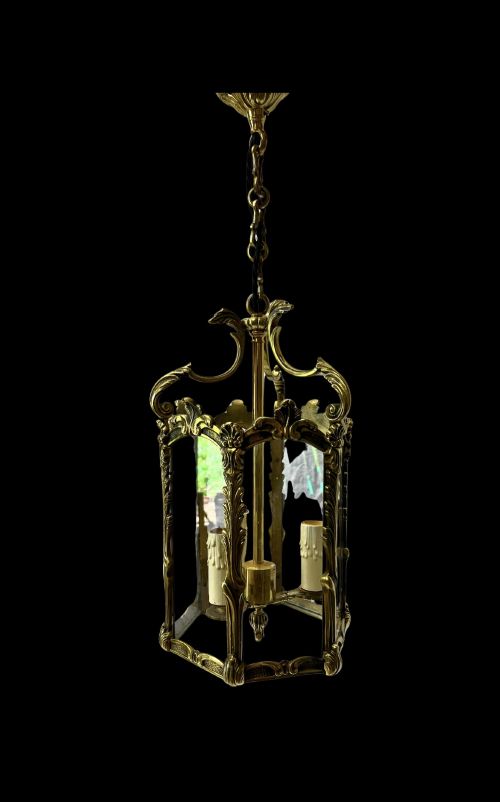
When you search for a french style brass lantern, you are looking at decorative hanging lights, wall lanterns, and ceiling fixtures shaped by historic French design traditions. The pieces gathered here span the nineteenth century, the Victorian era, and early twentieth-century decades up to nineteen thirty.
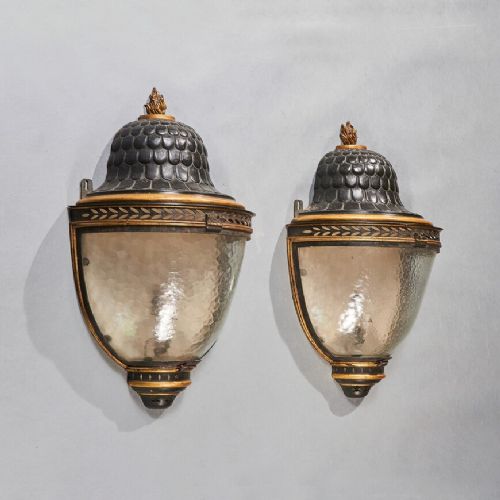
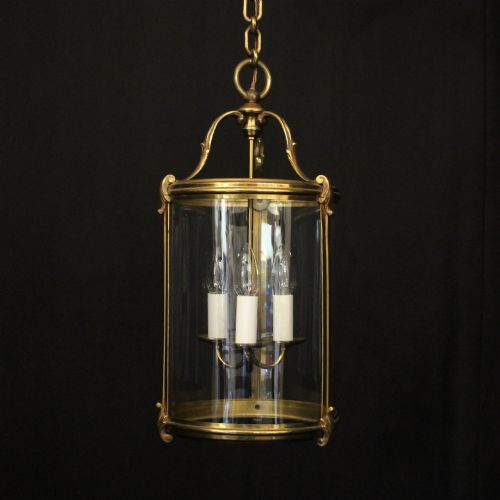
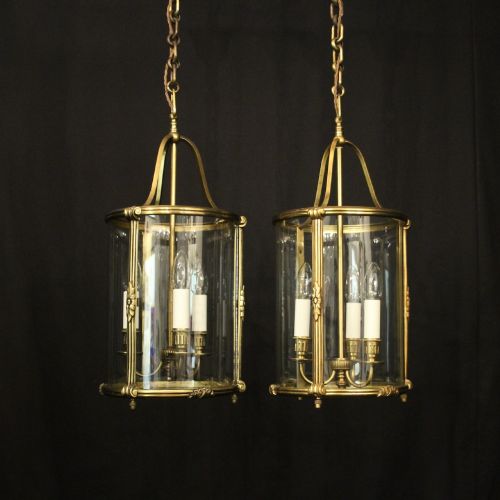
You will frequently meet hall lanterns, hanging pendants, and convex glass forms that reflect styles such as French Rococo, Louis XVI, Empire, and neoclassical taste. These fixtures originate primarily from French design vocabularies, often taking the form of glazed metal frames designed to cast warm interior illumination.
How they were made
The construction of these pieces relies on metalwork combining brass, bronze, or steel frames with fitted glass panels. Many examples feature gilded brass, gilt bronze, or ormolu surfaces applied over the base metal to create a rich metallic sheen.
Glass components vary from flat panes to convex and cut glass panels, occasionally paired with opaline elements or etched details. Structural mounts and decorative elements are cast or chased, then assembled to hold single or multiple interior lights.
Listings feature periods spanning from Victorian and nineteenth-century designs through to nineteen thirty, constructed in brass, gilt bronze, steel, and glass.
What varies in quality
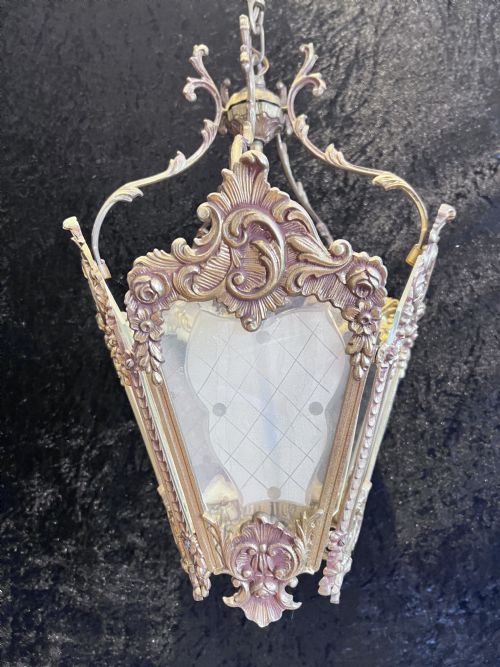
The distinction between tiers of quality rests on the crispness of the cast metal ornamentation and the depth of the gilding. Finer examples display carefully chased acanthus leaves, rococo scrolls, or neoclassical appliques that remain sharp and well-defined.
Quality also shows in the weight of the bronze or brass frame, the thickness and clarity of the curved or cut glass, and the integration of structural components like Tole Peinte or opaline glass.
Perry And Co
The French Style Brass Lantern Glossary
- Ormolu
- A gilded bronze technique utilising finely ground gold mercury mixtures applied to cast bronze objects. This process imparts a rich golden finish characteristic of high-end decorative metalwork.
- Convex glass
- Curved glass panels shaped to bulge outward from the lantern frame. This design broadens the optical spread of light from internal bulbs or candles.
- Tole Peinte
- Painted sheet metal used to form decorative elements on light fixtures. It introduces painted colour surfaces alongside polished brass and bronze frames.
- Gilt bronze
- Bronze metal treated with a gold leaf or gilt surface layer. The technique combines the structural strength of bronze with a bright golden exterior.
- Rococo
- An ornate decorative style featuring asymmetrical scrolls, C-curves, and naturalistic plant motifs. It heavily influences the swirling brass frames of nineteenth-century lanterns.
French Style Brass Lantern: Frequently Asked Questions
Where should I hang a french style brass lantern?
These lanterns suit high-ceilinged hallways, entrance vestibules, and stairwells where their hanging forms can act as focal points. They also function well in principal reception rooms as central ceiling pendants.
Smaller wall lanterns provide symmetrical accent lighting beside architectural doorways or period mirrors. Ensure the drop height matches your ceiling clearance before installation.
How do I distinguish Louis XVI style from Rococo lanterns?
Louis XVI style pieces favour symmetry, straight lines, neoclassical urn motifs, and crisp geometric framing. They reflect a more restrained, classical architectural discipline.
Rococo lanterns, by contrast, embrace asymmetrical scrolling foliage, shell motifs, and exuberant organic curves. The brass or gilt bronze frames twist and flow without rigid geometric symmetry.
Are these lanterns electrified for modern wiring?
Many surviving examples have been adapted over time to accept modern electrical internal fittings and multi-light bulb clusters. Listings often specify single-light, triple-light, or four-light configurations.
Buyers should inspect the internal wiring status of any vintage fixture upon receipt. Professional rewiring can be arranged to meet current domestic electrical safety standards.
What materials make up these antique lanterns?
The primary structural materials are brass, bronze, gilt bronze, and steel, frequently enhanced with applied surface gilding. Glazing consists of clear, convex, cut, or opaline glass panels.
Some exceptional variations incorporate painted sheet metal known as Tole Peinte. Each combination contributes to the weight, colour tone, and light diffusion of the individual piece.