
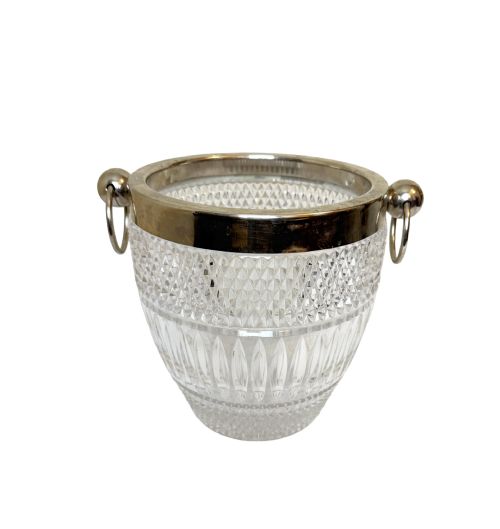


French Silver Champagne Bucket
A french silver champagne bucket brings unmistakable dining table elegance, holding ice and bottles in gleaming style.
French Silver Champagne Bucket
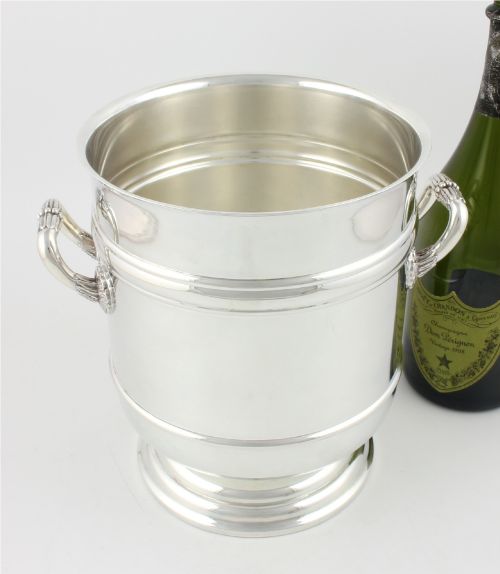
A french silver champagne bucket is a barware vessel designed for chilling wine and champagne at the table. These coolers appear across multiple decades, including the Belle Epoque, Art Deco, and Mid-Century Modern periods.
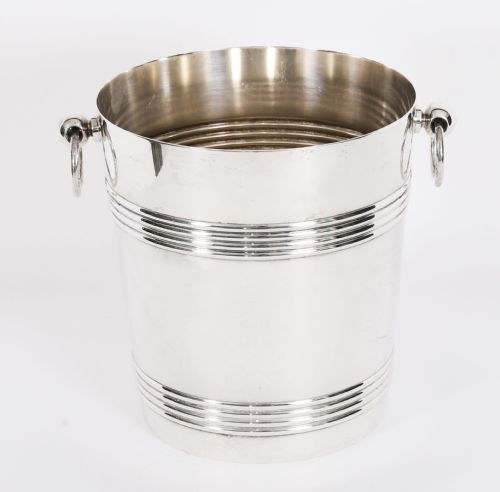
Most examples found here utilise silver-plate over base metal or pewter, frequently taking the form of ring-handle coolers or deep champagne bowls. Objects range from restrained corporate designs to heavily embossed restaurant pieces.
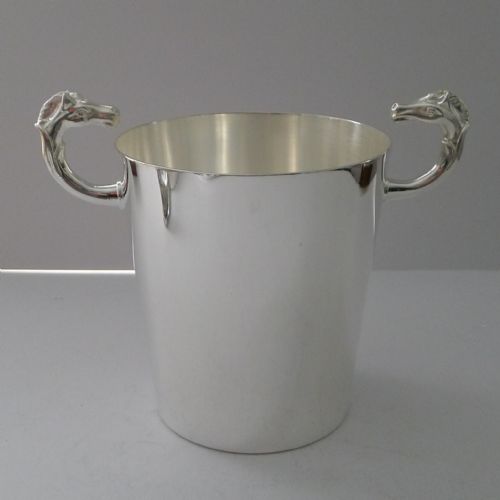
Makers in Paris such as Christofle, Ercuis, and Puiforcat produced distinct variants, alongside individual designers like Luc Lanel and Lino Sabattini. Buyers encounter everything from equestrian themed horse head buckets to geometric Art Deco cylinders.
Materials and construction
Makers shaped heavy base metals and pewter before applying silver plating to achieve a brilliant reflective surface. Many pieces incorporate cast handles shaped as lions, foo dogs, grapes, or equestrian motifs.
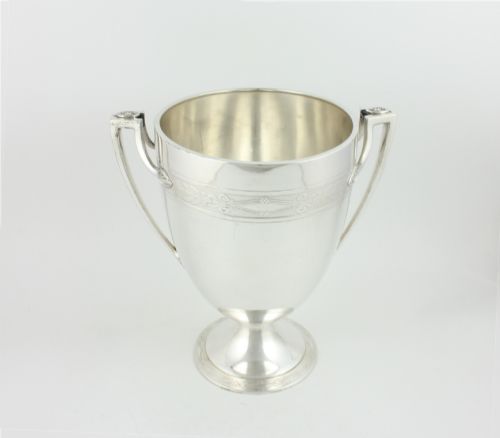
Art Deco and mid-century items often utilise clean geometric lines, while earlier examples display elaborate embossing. Cut crystal inserts appear in combination with silver-plate for dual-purpose ice buckets.
Some mid-century champagne buckets feature sculpted horse heads, turning a practical ice vessel into an equestrian sculpture.
Assessing quality
The distinction between standard production and top tier work rests on the weight of the metal and the authority of the design. Pieces created by named designers and prominent Parisian houses display superior heft and balance.
Subtle details in the casting of handles and the crispness of maker marks separate mass-market barware from exceptional studio output.
Christofle·Ercuis·Puiforcat·St Medard·Luc Lanel·Lino Sabattini·Le Chardon·Andre Laine
The French Silver Champagne Bucket Glossary
- Silver-plate
- A thin layer of silver bonded to a base metal substrate. This technique allowed makers to produce substantial vessels without the cost of solid silver.
- Art Deco
- A design style dominant in the 1920s and 1930s emphasising geometric shapes and streamlined forms. It remains a defining aesthetic for many wine coolers.
- Gallia
- A high quality silver-plate alloy developed and utilised by Christofle. It marked luxury tablewares produced through the early and mid twentieth century.
- Pewter
- A malleable alloy of tin mixed with copper and antimony. Several restaurant bowls utilise this durable material for heavy commercial service.
- Base metal
- The underlying metallic body of plated items, typically brass, copper, or nickel-silver. It provides structural rigidity to the cooler.
French Silver Champagne Bucket: Frequently Asked Questions
How do I clean a silver plated bucket?
Wash gently with warm soapy water and a soft cloth to remove everyday residue.
Avoid abrasive polishes that might wear down the silver-plate over years of maintenance.
Can these buckets hold wine bottles too?
These vessels accommodate standard wine bottles alongside champagne.
Their generous internal dimensions suit any bottled beverage requiring chilling.
How do I date an Art Deco piece?
Examine the geometric styling, stepped bases, and maker marks characteristic of the 1920s and 1930s.
Design patents and studio stamps often confirm the specific decade of production.
Were these used in restaurants?
Many heavy pewter and silver-plate bowls originated in bustling Paris dining establishments.
Commercial service requirements dictated their robust construction and deep basins.