

French Serpentine Side Table
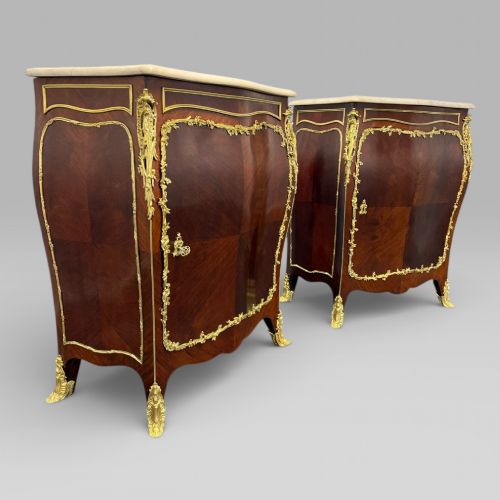
A French serpentine side table brings together flowing curved woodwork and classical revival styles from the nineteenth century.
French Serpentine Side Table
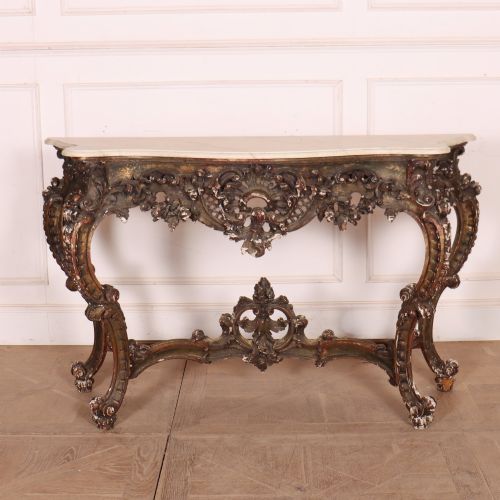
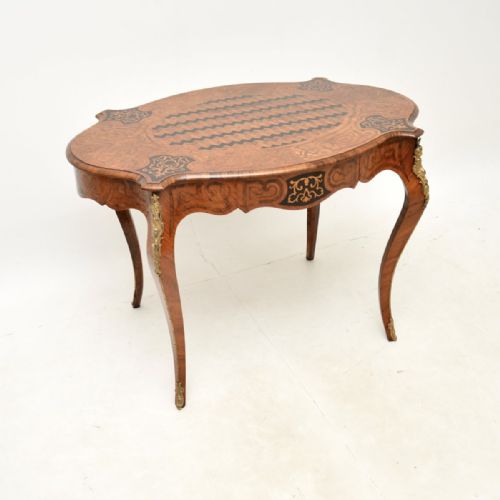
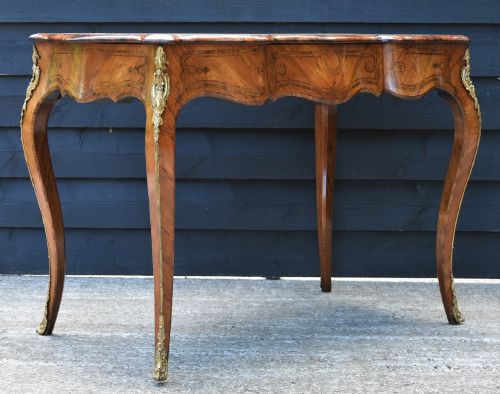
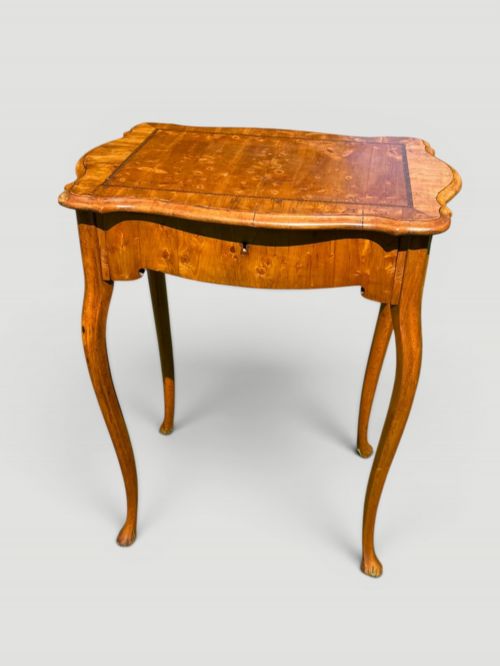
A french serpentine side table is a functional surface defined by its distinctive undulating front edge, following eighteenth-century revival designs popular across the nineteenth century.
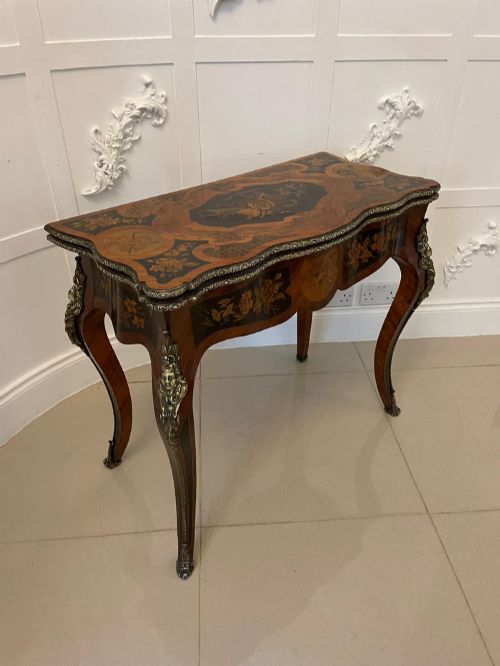
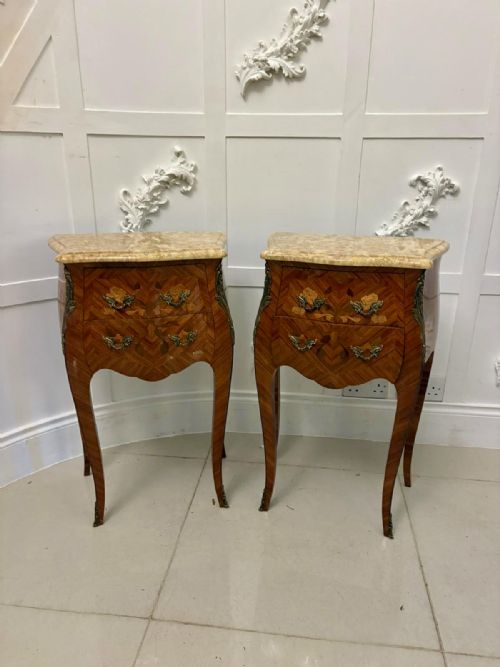
Most examples found in current and archived stock date from the nineteenth century into the early twentieth century, encompassing forms such as console tables, bedside cabinets, and card tables.
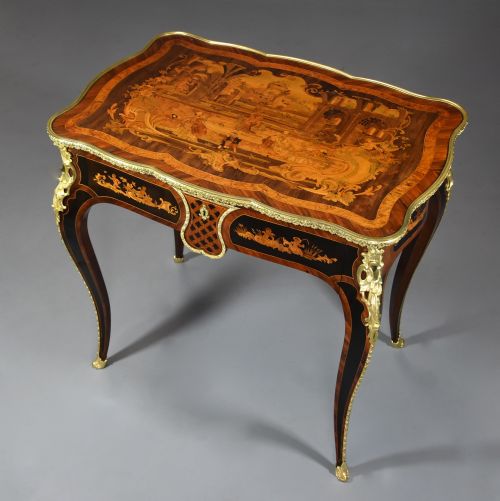
These pieces frequently display the influence of Louis XV and Louis XVI styles, marked by asymmetrical curves, floral marquetry, and sculptural mounts.
Materials and Construction
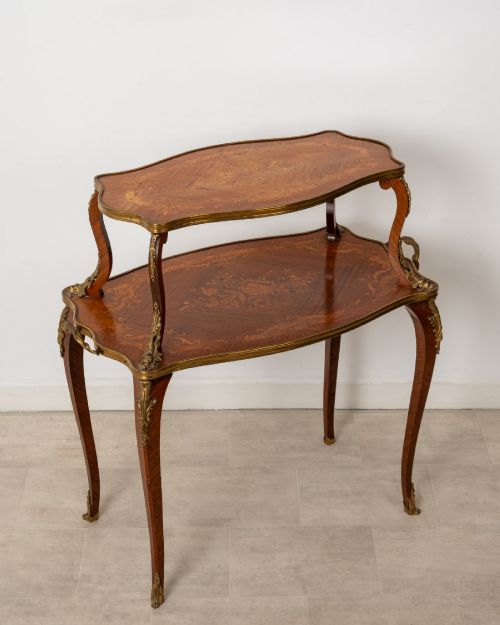
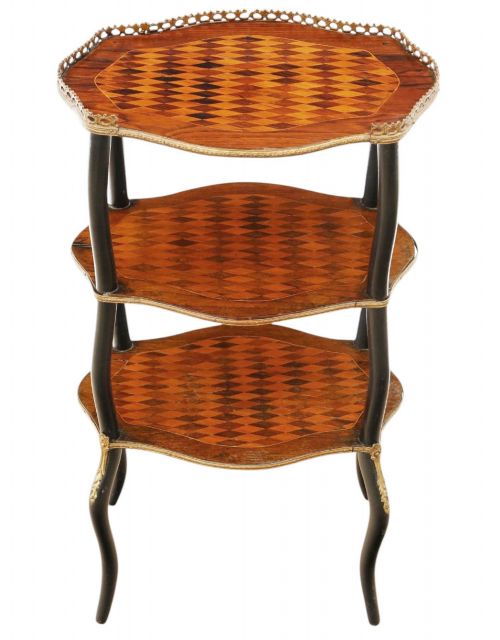
Cabinetmakers utilised dense hardwoods like kingwood, walnut, rosewood, and mahogany as substrates, often applying intricate marquetry and parquetry geometric patterns across curved surfaces.
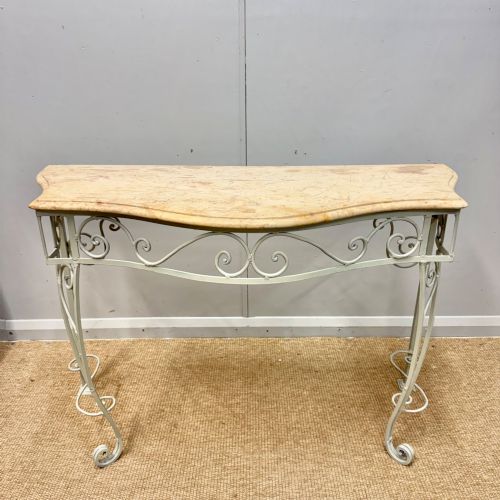
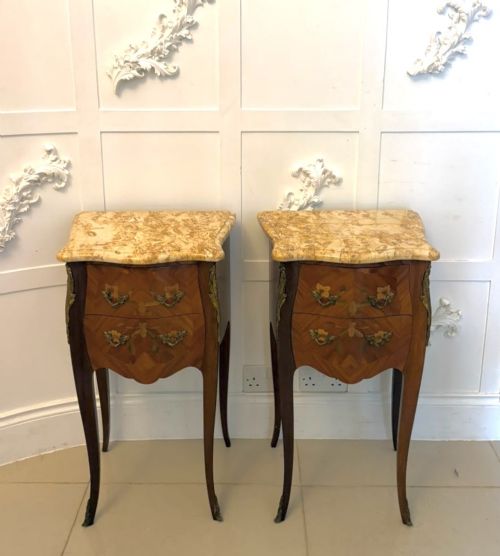
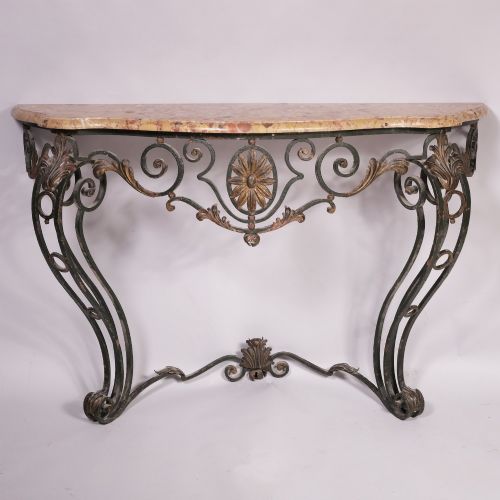
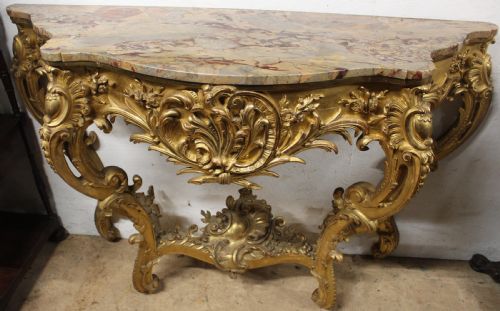
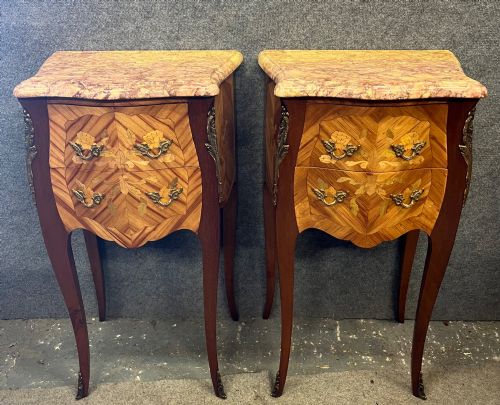
Gilded bronze ormolu mounts and brass details edge the contours and protect the corners, while shaped marble tops provide durable, smooth surfaces on console and bedside variants.
Listings feature walnut, mahogany, rosewood, and kingwood alongside marble tops and cast ormolu mounts.
Assessing Craftsmanship
Quality rests in the precision of the serpentine curve, where fluid lines demand expert woodworking to ensure the grain follows the undulations seamlessly.
The refinement of the cast ormolu mounts and the complexity of the wood marquetry differentiate standard production from exhibition-grade pieces.
E. Kahn·Maison Millet
The French Serpentine Side Table Glossary
- Serpentine
- A curved line that bends inward and outward in a continuous flowing wave. This shape requires advanced cabinetmaking to execute across a wooden frame.
- Ormolu
- Gilded bronze used for decorative mounts and furniture trim. It accentuates the structural lines of nineteenth-century revival pieces.
- Marquetry
- Decorative veneer applied to furniture in pictorial or patterned designs. Craftsmen cut different woods to form floral or geometric compositions.
- Console table
- A table designed to stand against a wall, frequently topped with marble. Many nineteenth-century versions feature carved giltwood or inlaid timber.
- Parquetry
- Geometric wood inlay forming repeating patterns like cubes or herringbone. It demonstrates precise carpentry across tabletops and cabinet fronts.
French Serpentine Side Table: Frequently Asked Questions
What rooms suit a french serpentine side table?
These tables adapt well to living rooms as lamp tables or hallways as console tables. Their curved profiles soften straight architectural lines.
Marble-topped variants also function effectively as bedside cabinets or occasional surfaces in bedrooms.
How do I identify the period?
Nineteenth-century pieces often combine Louis XV revival aesthetics with dense kingwood or walnut veneers. Look at the construction methods and wood ageing beneath the surface.
Later twentieth-century versions tend to feature simplified marquetry and lighter structural framing.
Were these tables used for writing?
Certain forms function specifically as desks or writing tables alongside standard side and console tables. Bureau plat and writing variants incorporate drawers fitted beneath the undulating top.
Card tables with folding tops also appear within this group for parlour games.
Why do some tables feature marble tops?
Marble provides a heavy, durable surface that complements console and bedside tables. It protects the wooden frame underneath from spills and heavy objects.
White and veined marble slabs were standard additions to nineteenth-century French revival designs.