




French Serpentine Credenza
A French serpentine credenza brings together curved timber, marquetry and metal mounts to anchor a room.
French Serpentine Credenza
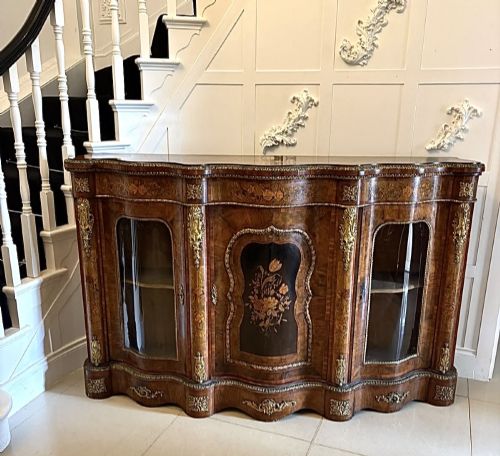
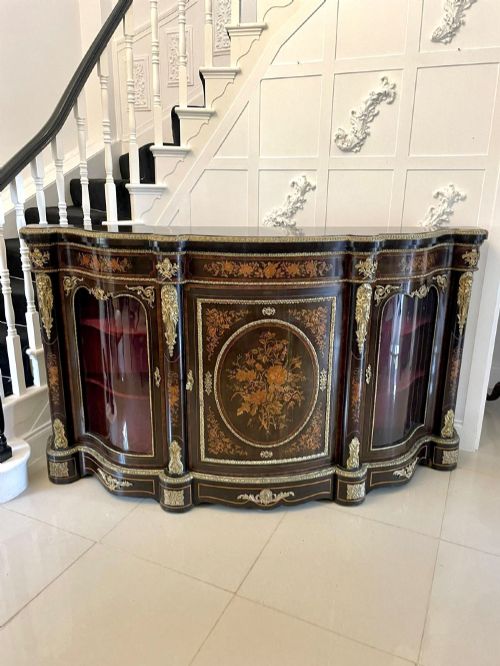
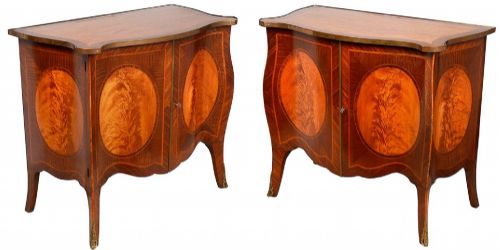
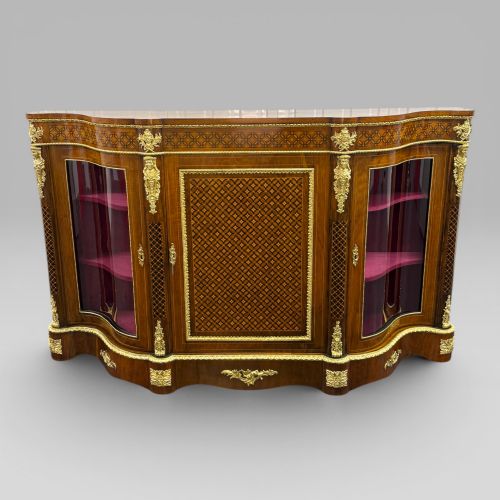
A French serpentine credenza is a low cabinet designed for display and storage, distinguished by its undulating, curved front line. These pieces emerge primarily from the nineteenth century, including Victorian interpretations and revival styles that mirror earlier European cabinet-making.
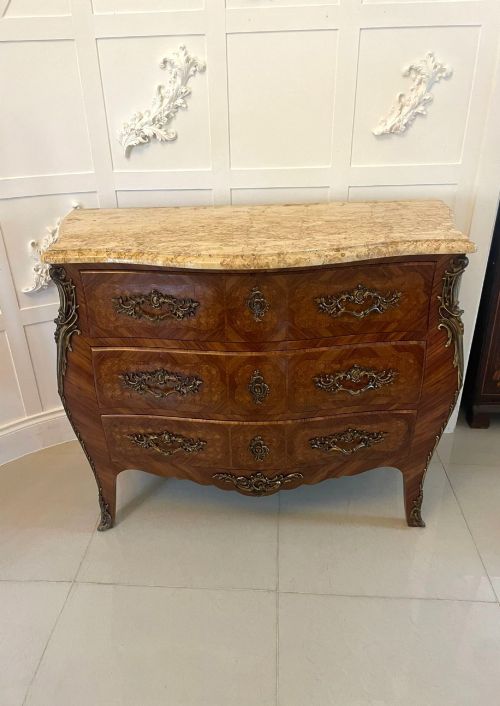
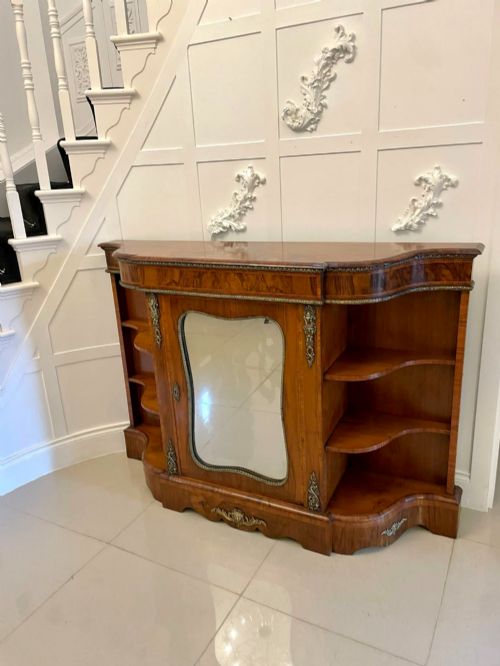
Buyers meet walnut, burr walnut and rosewood variations most often on this page, frequently decorated with intricate floral inlay. Forms extend to side cabinets and commodes sharing the same characteristic rounded profile.
Origins span French workshops and British cabinet-makers influenced by continental tastes, yielding pieces from simple side cupboards to exhibition-standard credenzas mounted in ormolu.
Materials and construction methods
Cabinet-makers constructed these pieces using solid carcasing timbers like walnut or mahogany, faced with decorative veneers including burr walnut, kingwood and rosewood. Sparing use of timber figure created striking patterns across the undulating fronts.
Marquetry and parquetry laid down contrasting woods and brass inlays to form floral and geometric motifs. Ormolu mounts cast in bronze and gilt-finished protected corners and accented door borders.
Marble slabs fitted to the tops of certain commodes and cabinets provided durable surfaces, whilst glass panels appeared in doors designed to display porcelain and glassware.
French Serpentine Credenza Retail Price Guide 2026
Typical asking prices for french serpentine credenza among the pieces listed under this phrase on Sellingantiques today, from the lower quarter to the upper quarter. They describe what is for sale here now, not the wider market.
Some nineteenth-century makers hid secret interior drawers behind false panels, keeping family receipts safe from domestic staff.
Markers of distinction
Quality rests upon the crispness of the marquetry and the depth of figure in the chosen veneers. Pieces exhibiting tight burr patterns and carefully balanced floral panels show superior workshop selection.
The weight and detail of the ormolu mounts separate standard production from exhibition-grade examples. Heavily chased bronze mounts fitted flush to the timber indicate skilled hand-finishing.
Construction integrity shows in the management of the serpentine curve, requiring precise woodworking so doors and drawers follow the contour smoothly without binding.
Maison Gagneau·Gaudreaux
The French Serpentine Credenza Glossary
- Serpentine
- A shape characterised by a double curve, concave in the centre and convex at the sides, creating a wave-like front.
- Marquetry
- Decorative veneer work forming pictures or patterns by arranging small pieces of coloured wood, shell or ivory into a wooden ground.
- Ormolu
- Gilded bronze used for furniture mounts and decorative accents, popular in French furniture design.
- Boulle
- A form of marquetry utilising brass and tortoiseshell inlaid in counter-changed patterns, named after cabinet-maker André-Charles Boulle.
- Parquetry
- Geometric mosaic woodwork used for floors or cabinet surfaces, formed from small rectangular or triangular veneers.
- Vitrine
- A glass-fronted display cabinet intended for the exhibition of small objects and curiosities.
French Serpentine Credenza: Frequently Asked Questions
What is a French serpentine credenza used for?
These cabinets served historically in dining rooms and grand reception spaces for storing porcelain, silver and glassware. Their flat tops provided surfaces for serving food or displaying decorative ornaments.
Today, they function as sideboards in living areas or media consoles that conceal modern equipment behind historic timber doors.
How do I care for burr walnut veneer?
Burr walnut requires stable indoor humidity away from direct sunlight and heat sources to prevent the thin decorative veneers from drying or lifting. Regular dusting with a soft, dry cloth preserves the polished finish.
Applications of microcrystalline wax help nourish the wood surface periodically without building up heavy residues.
How do I distinguish Victorian French Revival from earlier pieces?
Victorian French Revival pieces date from the mid to late nineteenth century, interpreting continental eighteenth-century motifs using contemporary manufacturing methods. They often employ machine-cut veneers alongside hand-chased ormolu. Nail construction, secondary timbers like oak or pine, and the style of interior shelving help date the piece accurately.