
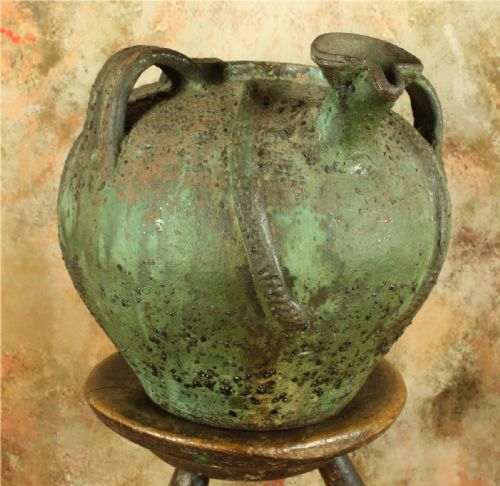


French Rustic Pottery Vessel
These french rustic pottery vessel examples are utilitarian earthenware and terracotta pieces shaped for country life, sought after for their honest textures and age-worn glazes.
French Rustic Pottery Vessel
Buyers most frequently meet nineteenth-century confit pots and olive jars on this page, alongside earlier eighteenth-century multi-handled jars. Pieces range from large painted terracotta jars to salt-glazed vinegar barrels and green-glazed terracotta vessels. Each item carries the distinct character of French provincial and Mediterranean folk traditions.
Materials and construction methods
Makers shaped these vessels from local terracotta, earthenware, and stoneware, relying on simple throwing techniques for daily utility. Potters applied liquid glazes, including salt glaze and green lead-derived formulas, to seal porous clay bodies for storing liquids like oil, vinegar, and wine.
Surfaces often show hand-finishing marks, brushwork on painted olive jars, and natural firing variations inherent in traditional kilns. The combination of dense ceramic bodies and durable exterior glazes allowed these storage jars and jugs to endure generations of agricultural and domestic use.
Some olive jugs required three handles so farmhands could heave them upright together when full of oil.
Assessing quality in provincial ceramics
Quality in a french rustic pottery vessel rests on the integrity of the clay body, the richness of the glaze application, and the preservation of its original surface. Pieces with deep, even glaze pools and minimal structural compromise demonstrate superior survival from their working eras.
The harmony between the handmade form and its intended utility distinguishes finer examples, where handles, rims, and bodies show confident proportion. Surface patination accumulated through decades or centuries of use adds depth to the material without masking the original potting skill.
The French Rustic Pottery Vessel Glossary
- Terracotta
- A porous, unglazed or glazed fired earthenware clay typically reddish-brown in colour. It forms the structural base for many provincial storage jars.
- Confit pot
- A traditional French earthenware jar featuring handles, designed for preserving meats and provisions. These vessels often display partial glazing.
- Salt glaze
- A glossy, slightly textured finish achieved by throwing common salt into the kiln during high-temperature firing. This technique creates a durable coating on stoneware.
- Earthenware
- Porous pottery fired at lower temperatures than stoneware, requiring a glaze to hold liquids. It represents the primary material for country utilitarian kitchenware.
French Rustic Pottery Vessel: Frequently Asked Questions
What were french rustic pottery vessels used for?
These vessels served practical storage roles in French country homes and agricultural estates. They held essential provisions like olive oil, salted meats, wine, vinegar, and walnuts.
Larger jars accommodated bulk preservation, while jugs and pitchers managed daily liquid transfers in the kitchen or cellar.
How do I date an 18th or 19th century piece?
Dating relies on observing potting techniques, clay body composition, and glaze characteristics. Earlier eighteenth-century pieces often feature heavier handles and distinct throwing rings from hand-wheel production.
Nineteenth-century examples frequently show standardised forms and varied green or painted surfaces typical of later provincial workshops.
How should I clean and care for antique terracotta?
Antique terracotta and earthenware require gentle maintenance to preserve their dry surfaces and aged glazes. Dust them with a soft, dry cloth rather than using chemical cleaning agents.
Avoid submerging porous unglazed terracotta in water, as trapped moisture can damage the historic clay body.
Where can I display these vessels in a modern home?
These pieces suit living spaces, kitchens, and hallways as sculptural floor standing jars or table centerpieces. Large olive jars and confit pots work well empty as focal points or holding dried botanicals.
Their neutral earthy tones complement both minimalist and traditional interior aesthetics.