

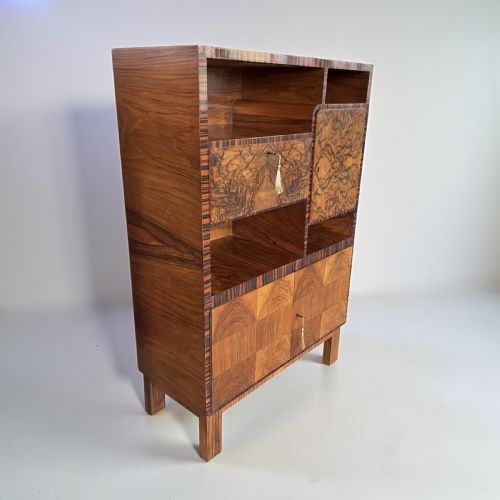


French Rosewood Side Cabinet
A french rosewood side cabinet brings heavy nineteenth-century warmth into a room, combining dark exotic timbers with polished marble and gilt metal.
French Rosewood Side Cabinet
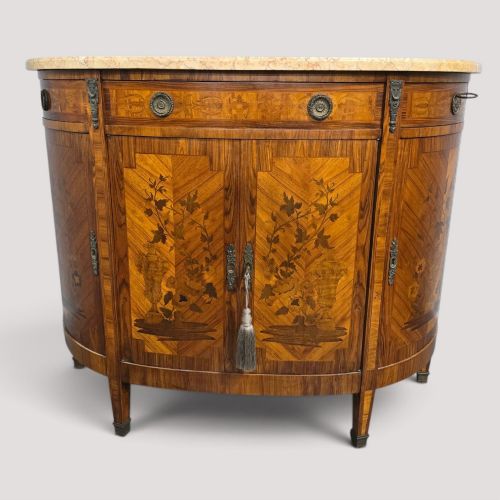
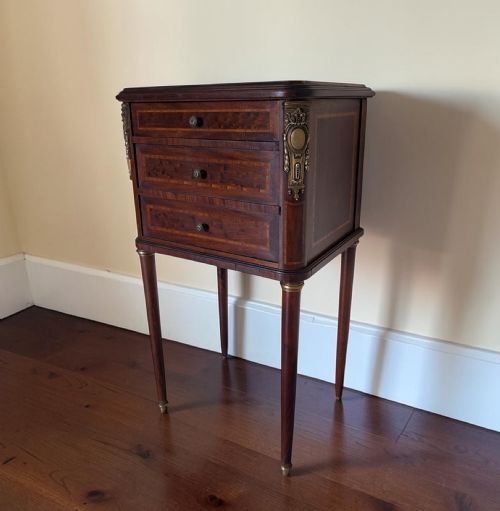
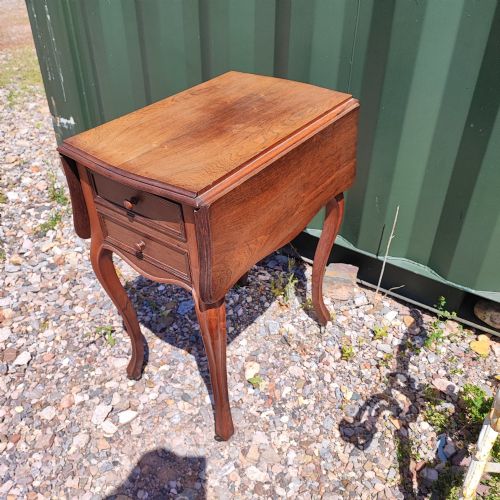
A french rosewood side cabinet represents a functional item of furniture built to hold books, display porcelain or flank a bed within formal nineteenth and early twentieth-century interiors. These pieces range from compact bedside tables to larger serpentine commodes and credenzas designed for the principal rooms of a house.
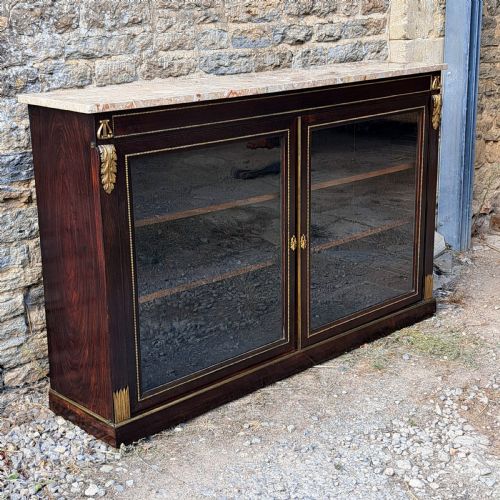
The version most commonly encountered on this page is the nineteenth-century bedside cabinet, often topped with white or coloured marble and fitted with lower shelving or enclosed cupboards. Alongside these sit taller pier cabinets, low meuble d'appui pieces, and occasional marquetry tables echoing eighteenth-century louis styles.
Makers and cabinetmakers drew heavily on revival aesthetics, producing works that referenced louis xv, louis xvi and rococo taste long after those monarchs vanished. These items served as practical storage while projecting an air of continental refinement through elaborate floral inlay and contrasting veneers.
Materials and Construction
Carpenters laid rich rosewood veneers over firmer underlying carcasing timbers, frequently combining kingwood, satinwood, ebony and walnut to create intricate floral marquetry patterns across door panels and drawer fronts. Boulle work incorporating brass and tortoiseshell also appears, adding reflective texture to breakfront and credenza forms.
Heavy cast ormolu and gilt-bronze mounts frame the edges, protect the corners and highlight key structural lines on pieces influenced by french revival tastes. Smooth marble slabs, selected for their veining and colour, sit flush upon the upper surfaces of commodes and bedside tables to provide a durable finish.
Joinery relied on traditional carcase construction, with panelled doors and fitted drawers operating within sturdy frameworks designed to support the dense weight of exotic timbers and stone tops. Interior shelving is typically timber, shaped to fit the specific proportions of each cabinet.
Listings feature rosewood combined with brass, marble, ormolu, kingwood, walnut, mahogany and glass across nineteenth-century and art deco periods.
Judging Quality
The distinction between ordinary and exceptional pieces lies in the crispness of the bronze mounts and the precision of the marquetry cutter's hand. Higher quality cabinets display finely chased ormolu details that fit flush against the wood, whereas lesser items rely on heavy, repetitive cast metalwork with softened definition.
The selection and matching of the rosewood grain dictates visual harmony across the front of a sideboard or commode. Master workshops ensured that symmetrical veneer patterns flowed naturally across doors and drawers, while simpler versions used random or mismatched timber slices.
Originality of the marble top and the survival of matching keys or interior fittings heavily influence the standing of any cabinet. Replacements alter the integrity of the piece, whereas undisturbed surfaces retain the subtle patina accumulated over generations of domestic use.
Mercier Freres
The French Rosewood Side Cabinet Glossary
- Ormolu
- Gilded bronze mounts applied to furniture edges and corners. This technique added decorative contrast to dark rosewood surfaces.
- Marquetry
- Inlaid wood veneers assembled to create pictorial or floral designs. Artisans used contrasting timbers like satinwood and kingwood within these patterns.
- Commode
- A low freestanding chest of drawers or cabinet with a flat top. They frequently feature marble slabs and elaborate metal mounts.
- Meuble d'appui
- A French term for a supporting piece of furniture or side cabinet. These low cabinets often incorporate glass doors or open shelving.
- Boulle
- A method of marquetry using brass and tortoiseshell inlay. It decorates breakfront side cabinets from the nineteenth century.
French Rosewood Side Cabinet: Frequently Asked Questions
What is a french rosewood side cabinet used for?
These cabinets served multiple purposes in historic interiors, functioning as bedside storage, display surfaces for decorative objects, or low sideboards in reception rooms.
Their enclosed cupboards and open shelves accommodated books, linens and personal items while adding a strong decorative presence to the room.
How do I spot a reproduction?
Examine the construction methods, timber movement and the integration of the metal mounts to understand the age of the item.
Nineteenth-century pieces show natural timber shrinkage and hand-chased bronze work, whereas later copies often use uniform modern adhesives and machine-cast fittings.
How do I care for rosewood furniture?
Keep these pieces away from direct sunlight and sudden temperature changes to protect the delicate rosewood veneers and underlying timbers from splitting.
Apply a light, appropriate wax occasionally and dust with a soft dry cloth to preserve the natural sheen of the polished wood.
How do I tell Louis XV and Louis XVI styles apart?
Louis XV style pieces feature asymmetrical curves, flowing serpentine lines and exuberant rococo mounts that emphasise organic movement.
Louis XVI style furniture introduces straight lines, neoclassical symmetry, fluted columns and geometric marquetry patterns inspired by antiquity.