



French Rococo Shelf Clock
A French rococo shelf clock brings scrolling asymmetrical bronze, painted porcelain panels, and rhythmic brass movement into a room.
French Rococo Shelf Clock
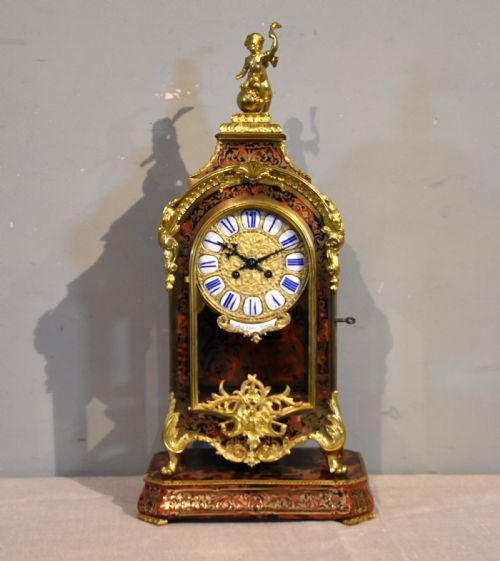
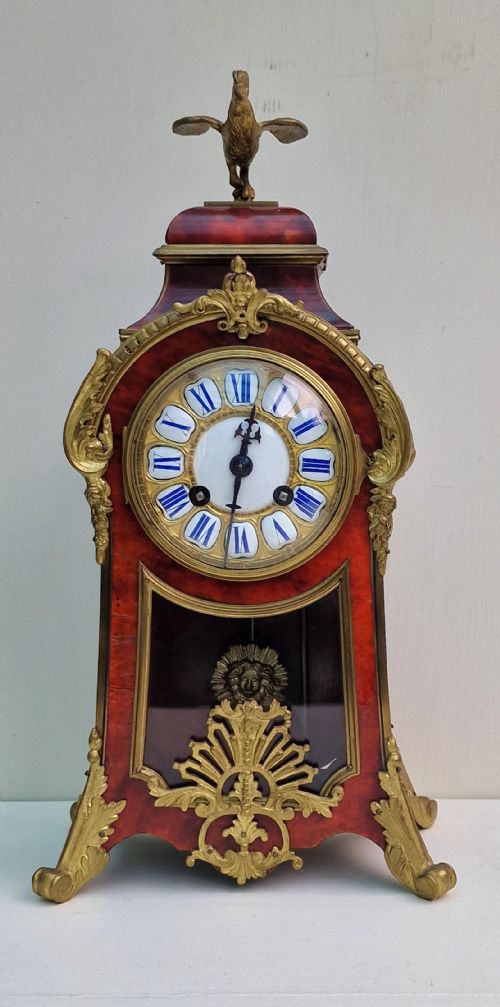
A French rococo shelf clock sits upon a mantelpiece or bracket, uniting mechanical timekeeping with sculptural ornament. These objects take the form of mantel clocks fashioned in revival styles that echo the curves of the eighteenth century.
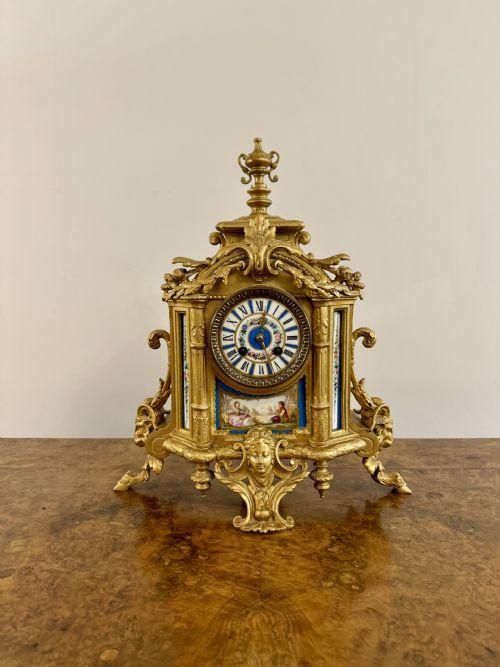
Makers working during the nineteenth century produced the majority of these pieces, drawing on Louis XV and Rococo Revival idioms. Examples range from solid ormolu cases to four-glass designs and porcelain-garnished housings.
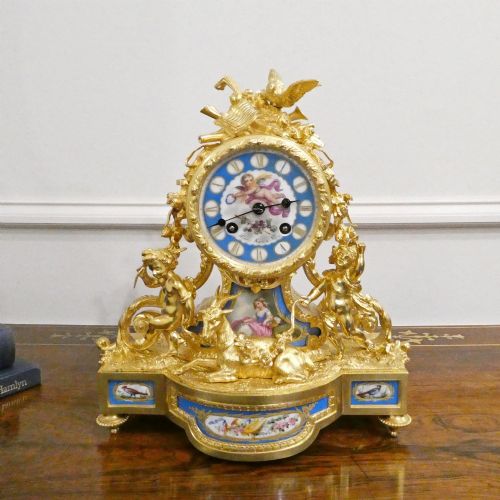
The buyer meets domestic timepieces intended for nineteenth-century parlours, often featuring enamel dial chapters and decorative figures of putti, cupids, or classical subjects cast in bronze and brass.
Materials and construction
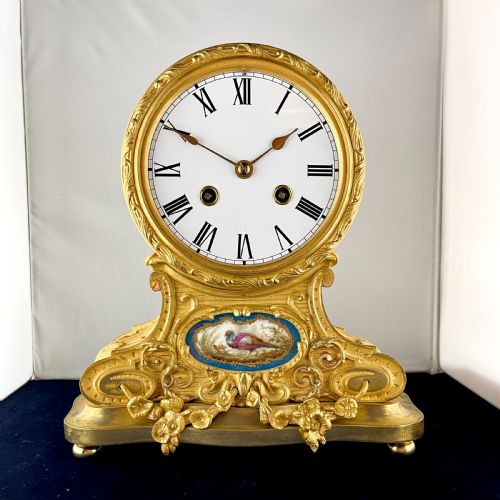
Foundries cast cases in bronze, brass, and gilt metal, applying mercury gilding or electroplating to achieve the bright ormolu finish characteristic of the period. Hand-painted porcelain panels depicting pastoral scenes or floral motifs are frequently integrated into the body.
Movements within these pieces rely on brass wheel trains and escapements, driving striking mechanisms that sound hours and halves on bells or gongs. Enamel dials carry Roman or Arabic numerals behind glazed bezels.
Cupids and putti lean nonchalantly against clock dials, pretending to help time pass.
Judging quality and execution
Quality rests upon the crispness of the bronze chaser's hand-finishing and the depth of the gilding across scrollwork and foliage. Superior castings retain sharp relief and subtle textures where smooth surfaces meet pierced rocaille ornament.
The integration of signed movements by makers such as Samuel Marti or Philippe-Humbert Mourey elevates a piece, as does the preservation of original hand-painted porcelain and matching mercury gilding.
Samuel Marti·Henry Marc·Delettrez
The French Rococo Shelf Clock Glossary
- Ormolu
- Gilded bronze produced by applying a mixture of gold and mercury to a cast bronze base, then heating to drive off the mercury. This technique creates a distinctive, deep golden lustre found on nineteenth-century French cases.
- Boulle
- A marquetry technique using brass and tortoiseshell inlaid in counterpoint patterns, named after the cabinetmaker André-Charles Boulle. It appears on select clock cases alongside gilt metal mounts.
- Four-glass clock
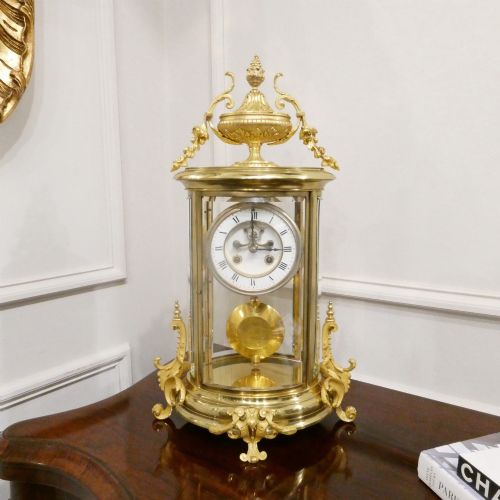
- A mantel clock housed in a rectangular brass or gilt bronze frame with bevelled glass panels on all four sides. This construction allows a clear view of the pendulum and movement.
- Drumhead
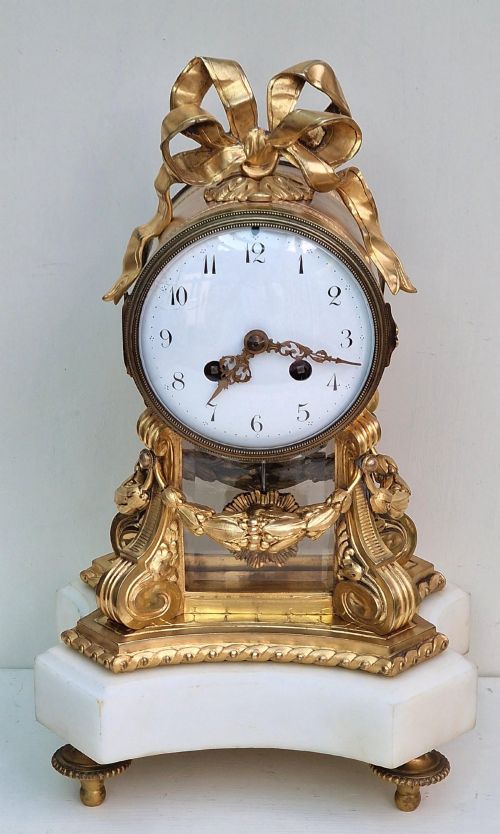
- A clock case shaped like a circular drum, mounted upon a plinth or base of marble, wood, or gilt metal.
- Garniture
- A set comprising a central clock accompanied by matching side ornaments, such as vases or candelabra, designed to display together on a mantelpiece.
French Rococo Shelf Clock: Frequently Asked Questions
How do I wind a French rococo shelf clock?
Use the appropriate winding key on the arbors located on the enamel dial, turning gently until resistance is felt. Avoid over-winding to protect the tension of the mainsprings.
Ensure the clock is placed on a level surface so the pendulum beats in rhythm, maintaining accurate timekeeping.
What is the difference between ormolu and gilt brass?
Ormolu denotes gilded bronze, where a gold amalgam is fired onto a cast bronze substrate, yielding a rich and durable surface. Gilt brass uses a similar plating method over a softer brass alloy base.
Bronze permits sharper chisel work and deeper sculptural definition during the casting and chasing process than standard brass.
How do I identify a nineteenth-century movement?
Makers stamped their machinery backplates with foundry medals, serial numbers, and initials such as Samuel Marti's intersecting initials. These stamps indicate the production period during the 1800s.
The presence of silk-suspension systems or early pendulum stamps helps narrow down the decade of manufacture.
Where should I place a four-glass clock?
Position the clock on a stable mantelpiece or shelf away from direct sunlight and drafts that might affect the delicate balance of the movement. The surrounding glass panels benefit from a spot where they reflect interior light.
Allow clearance around the piece so the swinging pendulum inside remains undisturbed by surrounding objects.