


French Rococo Revival Cabinet
A french rococo revival cabinet brings nineteenth-century Continental opulence into a room with curved lines, glazed panels, and rich gilt mounts.
French Rococo Revival Cabinet
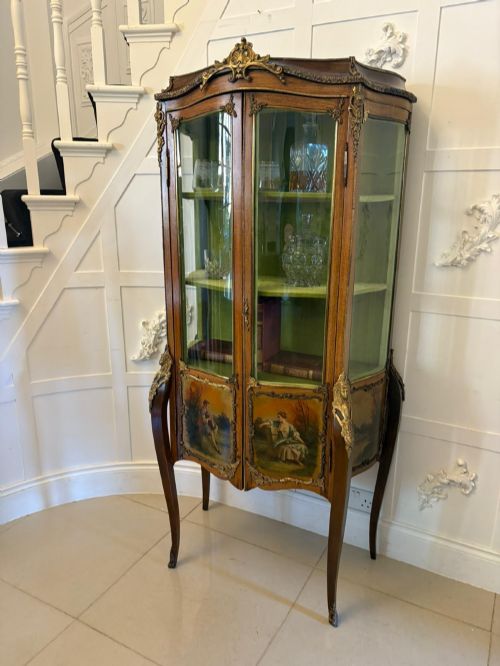
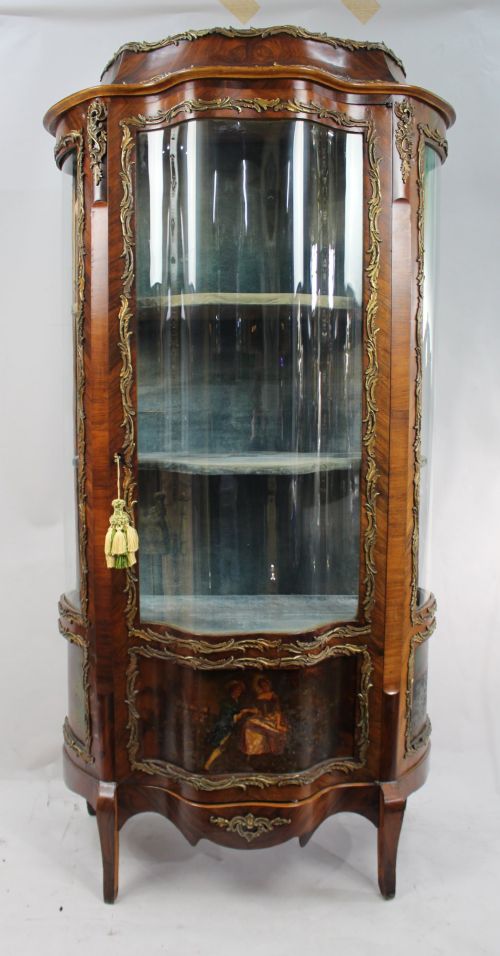
A french rococo revival cabinet encompasses glazed vitrines, serpentine side cabinets, and bombé secretaires produced primarily during the nineteenth century and into the early twentieth century. These pieces draw directly on earlier Louis XV aesthetics, translating eighteenth-century court taste into Victorian and Edwardian interiors.
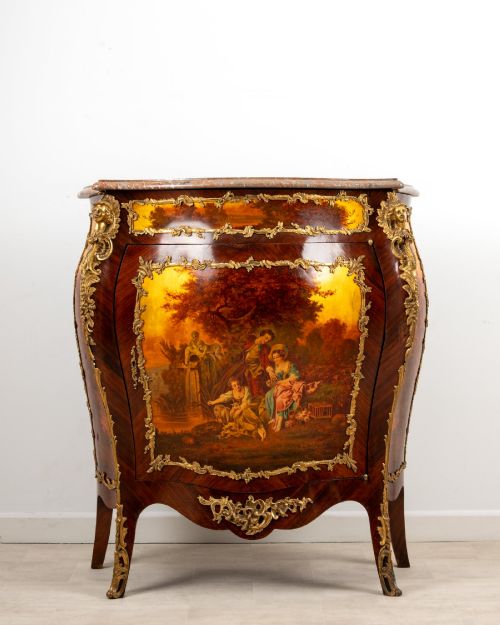
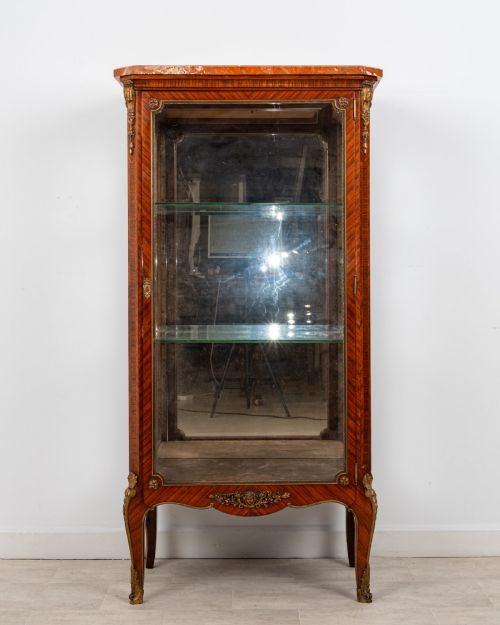
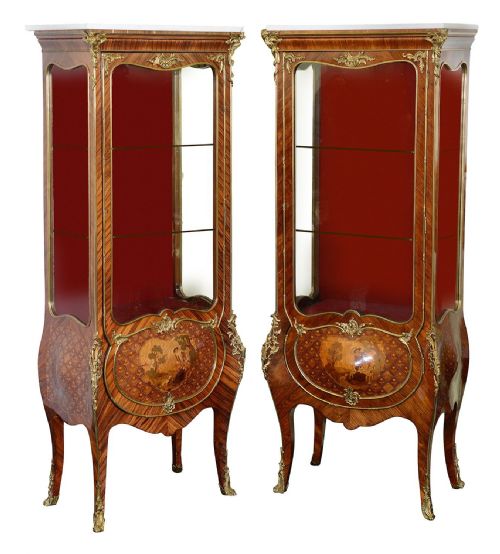
Buyers will encounter various forms on this page, ranging from tall display cabinets with glass sides to small bedside commodes and writing desks. Vitrines dominate the selection, designed specifically to showcase porcelain and decorative objects behind glass doors.
Materials and Technique
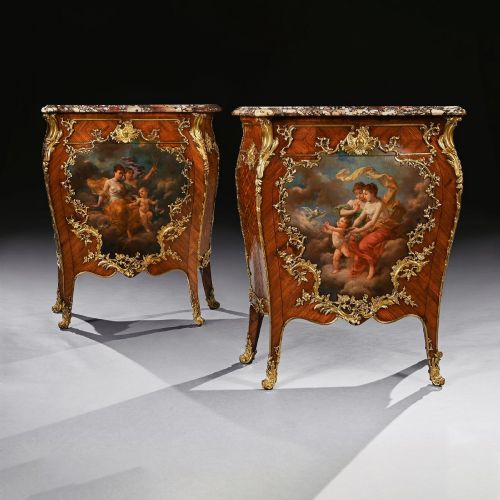
Cabinetmakers utilised exotic timbers like kingwood, rosewood, and walnut, frequently laid in intricate parquetry or marquetry patterns across curved surfaces. Vernis Martin painted panels appear frequently, depicting pastoral scenes in imitation of eighteenth-century French lacquerwork.
Heavy cast ormolu mounts, also known as gilt bronze, frame the doors, feet, and shoulders of the cabinets, complementing inset marble tops in white or coloured stone. Glazed sides and serpentine fronts demand advanced joinery to achieve the sweeping, asymmetric lines characteristic of the revival.
Marble tops and glazed panels appear frequently across the vitrines, secretaires, and side cabinets recorded in these records.
Distinctions in Execution
The distinction between ordinary and exceptional pieces rests upon the crispness of the ormolu mounts and the depth of the timber work. Hand-chased gilt bronze shows sharp detail and weight, whereas inferior castings appear soft and brassy.
Cabinets by recorded makers display superior cabinetmaking in the hidden secondary woods, the fluidity of the bombé or serpentine carcase, and the artistry of the painted panels. Finer marquetry utilises carefully selected grain alignments that follow the complex contours without buckling.
François Linke·Gillows·Gouffel
The French Rococo Revival Cabinet Glossary
- Ormolu
- Gilded bronze mounts applied to furniture. This technique involves coating cast bronze with a gold amalgam and firing it.
- Vernis Martin
- A simulated lacquer finish developed in eighteenth-century France. It uses successive layers of varnish to create translucent, painted decorative panels.
- Vitrine
- A glass-fronted cabinet designed for the display of porcelain and curiosities. The sides are frequently glazed to allow maximum light penetration.
- Bombé
- Swelling or outward-curving in shape. This profile requires specialised carpentry to construct curved drawers and doors.
- Marquetry
- The art of applying pieces of veneer to a structure to form decorative patterns. Craftsmen use contrasting woods to create pictorial designs.
French Rococo Revival Cabinet: Frequently Asked Questions
What is a french rococo revival cabinet?
These are nineteenth-century decorative storage and display pieces inspired by the ornate, curving styles of the French court under Louis XV.
They combine rich timbers, hand-painted panels, and gilt bronze mounts to create ornamental furniture suited to formal drawing rooms.
How do I identify Vernis Martin panels?
Vernis Martin is a specific type of polished lacquerwork featuring delicate painted scenes, often in the pastoral taste, beneath clear varnish layers.
On these cabinets, the panels appear on doors or lower sections, offering a glossy finish that mimics Asian lacquer.
Where should I place a vitrine cabinet?
Vitrines with glass sides and doors need placement away from direct sunlight to protect interior contents and timber finishes from fading.
They work best against solid interior walls where surrounding lighting can pass through the side panels to illuminate displayed collections.
How do I care for marble tops?
Marble tops on these cabinets require simple dusting with a soft cloth and immediate wiping of any liquid spills to prevent staining.
Avoid using acidic cleaners or abrasive scouring powders, which will etch the polished stone surface.
Are these pieces strictly French?
While the style originates in France and many examples were made there, English and Continental makers also produced equivalent revival pieces.
Cabinetmakers across Europe adopted the serpentine forms and ormolu mounts to satisfy international demand for French taste.