




Antique Kingwood Curio Case
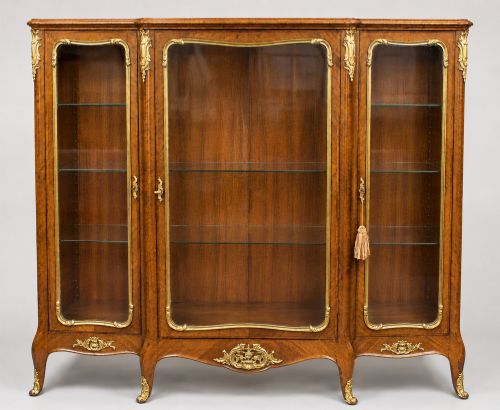
An antique kingwood curio case brings architectural elegance and warmth into a room, offering a glazed stage for precious objects.
Antique Kingwood Curio Case
An antique kingwood curio case sits within the broader family of vitrines and display cabinets, designed specifically to showcase ornaments and small treasures behind glass. These pieces most frequently emerge from the nineteenth century, reflecting the tastes of the Victorian era and the French revivals.
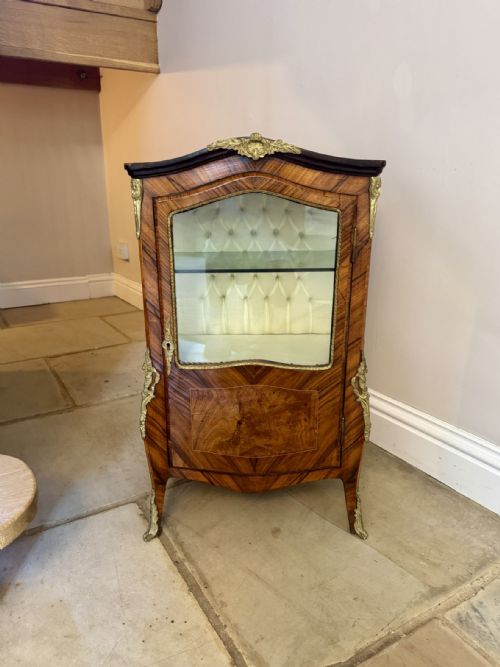
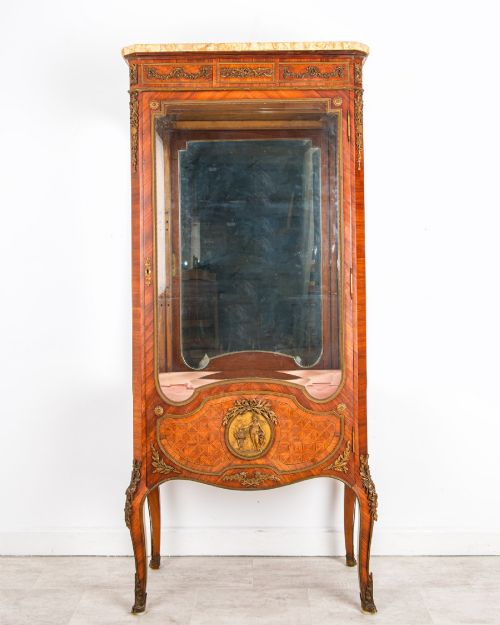
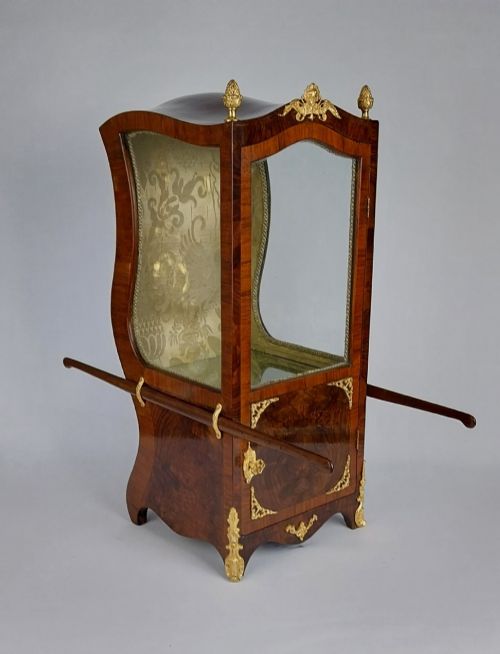
Makers drew heavily on Louis XV and Louis XVI styles, producing shapes that range from serpentine and bombe silhouettes to straight-lined architectural cabinets and table top sedan vitrines. The selection relies predominantly on French origins, connecting nineteenth-century craftsmanship with historic court aesthetics.
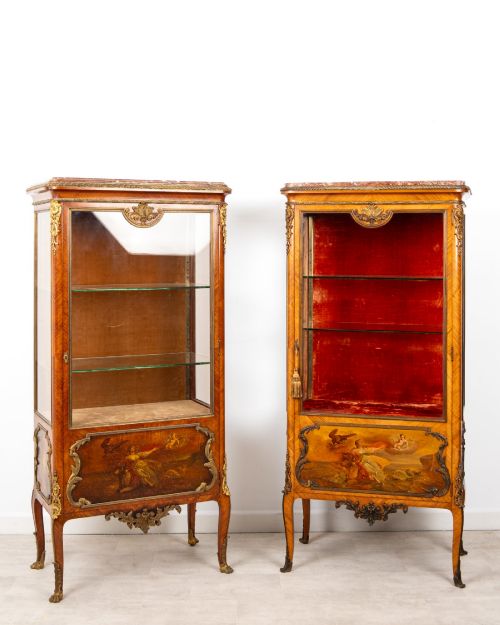
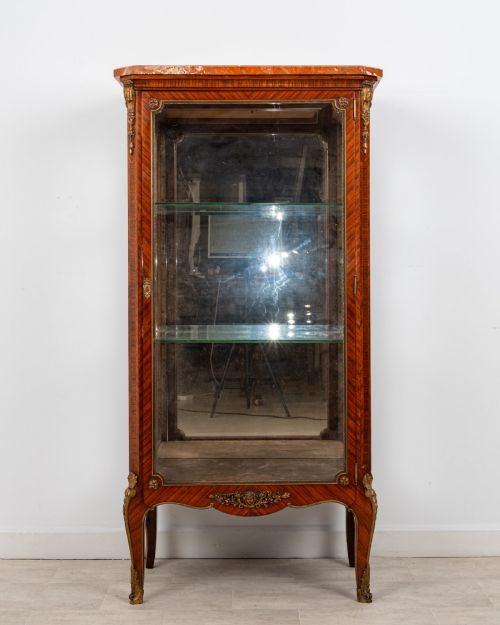
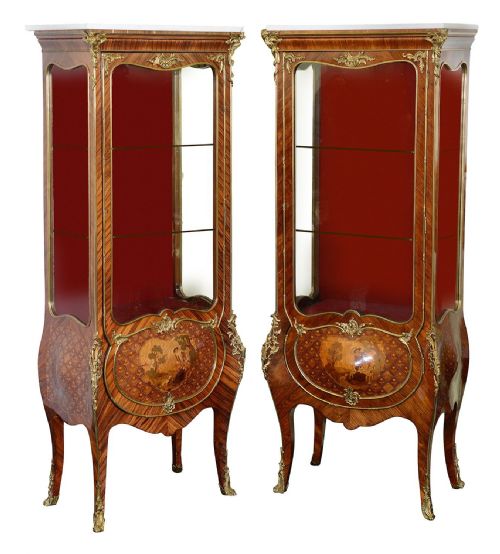
Buyers encounter various formats here, including corner cabinets, octagonal display pieces, and matched pairs mounted with marble tops. Kingwood veneer forms the defining surface material across these iterations, often paired with elaborate marquetry and parquetry patterns.
Materials and construction
Cabinet makers utilised kingwood veneers over supportive carcase timbers like walnut, arranging grain patterns into intricate geometric parquetry and floral marquetry. Vernis Martin painted panels frequently complement the wood surfaces, adding figurative or pastoral scenes to lower doors.
Cast ormolu and gilt bronze mounts provide structural trim and decorative foliage along corners, cornices, and feet, while inset marble slabs cap the tops of many larger cabinets. Glazed doors and side panels enclose the display space, sometimes lined internally with fabric such as silk damask.
The listings feature nineteenth-century pieces spanning the Victorian era up to nineteen-twenty, predominantly styled in French Rococo and Louis revivals.
Distinctions in execution
Quality rests upon the precision of the cabinet work, particularly in the handling of serpentine and bombe curves alongside the crispness of the gilt bronze mounts. Maker attribution separates standard production pieces from masterworks by leading workshops.
The sophistication of the timber selection dictates visual depth, where varied kingwood grain and detailed parquetry elevate an example far above plain veneered carcases. Painted Vernis Martin panels show distinct tiers of artistic merit in their brushwork and preservation.
François Linke·G. Durand·Gouffel
The Antique Kingwood Curio Case Glossary
- Kingwood
- A dense, richly figured timber native to Brazil, prized for its dark brown and violet-streaked grain. It was sliced into thin veneers for decorative furniture.
- Ormolu
- Gilt bronze ornamentation cast and chased to mount upon cabinet exteriors. This technique creates metallic highlights against wood surfaces.
- Vernis Martin
- A simulated Japanese lacquer technique developed in eighteenth-century France. It employs translucent varnishes over painted decorations.
- Parquetry
- Geometric wood inlay patterns assembled from small veneer tiles. Makers arranged contrasting grains to form checkerboard or cube motifs.
- Vitrine
- A glass-fronted display cabinet intended for showing ceramics and small objects. The term derives from the French word for glass.
Antique Kingwood Curio Case: Frequently Asked Questions
What is a kingwood curio case?
A kingwood curio case is a glazed display cabinet veneered in richly figured kingwood timber. These pieces protect and exhibit small collections behind glass panels.
They serve as decorative furniture focal points, combining polished wood surfaces with metal mounts and glass viewing areas.
How do I style a vitrine?
Place the cabinet away from direct sunlight to protect internal linings and delicate objects. Balance the contents by spacing ceramics and metalwork across the glass shelves.
Allow negative space around individual pieces so the timber frame and ormolu mounts remain visible.
Are these cabinets French?
Many pieces originate from nineteenth-century France, reflecting Revival aesthetics of the period. Makers adopted Louis XV and Louis XVI design vocabularies.
Some continental examples also appear, sharing similar veneering traditions and gilt bronze mounts.
How do I identify a marble top?
Marble slabs sit directly upon the upper carcase of specific cabinets to provide a durable and decorative surface. They are typically fitted with moulded edges that follow the contour of the wood.
These stone tops add weight and structural presence to nineteenth-century vitrines.