
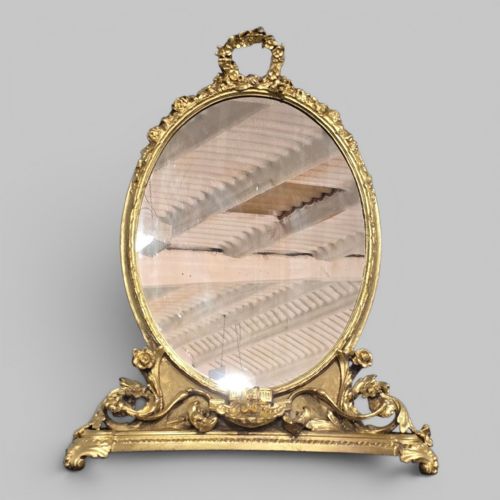
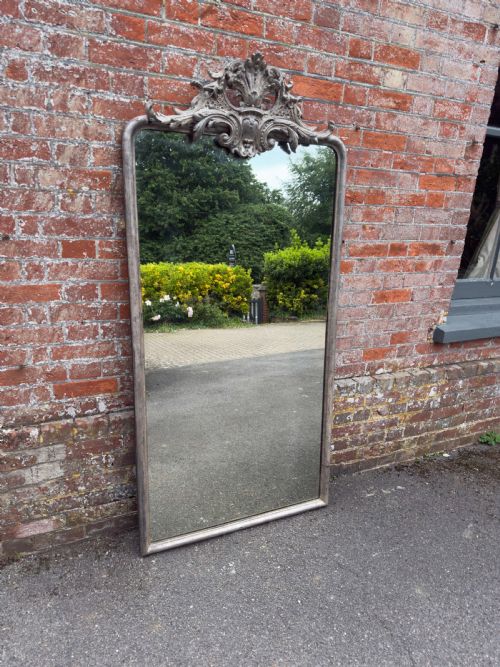


French Rococo Dress Mirror
A french rococo dress mirror brings fluid, asymmetric curves and ornate framing to a dressing table or vanity.
French Rococo Dress Mirror
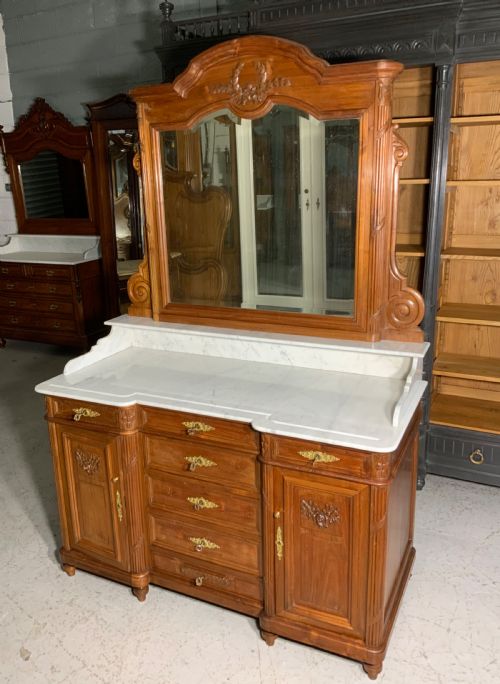
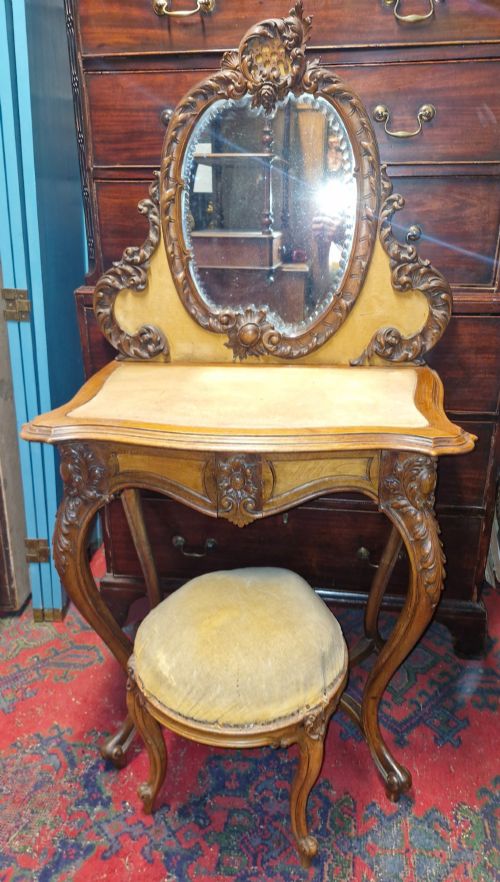
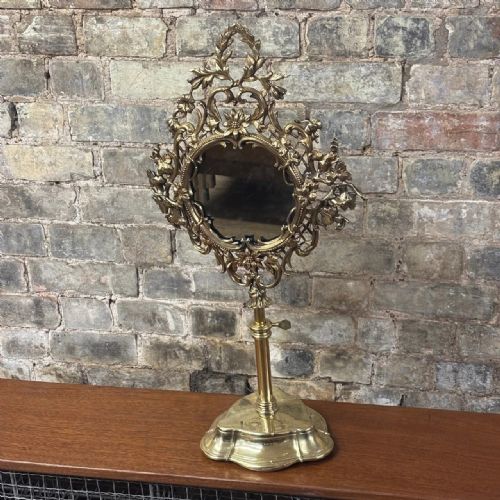
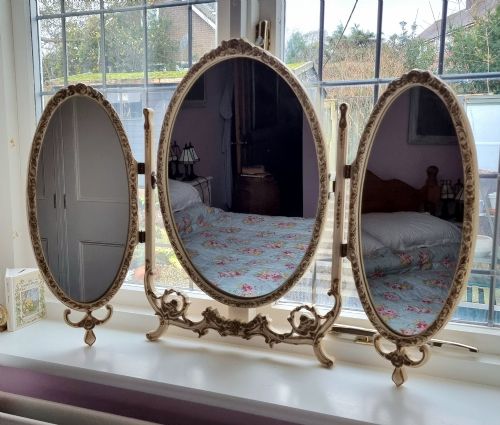
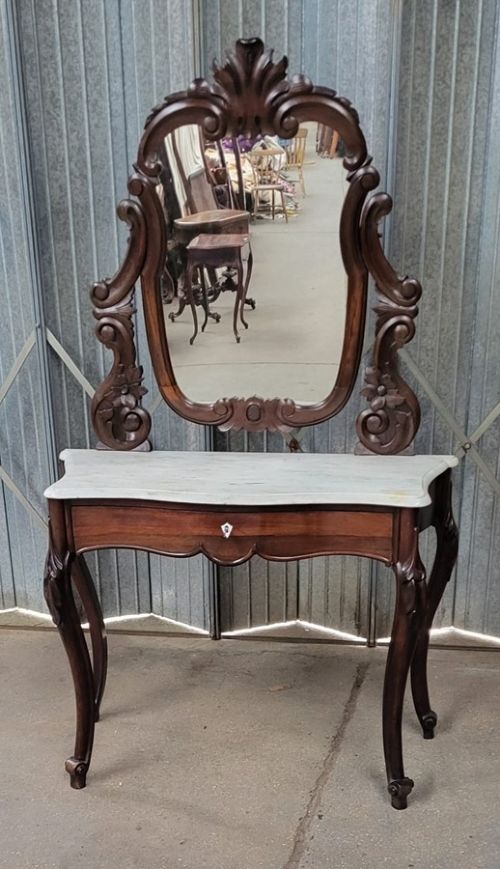
When searching for a french rococo dress mirror, buyers encounter table mirrors, vanity mirrors, and cheval mirrors shaped by nineteenth-century revival styles. These pieces often appear alongside related dressing furniture, including walnut and mahogany dressing tables fitted with marble tops or integrated mirror plates.
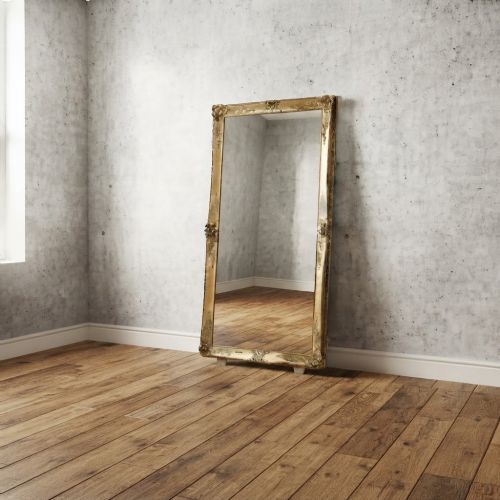
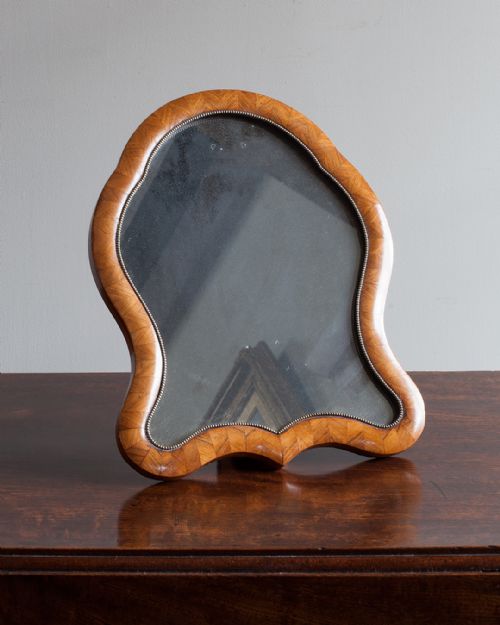
The surviving selection includes compact brass and kingwood table mirrors alongside larger carved gesso and giltwood cheval mirrors. Makers and artisans drew heavily upon Louis XV motifs, producing C-scrolls, asymmetric cartouches, and naturalistic floral ornamentation across the nineteenth and early twentieth centuries.
Materials and construction methods
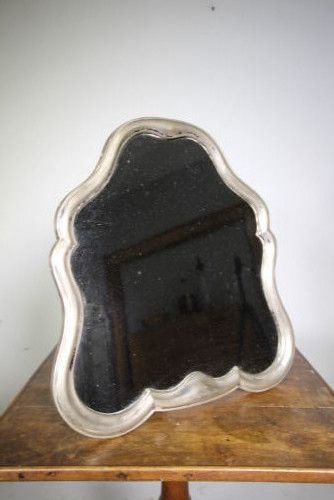
Carved wood, gesso, and cast brass form the primary structural foundations for these items. Artisans shaped giltwood and painted timber frames with intricate scrollwork, applying metallic leaf or silver deposit to achieve decorative luminance.
Many table and cheval mirrors utilise bevelled glass plates set into hinged frames or pivoting stands. Cabinetmakers combined hardwoods such as walnut, mahogany, and kingwood with ormolu mounts and porcelain plaques from factories like Sevres and Limoges.
Some dressing mirrors feature concealed porcelain trinket cups behind the swing frame, perfect for misplaced earrings.
Assessing quality and execution
The depth and crispness of the carved ornamentation separate standard production from exceptional examples. Hand-chiselled brass, finely modelled ormolu, and deeply undercut wood or gesso carving indicate superior craftsmanship.
Integration between the mirror plate, framing, and pivoting stands dictates overall structural integrity. Heavy porcelain mounts, crossbanded veneers, and original silvered surfaces elevate the status of individual pieces within this stylistic group.
Jean Gille·Joseph Meissonnier
The French Rococo Dress Mirror Glossary
- Cheval mirror
- A full-length freestanding mirror suspended on a vertical frame with pivoting side pivots. This form allows the glass to tilt to various angles.
- Gesso
- A plaster-like mixture applied to wood surfaces and carved or moulded before gilding or painting. It provides the crisp relief work seen on ornate frames.
- Ormolu
- Gilt bronze mounts cast and chased for decorative effect on furniture and mirrors. The technique involves applying a gold amalgam to bronze.
- Louis XV Revival
- A nineteenth-century design movement emulating the asymmetrical curves and naturalistic motifs of the French rococo period. This style dominates many nineteenth-century vanity and dress mirrors.
French Rococo Dress Mirror: Frequently Asked Questions
How do I mount a table mirror safely?
Table mirrors generally rely on attached folding wooden struts or stable brass easel stands rather than wall fixings. Ensure the support mechanism locks securely into position before placing the piece on a dressing surface.
Position the mirror away from direct sunlight and areas prone to moisture to protect the timber frame and the reflective backing of the glass.
What is the difference between a cheval mirror and a dress mirror?
A cheval mirror stands independently on the floor as a full-length glass supported by a frame and pivot pins. A dress mirror is typically smaller, designed to sit upon a dressing table, chest, or washstand.
Both forms utilise similar rococo revival styling, but their scale and intended placement within a bedroom differ entirely.
How should I clean an antique giltwood frame?
Dust giltwood and gesso surfaces gently with a very soft, dry brush to remove particles without disturbing the delicate metallic finish. Avoid using water, chemical sprays, or abrasive cloths.
Water can soften historical gesso and cause flaking to the gold leaf or silvered surfaces applied by nineteenth-century craftsmen.
Can these mirrors be tilted?
Most table and cheval mirrors feature original brass side screws or pivot pins that allow the glass angle to be adjusted. Check that the side hardware remains stable and supports the weight of the frame.
Avoid forcing stiff pivots, as vintage metal threads require careful adjustment to prevent damage to the surrounding wood.