



French Rococo Chimney Glass
When you search for french rococo chimney glass, you find grand overmantel mirrors shaped by ornate curves and classical French styling.
French Rococo Chimney Glass
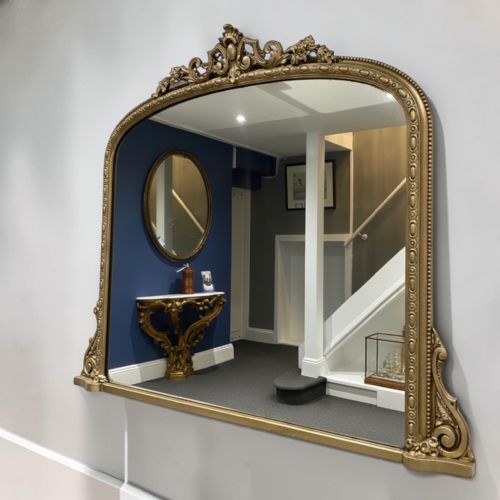
A french rococo chimney glass is typically a large overmantel mirror designed to sit above a fireplace mantel in a reception room or grand hall. These pieces dominate a wall through their scale and reflect light deep into the interior space.
The selections encountered here span the Victorian era and the nineteenth century, reflecting revivalist tastes that looked back to earlier French chateau aesthetics. Overmantel mirrors and wall mirrors form the majority of the objects, accompanied occasionally by period lighting.
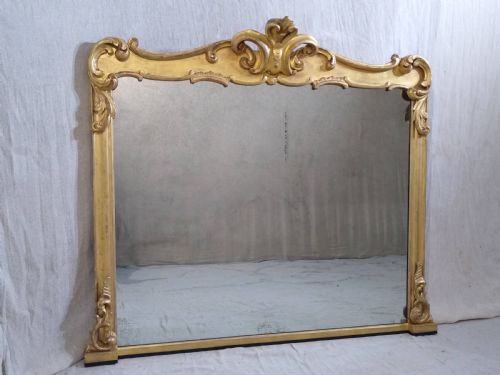
Makers and craftsmen drew directly upon Louis XV design vocabulary, incorporating asymmetrical scrolls, naturalistic foliage, and shaped crestings into the wooden framework. These furnishings served both a decorative function and a practical purpose in period domestic architecture.
Materials and Construction
The foundational structures of these frames utilise carved wood, gesso, and composition moulded ornament applied over timber. Artisans built up intricate relief decoration using gesso before applying layers of gold leaf or paint to the surface.
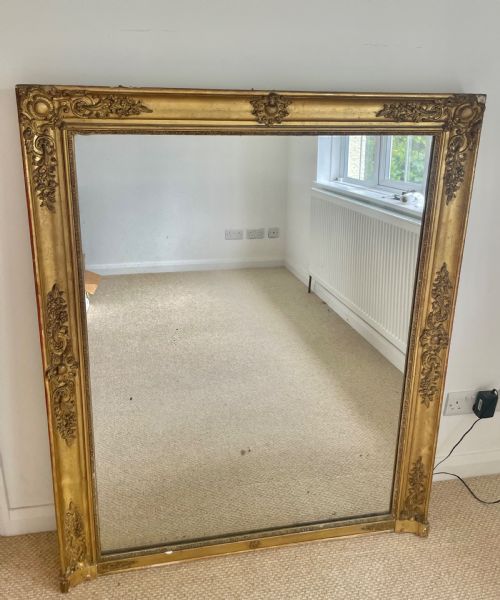
Mirror glass panels are set within these heavy frames, often displaying the subtle imperfections and foxing associated with age. Giltwood and gilded finishes dominate the material record, creating a reflective and opulent visual presence.
Several mirrors are described as massive country house scale, proving that earlier generations enjoyed checking their hair from across the ballroom.
Judging Quality and Execution
Quality in a french rococo chimney glass rests upon the depth and crispness of the carved detail within the gesso and wood. Superior examples display fluid, deeply undercut foliage and scrolls that demonstrate confident hand-tooling rather than flat, mass-produced moulding.
The integrity of the original gilding and the retention of the early mirror plate further distinguish finer pieces from later or more heavily restored alternatives. Proportions also matter, as successful mirrors maintain a harmonious balance between the arched or shaped frame and the reflective glass.
The French Rococo Chimney Glass Glossary
- Overmantel mirror
- A large looking glass specifically proportioned to hang on the wall directly above a fireplace mantelpiece. They often feature shaped or arched tops designed to echo architectural cornices.
- Gesso
- A plaster-like mixture applied to wood frames to provide a smooth base for subsequent gilding or painting. Deep relief elements are often modelled directly in this material.
- Giltwood
- Timber that has been coated with a thin layer of gold leaf over a prepared ground. It provides a warm, reflective metallic surface that catches candlelight and daylight.
- Trumeau
- A decorative wall mirror or panel featuring a painted or carved scene incorporated above the glass. These originate from classical French interior design.
- Rococo style
- An artistic movement characterised by elaborate ornamentation, C-scrolls, S-scrolls, and asymmetrical natural forms inspired by shells and plants.
French Rococo Chimney Glass: Frequently Asked Questions
Where should I hang a large overmantel mirror?
These mirrors traditionally anchor the space directly above a fireplace mantel in a principal reception room.
Their substantial scale also allows them to function effectively on a blank wall where they can reflect natural light and open up the room.
How do I clean an antique giltwood frame?
Dust the carved surfaces very gently with a dry, soft brush to prevent disturbing the delicate gesso and gold leaf.
Avoid using liquid cleaners, moisture, or chemical polishes, as these can permanently damage historic gilded finishes.
Are these mirrors genuinely from France?
Many pieces reflect French Louis XV design influences and were made in France, while others are British Victorian interpretations produced in the Rococo revival style.
Both origins share the same decorative vocabulary and grand domestic purpose.
How can I tell the age of the glass?
Early mirror plates often display minor surface distortions, small oxidation spots, and handmade irregularities within the glass itself.
Replacement glass is common in pieces of this age, so original reflective plates add significantly to the character of the object.