
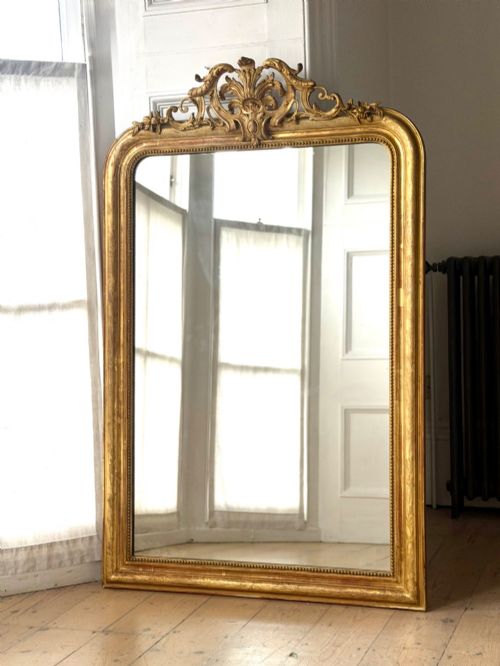
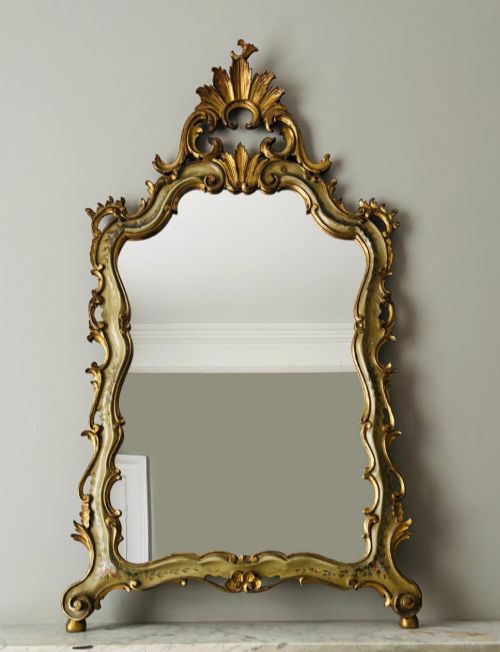
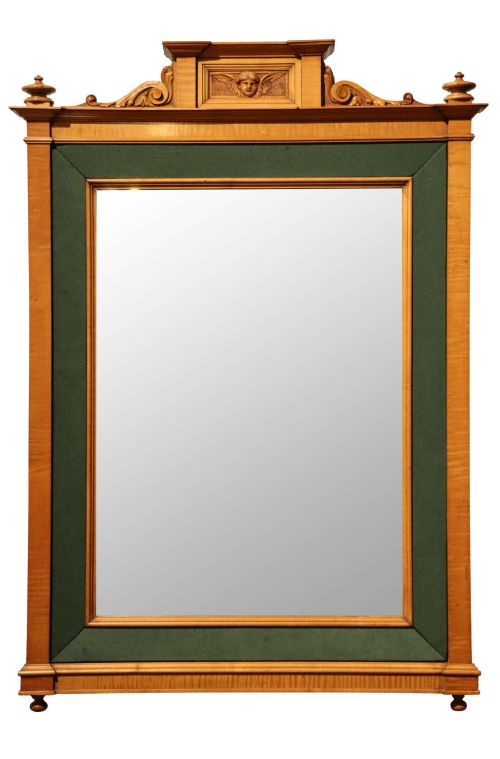
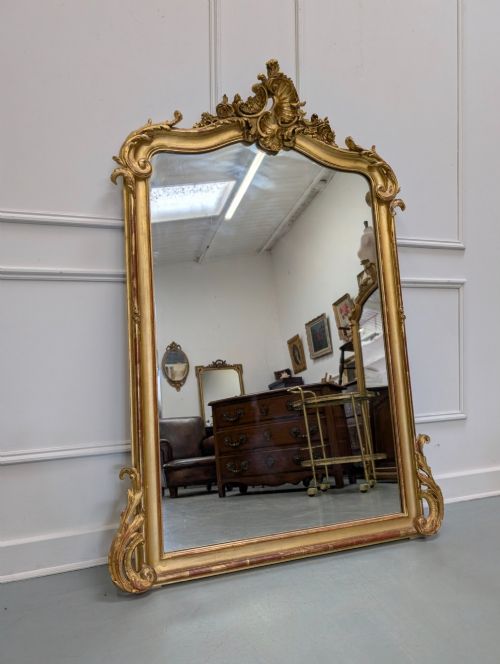
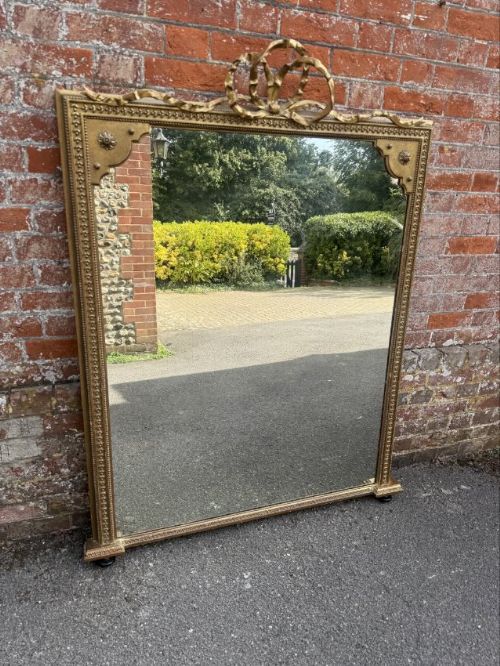
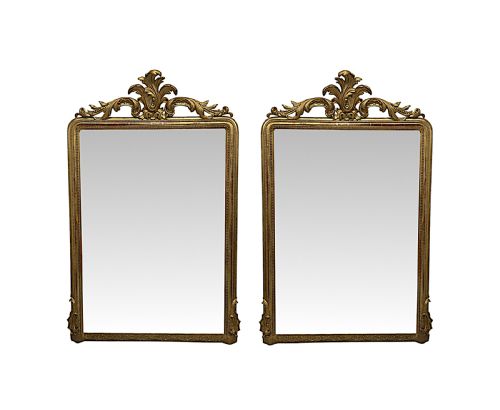
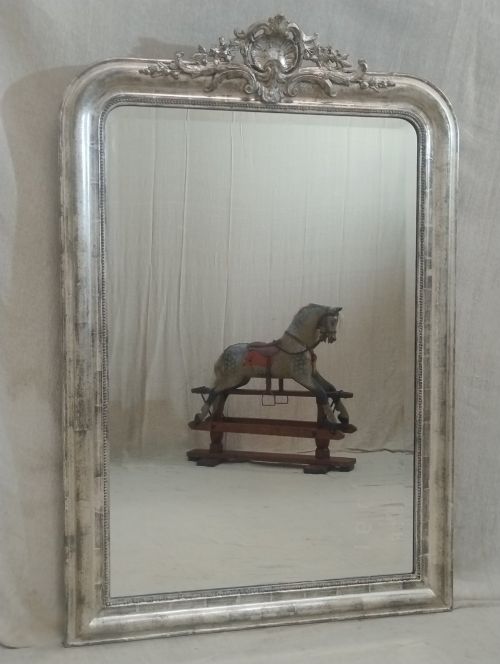
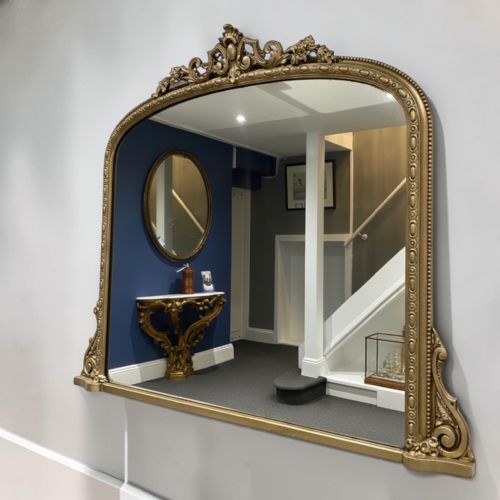
Carved Crest Overmantel
These large architectural glasses command attention above a fireplace, bringing depth and reflected light to a room through ornate crestings.
Carved Crest Overmantel
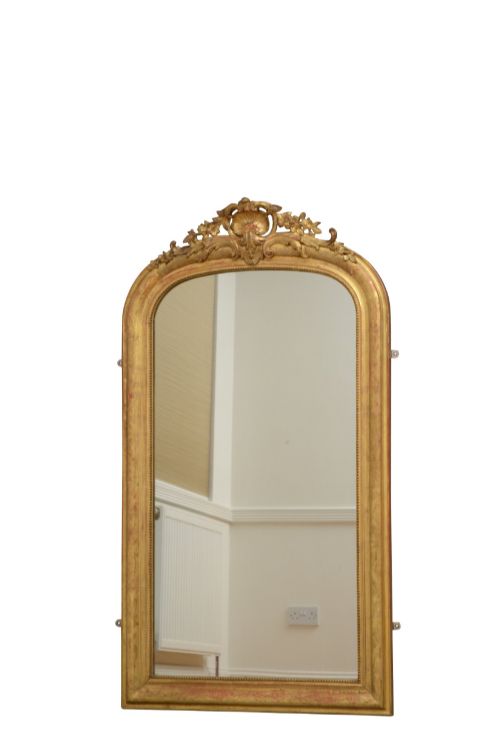
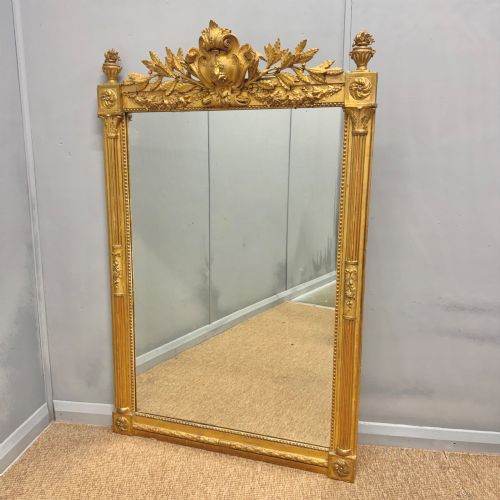
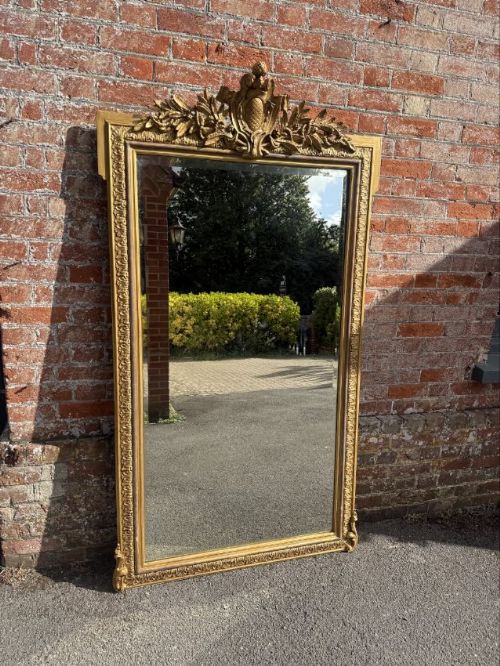
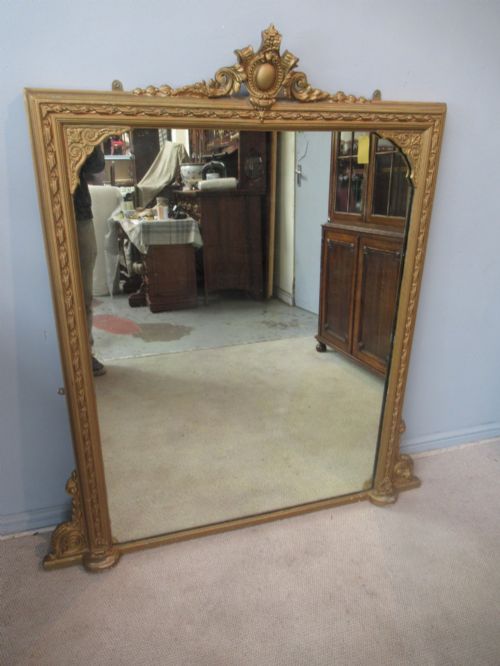
A carved crest overmantel is a substantial mirror designed to sit above a chimneypiece, frequently defined by elaborate ornamentation rising from the upper frame. The most common examples encountered here date from the nineteenth century, reflecting French and English stylistic revivals.
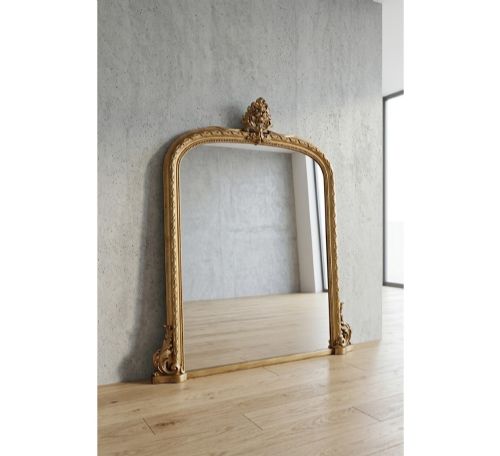
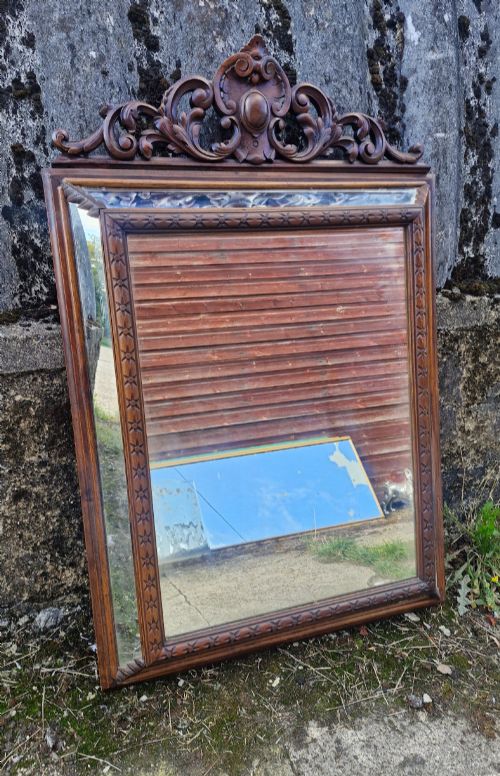
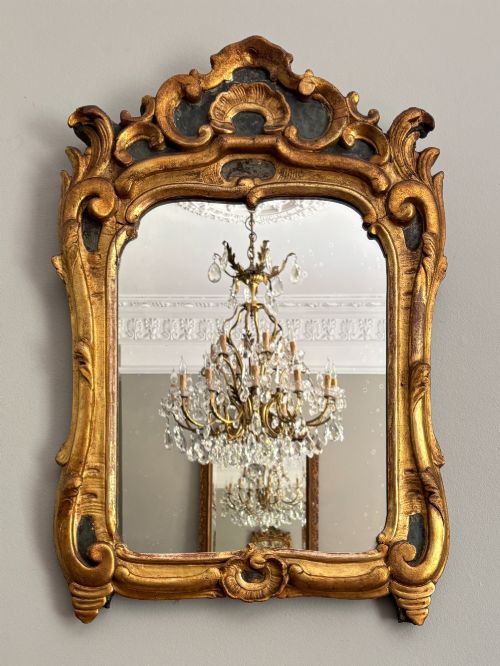
Makers produced these pieces in various regional profiles, including arched tops, shaped frames, and triptych formats. Many incorporate architectural proportions intended to dominate a reception room wall, whether functioning as an overmantel or a leaner mirror.
The decorative vocabulary draws heavily from historical periods such as Louis XV, Louis XVI, and the Victorian era. Crests often feature prominent motifs like ribbons, cartouches, or birds, anchoring the visual weight at the top of the glass.
How they were made
Craftsmen shaped the primary structure from timber such as mahogany, oak, or softwoods, applying layers of gesso to build up intricate relief decoration before gilding. Gold leaf was then laid over the prepared surfaces to achieve a brilliant metallic finish.
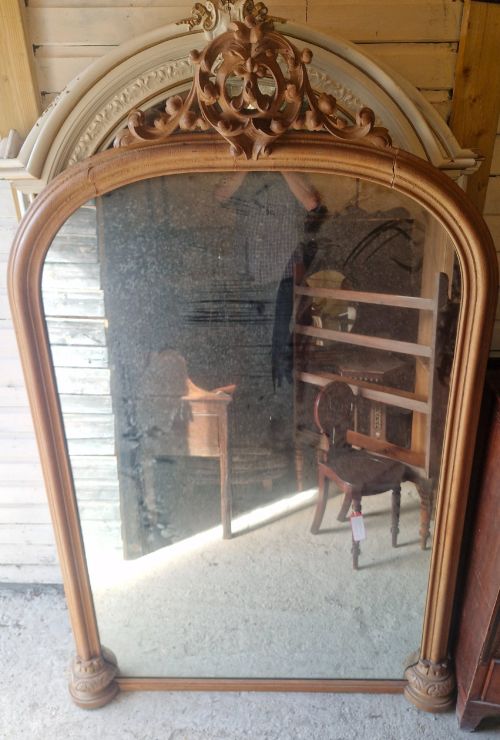
Alternatively, some pieces relied on carved wood surfaces left in their natural state or painted, occasionally combined with parcel-gilt details. Mirror glass was set into the rebates, with older examples utilising mercury silvering that produces characteristic foxing over time.
Some nineteenth-century French mirrors arrive with stubborn traces of Parisian workshop chalk still lingering inside the joinery.
What varies in quality
The refinement of the carving separates standard production from exceptional work, particularly in the depth and undercut detail of the cresting. Crisp execution in the gesso relief indicates skilled hand-tooling rather than mass-produced moulding compounds.
The originality of the components determines the integrity of the piece, from the retention of the primary glass to the continuity of the original gilt surface. Balanced proportions and harmonious scale between the frame and the decorative crest further distinguish superior examples.
The Carved Crest Overmantel Glossary
- Giltwood
- Wood that has been coated with gold leaf or gold paint. This finish creates a luminous surface that catches candlelight and natural illumination.
- Gesso
- A plaster-like mixture applied to wood frames to create a smooth surface for carving and gilding. It allows for sharp, intricate relief work.
- Foxing
- Age-related spots and discoloration within the mirror glass plate. This chemical change occurs behind the glass over decades.
- Cartouche
- An ornamental frame resembling a scroll or tablet, often bearing a central motif. It frequently appears as the focal point on a carved crest.
- Pier glass
- A tall mirror designed to hang on the wall between windows. These pieces often match the height of adjacent architectural openings.
Carved Crest Overmantel: Frequently Asked Questions
How do I hang a heavy overmantel mirror?
These substantial frames require secure fixing directly into masonry or heavy wall studs using appropriate steel brackets. Weight distribution must be shared across the lower support and upper anchor points to ensure stability.
Professional installation is strongly advised given the considerable mass of wood, gesso, and glass. The structure should rest partially on the mantelpiece shelf if positioned above a fireplace.
What is foxed glass?
Foxed glass refers to the natural oxidation of the reflective backing behind the mirror plate. This process creates mottled dark spots and an aged patina across the surface.
Many collectors value original foxed glass because it confirms the age of the mirror. It softens the reflection and contributes to the historic character of the piece.
Can these mirrors be placed on the floor?
Large formats are frequently utilised as leaner mirrors, resting directly on the floor against a wall. This placement creates a relaxed interior aesthetic while maximising the reflected light in a room.
When positioned this way, safety fixings attached to the wall behind the upper frame prevent accidental tipping. The base should rest on a level surface protected from dampness.
How do I clean an antique gilt frame?
Dusting should be performed gently with a soft, dry brush to avoid disturbing fragile gesso and gold leaf. Moisture and chemical cleaners must be avoided entirely to preserve the historical surface.
Professional conservation is recommended if the gilding shows signs of flaking or detachment. Regular maintenance is limited to the careful removal of surface particles.
How do I identify a French nineteenth century mirror?
French mirrors from this era often feature distinctive crests incorporating naturalistic motifs, ribbon bows, or neoclassical urns. The construction frequently employs oak or softwood framing finished with detailed gessowork.
Proportions tend to be elegant and tall, designed to draw the eye upward toward the ceiling. The presence of original backboards and traditional French joinery further supports the origin.