


French Rococo Bronze Candelabra
French rococo bronze candelabra are exuberant lighting fixtures defined by asymmetrical scrolls and naturalistic motifs, sought after for their opulent decorative presence in formal interiors.
French Rococo Bronze Candelabra
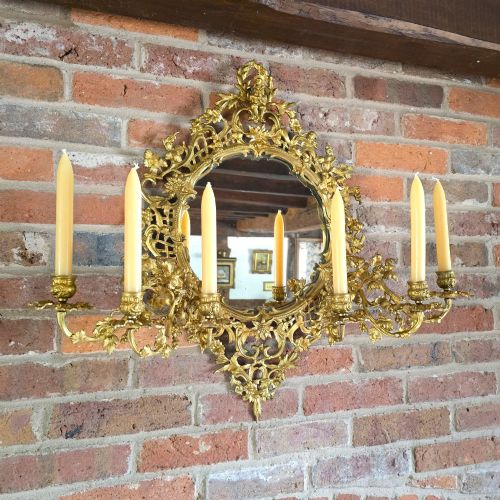
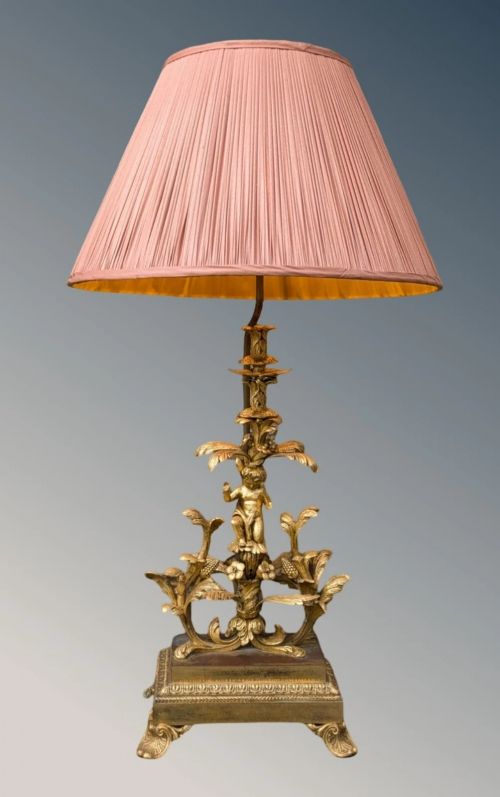
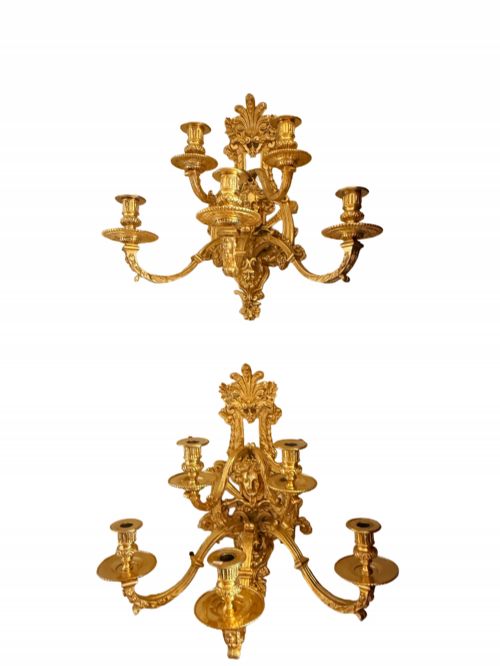
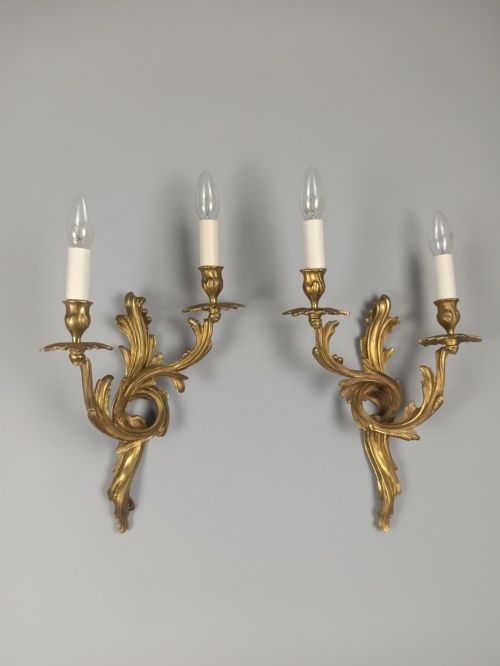
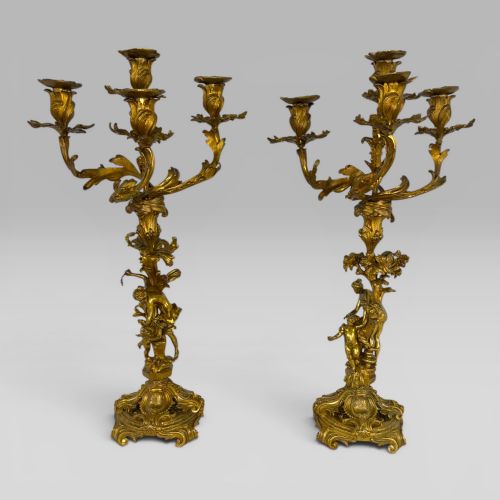
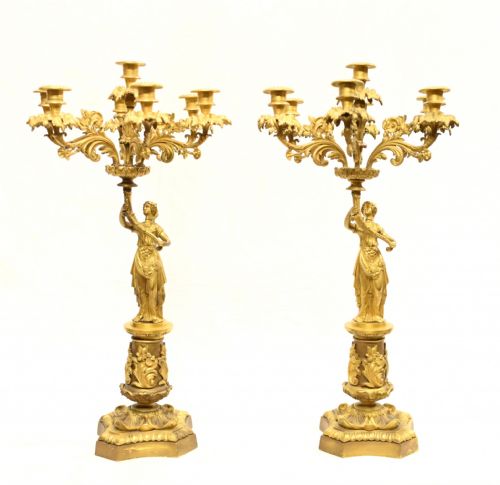
When searching for French rococo bronze candelabra, you encounter elaborate multi-branch lighting pieces originating primarily from the nineteenth century. The selection ranges from monumental table lamps and wall sconces to matching clock garniture sets featuring figures such as cherubs, puttis, and maidens. Most examples display the characteristic revival styles of the Victorian era and the Louis XV period.
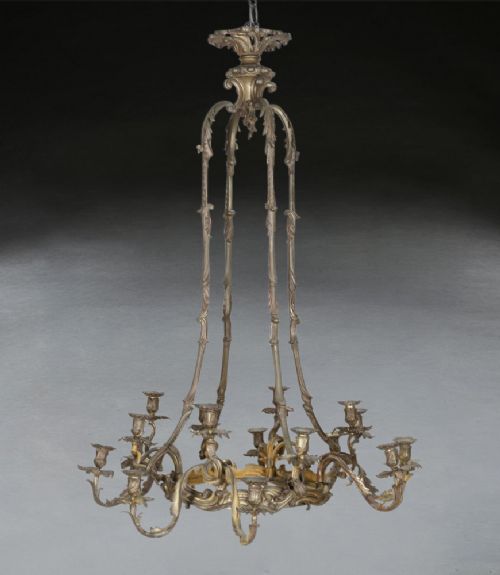
The prevailing forms on this page include matched pairs of gilt bronze and ormolu candelabra, often mounted on marble bases. You will also find branching wall lights, chandeliers, and composite pieces incorporating porcelain birds or ceramic vases. These objects translate eighteenth-century exuberance into nineteenth-century decorative schemes.
Materials and construction
These items rely heavily on cast bronze, brass, and gilt metal, with ormolu surfaces providing a brilliant golden sheen through the application of gold leaf or mercury gilding. Many pieces integrate contrasting materials such as white or dark marble for stability and visual weight, alongside crystal drops and enamel details.
Makers utilised intricate sand casting and lost-wax techniques to achieve the fluid, scrollwork forms typical of the rococo style. Chasing and hand-finishing followed the initial cast to sharpen details like foliage, cherub wings, and flame motifs before assembly into multi-branch configurations.
Several examples feature cheerful bronze cherubs and puttis balancing precariously while holding aloft heavy multi-branch candle holders.
Assessing craftsmanship and execution
Surface finish determines much of the visual impact, with high-quality mercury gilding or fire-gilding retaining a rich, warm lustre over time compared to flat modern plating. The integration of auxiliary materials, such as finely turned marble bases or intact crystal prisms, further separates exceptional examples from ordinary production.
The French Rococo Bronze Candelabra Glossary
- Ormolu
- Gilded bronze produced by applying a gold and mercury amalgam to a bronze base and heating it to vaporise the mercury. This technique creates a durable, luminous golden finish characteristic of antique French metalwork.
- Garniture set
- A decorative matching set usually comprising a central clock flanked by two matching candelabra or vases. These groups were designed to sit symmetrically on a mantelpiece.
- Candelabra
- A branched candlestick holder designed to support multiple candles simultaneously. In nineteenth-century French pieces, these often feature removable branches to function as simple candlesticks.
- Torchère
- A tall ornamental stand or candlestick originally designed to carry a torch. In later pieces, the term describes figural lamps holding light sources aloft.
- Rococo revival
- A nineteenth-century design movement that reinterpreted the curving, asymmetrical motifs of the eighteenth-century Louis XV style. It prioritised shellwork, C-scrolls, and naturalistic floral ornamentation.
French Rococo Bronze Candelabra: Frequently Asked Questions
How do I clean gilt bronze candelabra?
Dust the metal surfaces gently with a soft, dry microfibre cloth to remove accumulated particles without scratching the delicate gilding. Avoid using commercial brass cleaners, water, or chemical solvents, as these substances can strip the historic ormolu finish entirely.
For stubborn grime trapped in the cast crevices, use a soft-bristled artist's brush very carefully. Preserving the original patina remains paramount for maintaining the historical integrity and visual depth of nineteenth-century bronze work.
Are these candelabra wired for electricity?
Many surviving examples have been converted into table lamps or wired to accept electrical fittings over the course of their long domestic history. Some retain their original configuration designed strictly for wax candles, while others feature concealed wiring running through the central stem.
Buyers should examine the specific listing details or consult the dealer regarding the current wiring status. Conversions can often be reversed or updated by a qualified electrician to suit modern safety standards.
How do I distinguish nineteenth-century pieces?
Nineteenth-century French pieces usually display heavier bronze casting, sharper mechanical assembly techniques, and distinct material combinations like varied marble types. Examination of the construction marks, screw threads, and the composition of the gilt bronze often reveals the manufacturing period.
Stylistic cues also help, as nineteenth-century makers frequently reinterpreted earlier Louis XV motifs with a heavier, more theatrical execution. Comparing the weight, patination, and joinery against documented pieces from the same era provides further clarity.