




French Revival Clock
A french revival clock brings nineteenth-century architectural drama and precision engineering to a mantelpiece.
French Revival Clock
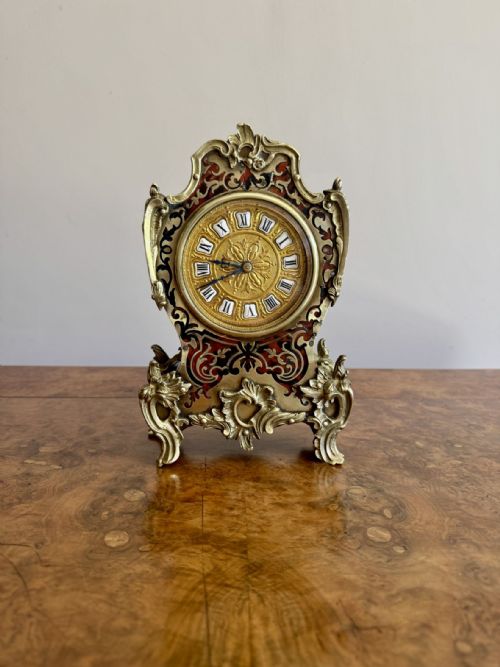
A french revival clock encompasses elaborate mantel clocks, desk clocks, and multi-piece garnitures originating primarily from the nineteenth century. These objects draw heavily on earlier historical design vocabularies, translating past grandeur into ornate household timekeepers.
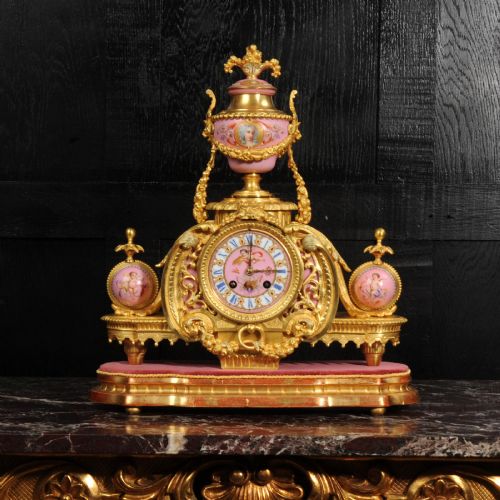
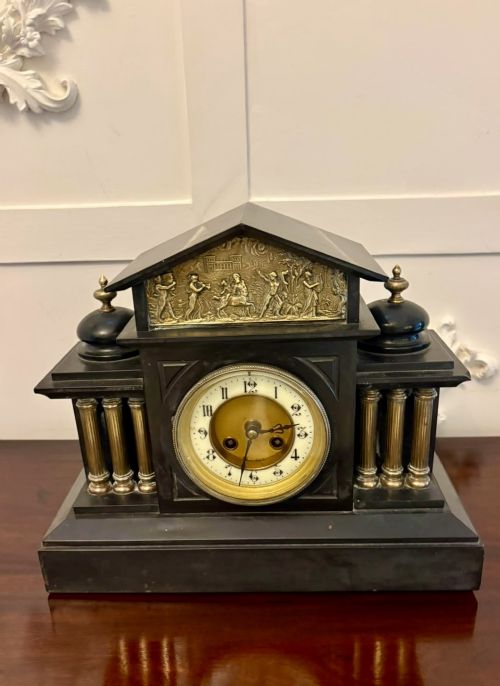
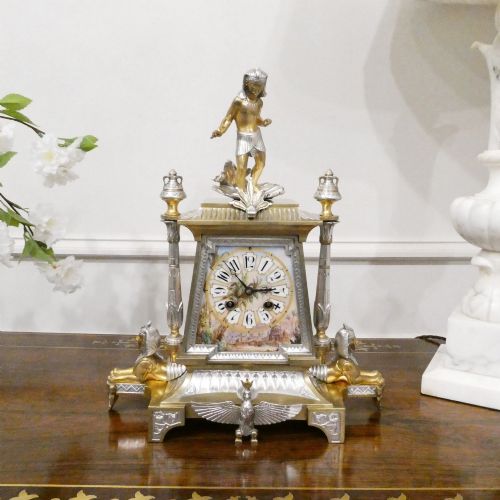
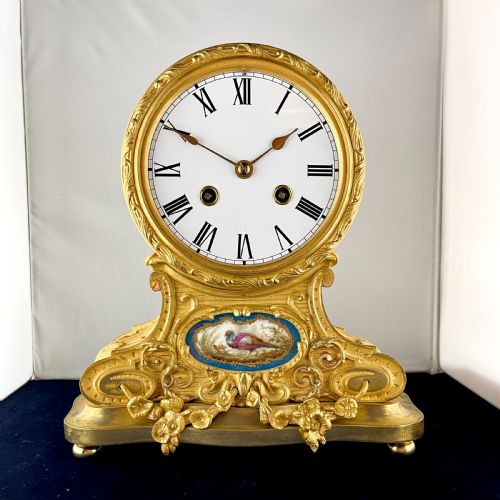
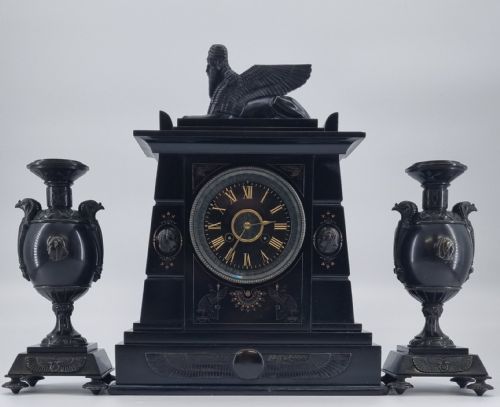
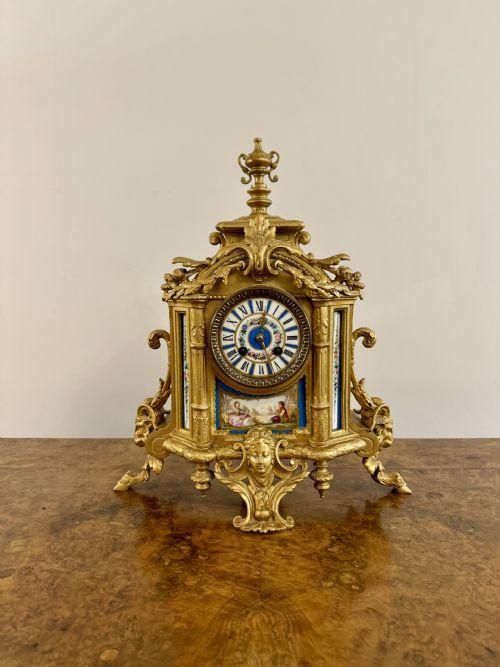
Mantel clocks dominate the selection, frequently paired with matching garnitures or rendered in architectural black marble, gilt bronze, and ormolu. Buyers encounter numerous variations adhering to Louis XV, Rococo, and Egyptian revival aesthetics from the 1860s through the 1880s.
Materials and construction
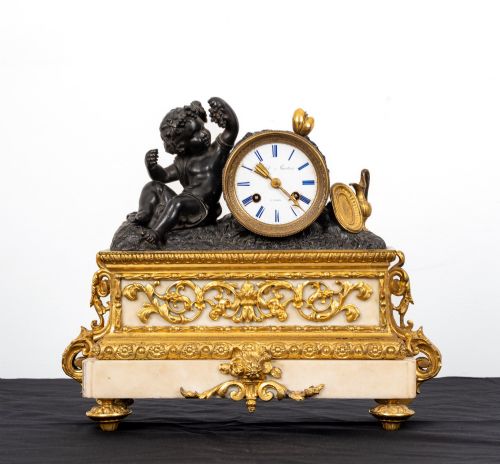
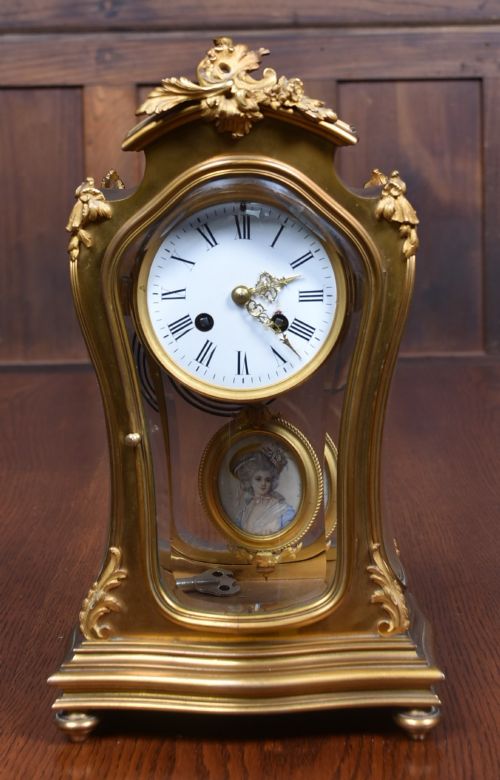
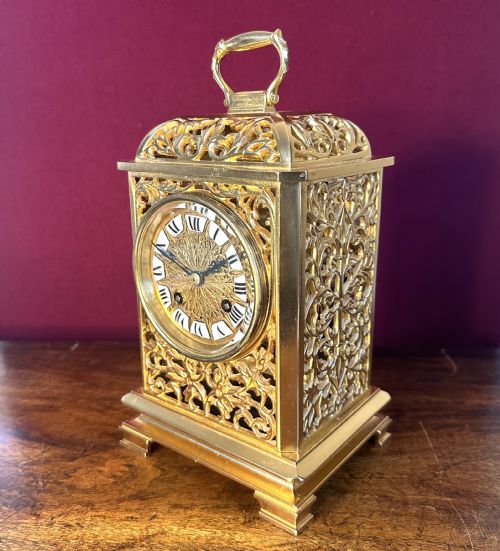
The construction relies heavily on cast bronze, ormolu, and solid brass, often combined with hand-painted porcelain panels, enamel dials, and polished marble bases. Artisans employed complex casting and mercury gilding techniques to achieve deep metallic lustre and intricate surface relief.
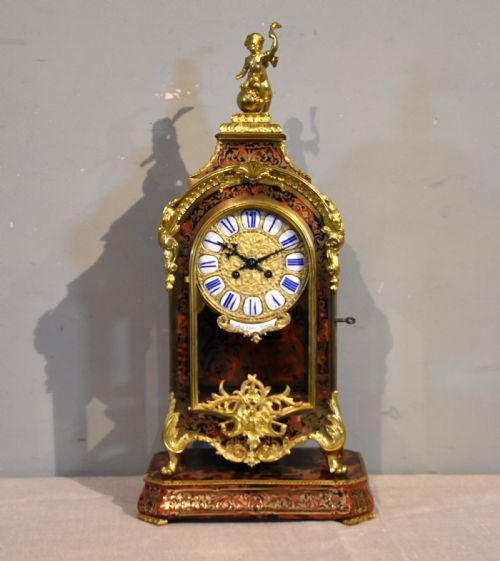
Cabinetmakers and bronze-founders incorporated exotic veneers such as tortoiseshell and brass inlay for Boullework pieces, while clockmakers housed eight-day mechanical movements within these heavy architectural housings.
Some solid brass models are described as having lots going on, packing astonishing mechanical complexity into a single ticking mantel ornament.
Craftsmanship and movement execution
Quality separates ordinary brass-cased timepieces from masterworks by the precision of the chased ormolu, the crispness of the bronze casting, and the integration of signed porcelain or enamel dial work. Finer examples display meticulous hand-finishing on every scroll and figural element.
The sophistication of the internal movement and the reputation of the founding maker or retailer dictate the standing of a piece within the hierarchy of surviving clocks.
Achille Brocot·Richard et Cie·Henry Dasson·Japy Freres·Leroy Paris·PH Mourey
The French Revival Clock Glossary
- Ormolu
- Gilt bronze created by applying a finely ground high-carat gold-mercury amalgam to a bronze object before firing. This technique produces a rich, durable golden surface seen on high-status nineteenth-century frames.
- Garniture
- A set of decorative matching objects, usually a central clock flanked by two matching vases or candelabra. These sets were designed to display symmetrically on a mantelpiece.
- Boullework
- Marquetry consisting of tortoiseshell and brass inlay inspired by André-Charles Boulle. It creates a striking contrast of dark tortoiseshell and gleaming metal across clock cases.
- Champlevé
- An enamelling technique where troughs or cells are hollowed out of a metal surface and filled with vitreous enamel powder before firing. The resulting coloured patterns sit flush with the surrounding metal.
French Revival Clock: Frequently Asked Questions
How do I wind a french revival clock?
Most mechanical models utilise a double-ended key inserted into winding holes on the dial to tension the springs for the time and strike trains.
Care must be taken not to over-wind the movement, as this can strain the internal brass gears and mainsprings.
Were these clocks made in sets?
Many fine examples were produced alongside matching side ornaments known as garnitures, forming a symmetrical triad for display.
These matching pieces typically mirror the bronze mounts, marble bases, or porcelain decoration of the central timekeeper.
How do I identify the historical revival style?
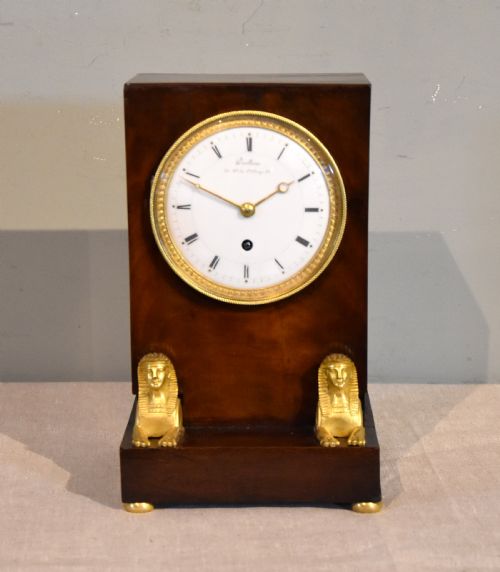
Stylistic clues point directly to the historical era being reinterpreted, such as asymmetrical scrolling for Rococo or sphinxes and obelisks for Egyptian revival.
Makers frequently combined these historical motifs with nineteenth-century architectural proportions and heavy marble plinths.
Where were these clocks originally displayed?
Bourgeois and aristocratic households placed these heavy mantel clocks in principal reception rooms, parlours, and formal drawing rooms.
They functioned both as reliable timekeepers and as status symbols reflecting the owner's taste for historical opulence.