


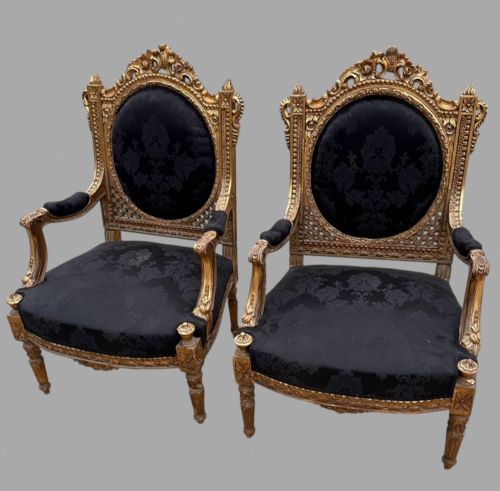


French Regency Chairs
French regency chairs bring monumental style and refined seating to a room, offering grand forms in giltwood, mahogany, and walnut.
French Regency Chairs
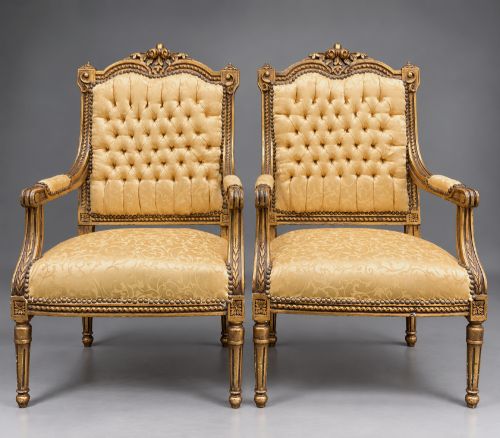
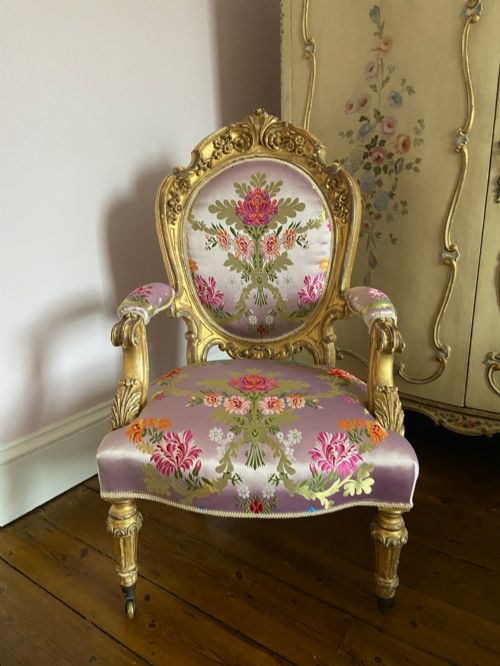
When you search for french regency chairs, you are looking at seating that encompasses armchairs, side chairs, window seats, and stools from various periods including the nineteenth century and twentieth century revivals. The forms span open armchairs, bergères, salon chairs, and curule stools, reflecting a rich vocabulary of historic design.
You are most likely to meet revival pieces and nineteenth-century interpretations on this page, alongside earlier nineteenth-century examples and twentieth-century pieces. These encompass styles such as Regency, Hollywood Regency, French Neoclassical, Louis XVI, and Rococo Revival.
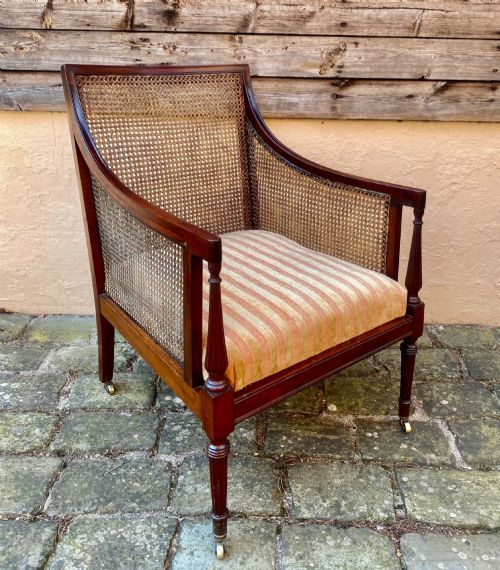
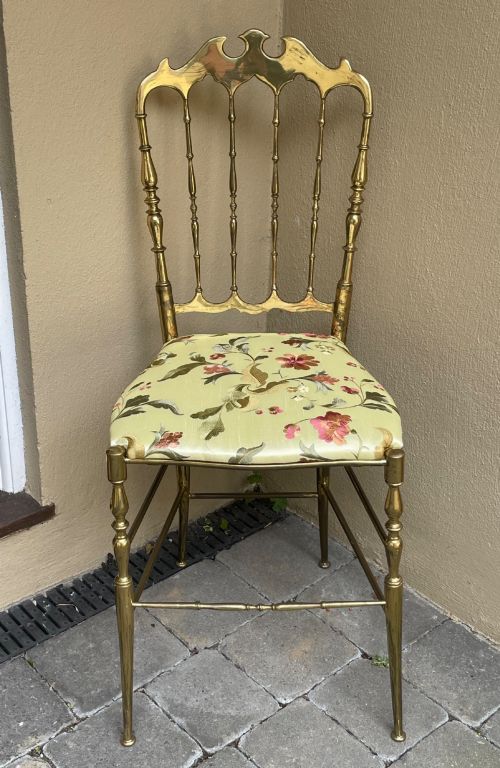
The assortment includes individual chairs, pairs, and larger sets of dining chairs featuring French linen seats or rope backs. Materials range across giltwood, mahogany, walnut, brass, cane, and textile, providing diverse options for sophisticated interiors.
Materials and construction
Makers utilised solid timbers such as mahogany and walnut alongside giltwood and polished or solid brass to build these frames. Wood frames often received gilt paint or detailed carving, while brass components added metallic contrast to salon chairs and side chairs.
Upholstery and structural elements incorporate fabric, textile, cane, and French linen seats. Pieces like the adjustable screw-top piano stool demonstrate specialised mechanical elements integrated into traditional wooden structures.
An adjustable screw-top mechanism allows a nineteenth-century piano stool to alter its height with mechanical precision.
Distinctions in quality
The calibre of a piece rests upon the crispness of its carved ornament and the integrity of its timber or gilt surface. Superior examples display refined proportions and harmonious execution across arms, legs, and backrests.
Material selection and decorative finishing dictate the standing of individual items, separating standard revival pieces from those with exceptional presence. The handling of brass mounts, cane work, and textile upholstery further defines the standard of the finished seating.
The French Regency Chairs Glossary
- Giltwood
- Timber treated with gold leaf or gold paint to simulate solid gold decoration. It appears frequently on grand nineteenth-century frames and revival pieces.
- Curule stool
- An ancient Roman magistrate form of X-shaped seating revived in later decorative schemes. These stools often utilise gilt or polished frames.
- Window seat
- An elongated bench designed to fit within a window recess or hallway. These pieces share stylistic traits with contemporary armchairs and side chairs.
- Lyre-back
- A chair back featuring a central splat shaped in the silhouette of a musical lyre. This motif recurs in nineteenth-century mahogany seating.
French Regency Chairs: Frequently Asked Questions
What defines a french regency chair?
These pieces incorporate classical French and Regency design vocabulary, spanning giltwood armchairs, mahogany bergères, and brass salon seating.
They reflect periods from the early nineteenth century through to twentieth-century revivals, utilising materials like walnut, cane, and textile.
How do I use these chairs in a room?
Armchairs and bergères anchor formal reception spaces, while side chairs and stools provide flexible seating around salons or dressing areas.
Pairs and larger dining sets create symmetry, and window seats suit hallways or alcoves.
Are these chairs comfortable for daily sitting?
Upholstered bergères and armchairs with fabric or French linen seats offer substantial padding and supportive enclosed backs.
Stools and side chairs provide firmer, upright seating suited to occasional use.
How do I distinguish nineteenth-century pieces from revivals?
Nineteenth-century examples often display period timber patination and traditional joinery methods suited to their age.
Twentieth-century revival pieces, including Hollywood Regency styles, interpret these historic forms with distinct surface treatments and materials.