



French Regency Candlesticks
French regency candlesticks combine heavy cast metals with classical motifs to illuminate a room with dignified warmth.
French Regency Candlesticks
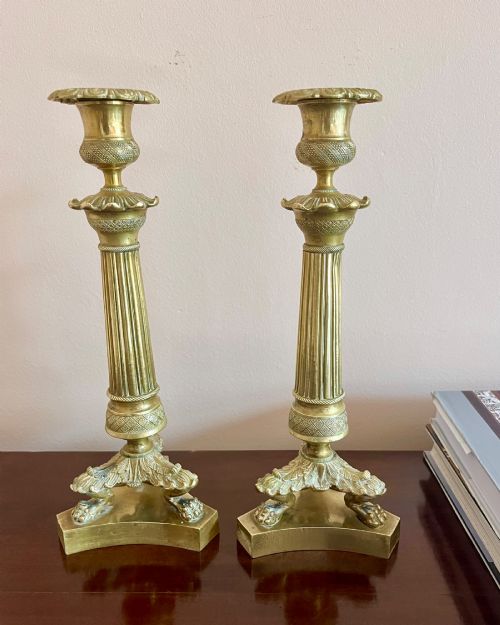
French regency candlesticks bring together classical proportions and heavy metal casting, most often appearing as matched pairs designed to anchor a mantelpiece or side table. These items span the nineteenth century and the regency period, taking the form of candlesticks, table lamps, and multi-light candelabra.
The silhouettes draw heavily on neoclassical and empire vocabularies, presenting upright columns or figural stems mounted on sturdy bases. Many examples incorporate adjustable arms or branch into several candle holders, creating functional height and balance.
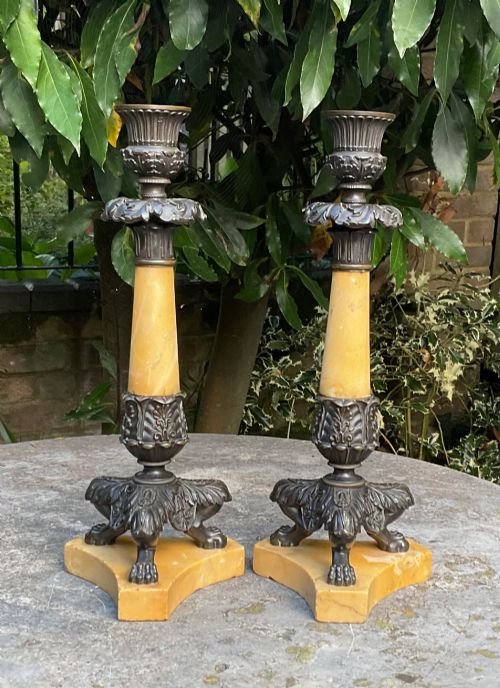
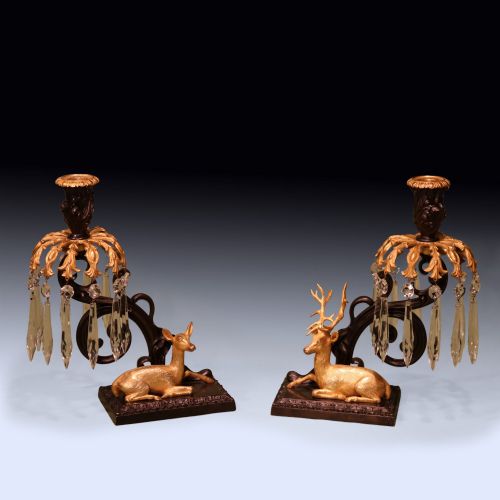
Makers frequently turned to mythological or natural subjects, producing figures such as cherubs, stags, dolphins, and putti to support the central shafts. These pieces often sit upon square or round plinths of marble, adding physical weight and visual contrast to the metalwork above.
Materials and Construction
Foundries combined patinated bronze with ormolu, applying a bright mercury gold gilding to highlighted details while leaving the underlying bronze dark. This contrast between matte dark surfaces and brilliant gilded mounts defines the aesthetic of the period.
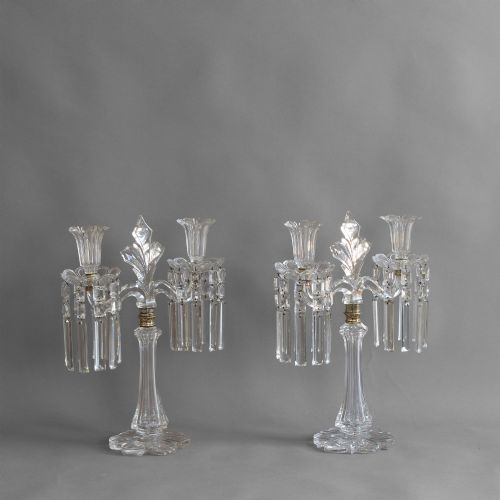
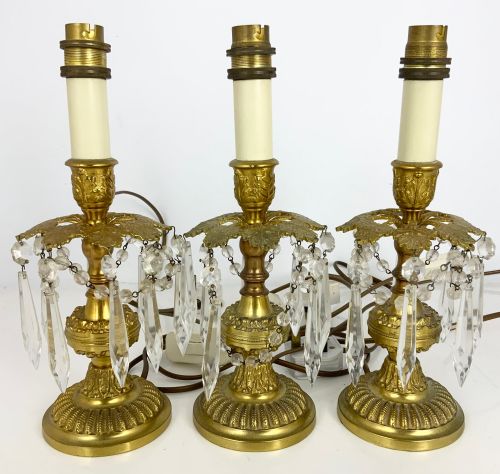
Foundational elements frequently relied on turning and carving dense stone, pairing bronze with sienna marble plinths. Craftsmen also integrated cut glass and lustre drops to reflect candlelight, alongside occasional uses of brass, treen, and fabric components.
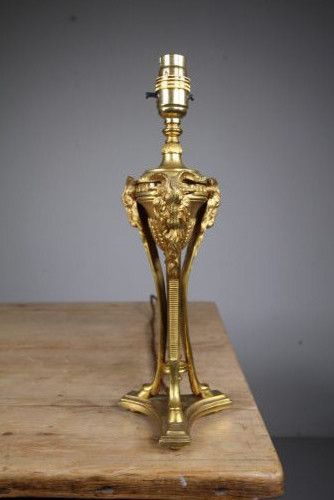
Casting required assembling multiple discrete components soldered or pinned together, allowing for complex figural work like rams heads or stork motifs. Adjustable mechanisms on desk lamps and multi-light candelabra demanded precise metal-fitting skills to function smoothly.
Storks, dolphins, and zodiac signs frequently support the candles, proving that historical lighting designers had a wonderful imagination.
Distinctions in Execution
The richness of the ormolu finish indicates the original investment in materials, with deeper, more luminous gold layers surviving on higher-grade commissions. Lesser examples rely on thin or flat metallic paints that lack the warm reflectivity of genuine fire-gilding.
Material integration also marks the standard of the piece, seen in the selection of unblemished marble bases and the weight of the bronze components. Heavier, balanced castings remain stable and straight, whereas inferior assemblies feel thin and prone to leaning.
The French Regency Candlesticks Glossary
- Ormolu
- Finely chopped gold amalgamated with mercury and applied to bronze through heat, creating a rich golden surface layer. This technique produces a durable finish characteristic of high-end nineteenth-century metalwork.
- Patinated bronze
- Darkened metallic alloy treated with chemical solutions to achieve a controlled aged appearance. It provides a dark matte contrast against bright gilt details.
- Lustre
- Glass pendant drop suspended from a sconce to refract and multiply candle or lamp light. These hanging prisms catch illumination from multiple angles.
- Plinth
- Solid rectangular or circular base block supporting the main column of a candlestick. Sourcing coloured stones like sienna marble for this foundation adds structural weight.
- Bouillotte
- Adjustable desk lamp featuring a central shade and candle arms designed for card games and reading. The height of the metal shade moves up or down on a central rod.
French Regency Candlesticks: Frequently Asked Questions
How do you clean ormolu safely?
Dust surfaces gently using a soft, dry brush to avoid abrading the delicate gold layer. Moisture and harsh metal polishes strip away historical gilding permanently.
Keep pieces away from direct water contact and modern cleaning chemicals. A clean, dry microfiber cloth remains the safest option for routine maintenance.
Were these originally wired for electricity?
Original pieces were made exclusively for wax candles or oil combustion before modern wiring existed. Many surviving examples were converted later into table lamps by running cords through the hollow stems.
Conversions often happened mid-century or later to accommodate domestic lighting needs. Checking the base reveals whether the original socket structure remains intact.
What is the difference between a candlestick and a candelabra?
A candlestick holds a single candle upright on a central shaft. It offers a straightforward silhouette designed for smaller surfaces and paired placement.
A candelabra branches out into multiple arms to support two or more candles from one base. These provide greater illumination and a more imposing visual presence.
How do you date a bronze and marble piece?
Dating relies on examining the construction methods, fastener types, and stylistic vocabulary of the metal casting. Nineteenth-century pieces often display hand-cut threading on screws and natural variations in the marble veining.
Comparing the decorative motifs against known neoclassical and empire design books helps narrow the production era. Makers frequently drew upon classical Greek and Roman archetypes popular during specific decades.