




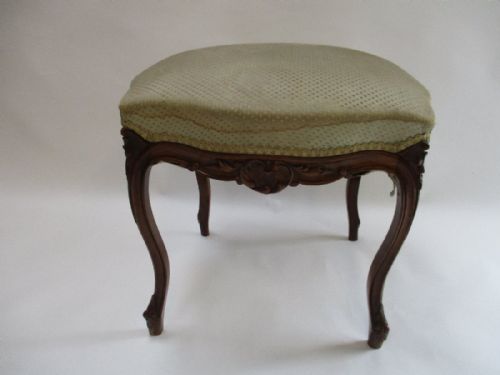
French Provincial Dressing Stool
These french provincial dressing stool pieces bring timeless seating into a room, offering compact charm and classic carving.
French Provincial Dressing Stool
When you search for a french provincial dressing stool, you encounter low seating designed for boudoir use, dressing tables, and intimate spaces. These pieces function as footstools, small benches, and boudoir seats rather than full-sized chairs.
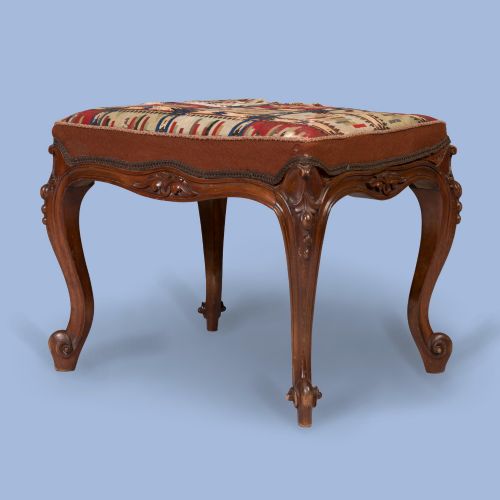
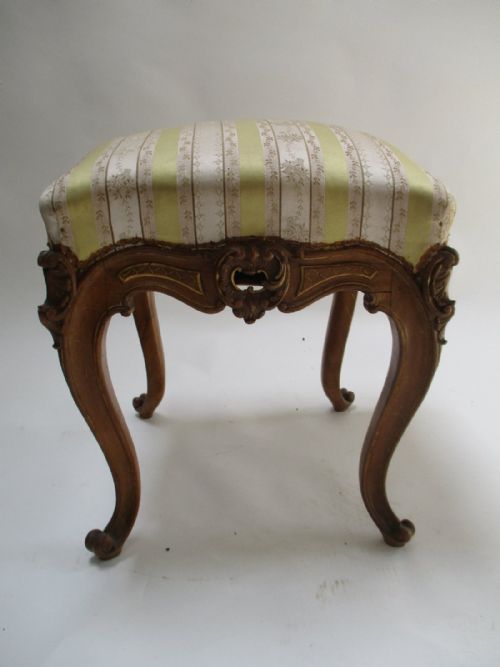
The versions most commonly met on this page date from the nineteenth century into the early twentieth century, spanning Victorian examples and later revivals. They frequently adopt Louis XV style, French Rococo, and French chateau aesthetics.
Makers shaped these items primarily as stools and banquettes, keeping profiles low and decoration focused on carved woodwork and painted finishes. Their compact footprint makes them versatile additions to bedrooms and dressing areas.
Materials and construction
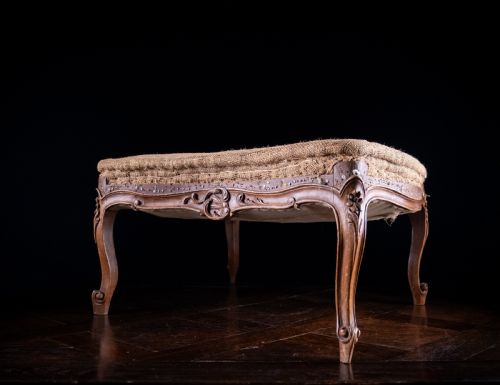
Carpenters utilised solid timbers like beech and walnut for the foundational frames, carving intricate scrollwork and floral motifs directly into the wood. Many pieces feature hand-carved details that reflect traditional provincial craftsmanship.
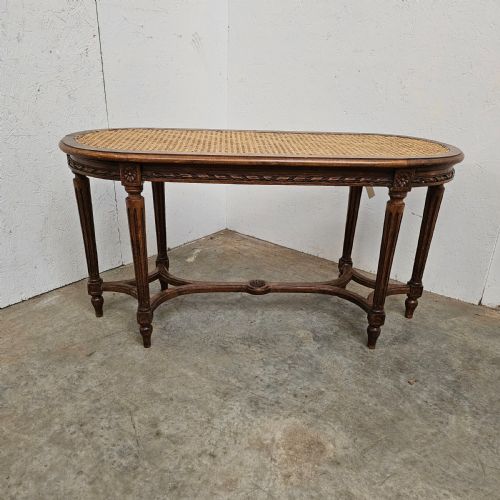
Surfaces were frequently painted or gilded to achieve the desired decorative finish, while other pieces showcase the natural grain of walnut. Seat construction incorporates cane work or upholstered pads layered over hessian support.
Several stools wear coats of historic paint, having survived a century or more of changing parlour colour schemes.
Judging quality in these stools
Quality separates pieces through the crispness and depth of the hand carving on the wooden frames. Sharply defined botanical and scroll details indicate superior craftsmanship compared to softer, more rounded mouldings.
The choice of primary timber also dictates value, with well-figured walnut and solid beech outlasting softer woods. Intricate touches like original painted finishes and intact cane work elevate the standard of a piece.
The French Provincial Dressing Stool Glossary
- Louis XV Style
- A design movement characterised by asymmetrical curves, cabriole legs, and naturalistic plant motifs. It heavily influenced nineteenth-century seating designs.
- Banquette
- An upholstered bench or long stool intended for seating one or more persons. These often appear in hallway or dressing room settings.
- Cane
- Woven rattan strips utilised to form breathable panels for seats and backs. It requires skilled hand-weaving to maintain structural tension.
- Hessian
- A coarse woven fabric typically utilised as a foundation layer beneath upholstery padding. It provides sturdy support within traditional seat construction.
French Provincial Dressing Stool: Frequently Asked Questions
Where should I place a dressing stool?
These low stools fit comfortably beside a dressing table, dressing room mirror, or at the foot of a bed. Their compact dimensions allow them to slide away neatly when not in use.
They also serve well as occasional footstools in living spaces or sitting rooms, adding a touch of period character without dominating the floor plan.
How do I care for wooden frames?
Maintain the timber by dusting regularly with a soft, dry cloth and avoiding direct sunlight to protect painted or polished finishes. Natural waxes can nourish exposed walnut frames over time.
Keep cane panels slightly hydrated with a damp sponge occasionally to prevent the material from becoming brittle and cracking under pressure.
Are these stools comfortable for sitting?
Most examples function as short-term seating for dressing or resting feet rather than lounging chairs. Their primary design focus centres on elegance and compact utility.
Upholstered versions provide soft support, while caned tops offer a firmer seating experience suited for brief intervals at a vanity table.
How do I identify the period?
Dating relies upon examining the timber joints, hand-carving techniques, and overall wear patterns on the painted or gilded surfaces. Nineteenth-century pieces often show traditional joinery methods distinct from later machinery-made items.
Stylistic revivals during the Victorian era and the early twentieth century frequently reinterpreted earlier French Rococo aesthetics with their own regional touches.