
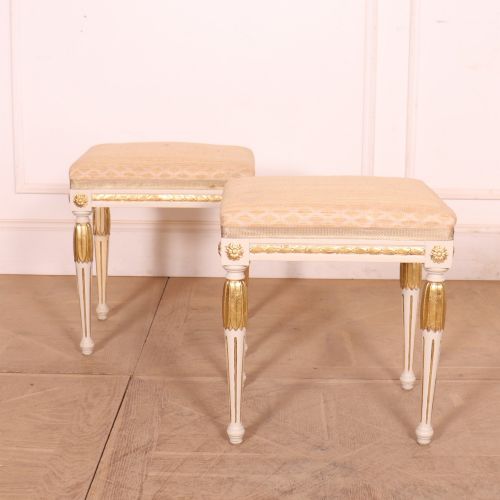


Cream Painted Stool
A cream painted stool brings continental elegance to an interior, offering practical seating shaped by centuries of European design.
Cream Painted Stool
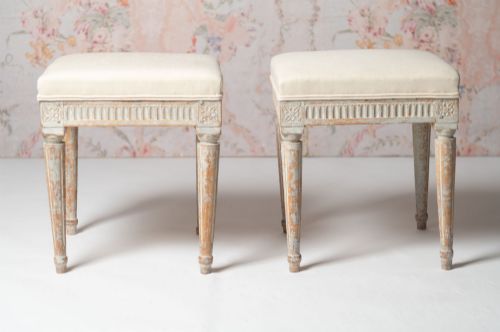
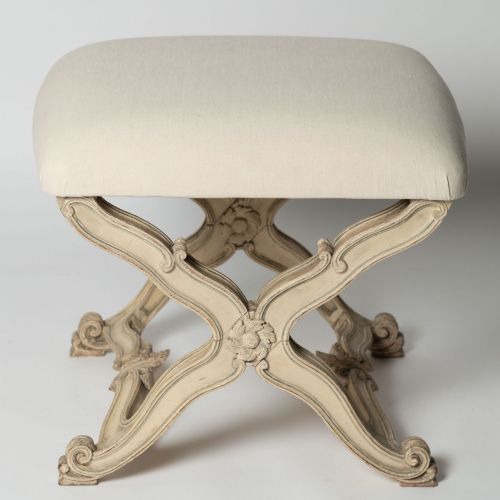
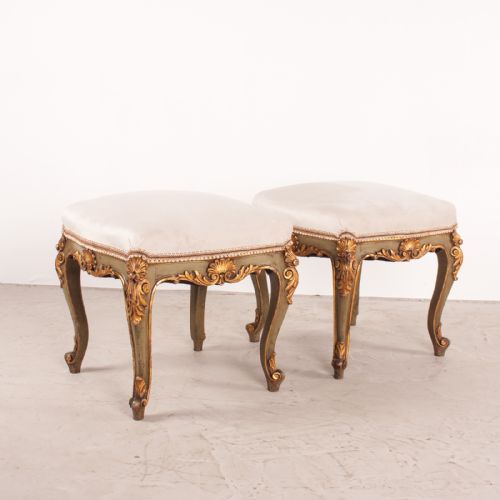
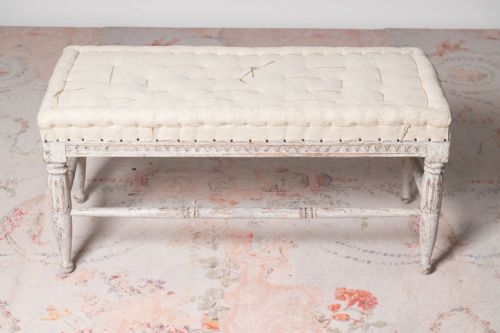
A cream painted stool encompasses a range of seating forms including footstools, benches, and window seats originating from the eighteenth century onwards. These pieces frequently reflect European stylistic traditions such as Swedish Gustavian, French Louis XV, and Italian Rococo designs.
The selections available here lean heavily towards Swedish origin and French revival periods, often presenting carved wooden frames finished with pale paint. Buyers will find individual chairs, low stools, and matching pairs designed for domestic utility and decorative placement.
Materials and construction
Makers shaped these frames from solid woods like satinwood and carved timber, applying layered paint finishes sometimes accented with gold leaf or giltwood. Construction methods rely on traditional joinery to support the carved ornament characteristic of period seating.
Upholstery forms an integral part of the finished piece, utilising fabrics such as linen and needlework to cover the padded seats. These textiles complement the painted and gilded wooden structures underneath.
The listings span the eighteenth, nineteenth, and early twentieth centuries, featuring Swedish, French, and Italian origins.
Distinctions in quality
Quality rests in the crispness of the hand-carved detail upon the wooden frame and the integrity of the original painted surface. Finer examples display deeper sculptural relief and restrained ornamentation rather than heavy-handed decoration.
The harmony between the structural frame and the upholstery finish dictates the visual success of the piece. Superior items maintain balanced proportions and period-appropriate textiles that complement the painted woodwork.
Miles & Edwards
The Cream Painted Stool Glossary
- Gustavian
- A Swedish neoclassical design style characterised by pale painted finishes, restrained carving, and functional elegance. This aesthetic emerged during the late eighteenth century under King Gustav III.
- Giltwood
- Timber treated with a thin layer of gold leaf or gold paint to create a lustrous metallic surface. It highlights specific carved details on decorative frames.
- Curule
- An ancient Roman chair shape featuring intersecting concave legs forming an X-frame. This classic silhouette reappeared in nineteenth-century revival seating.
- Rococo
- An ornate artistic style featuring asymmetrical scrollwork, C-scrolls, and naturalistic plant motifs. It heavily influenced French and Italian furniture design during the eighteenth century.
Cream Painted Stool: Frequently Asked Questions
Are these stools comfortable for daily sitting?
Most of these pieces feature padded upholstery designed for occasional seating, dressing tables, or as footrests.
Their primary function historically combined utility with decorative presence in boudoirs and drawing rooms.
How do I identify a Swedish Gustavian stool?
Gustavian pieces typically display lighter paint finishes, simpler neoclassical lines, and subtle hand-carved fluting or rosette motifs.
They reject the heavier ornamentation seen in concurrent continental styles in favour of clean geometric balance.
Can I use a long stool as a coffee table?
Long stools and window seats provide stable surfaces that readily adapt to holding books or a tray when topped firmly.
Many period examples possess the sturdy wooden construction necessary to function as low tables in contemporary spaces.
How should I clean a painted wooden frame?
Dust the carved wooden surfaces gently with a dry, soft cloth to protect the integrity of the historic paint finish.
Avoid liquid cleaners or abrasive materials that might lift the aged layers of paint or gilding.