


French Pot Cupboard Pair
A french pot cupboard pair brings symmetry to a bedroom while offering useful enclosed storage beside a bed.
French Pot Cupboard Pair
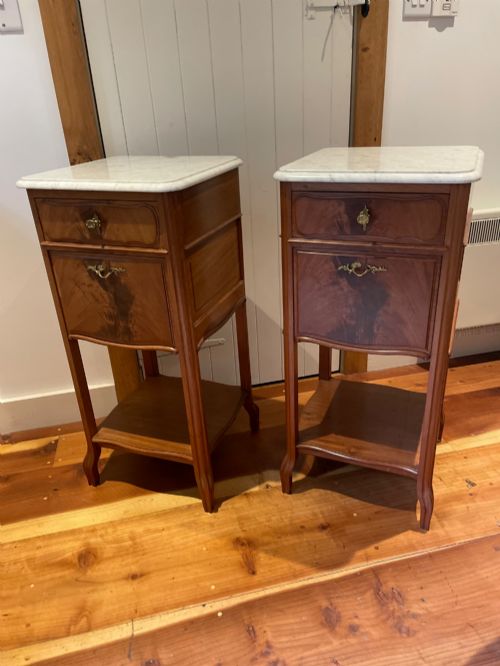
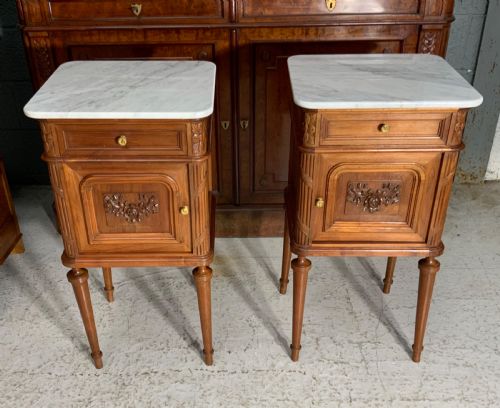
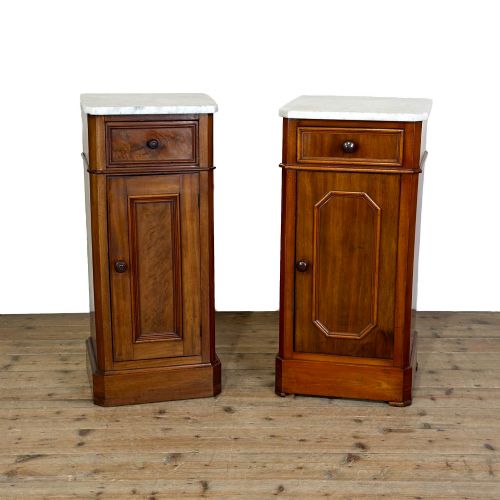
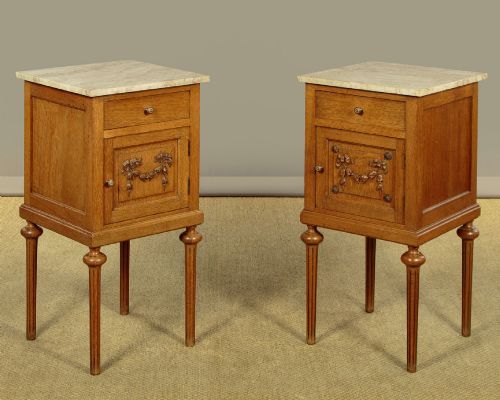
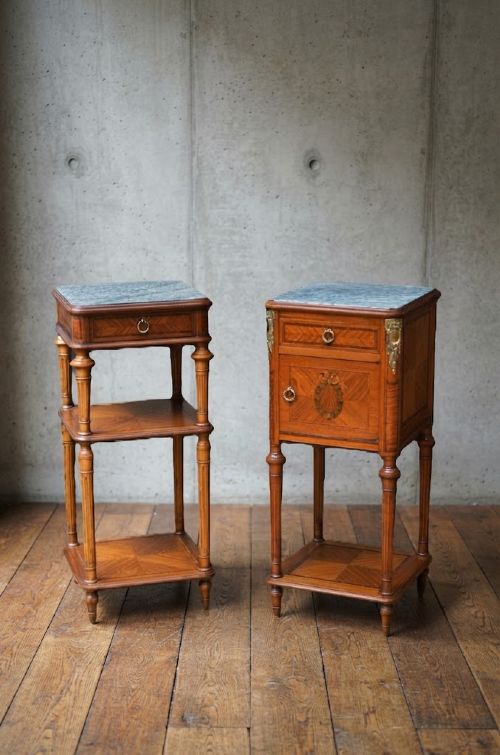
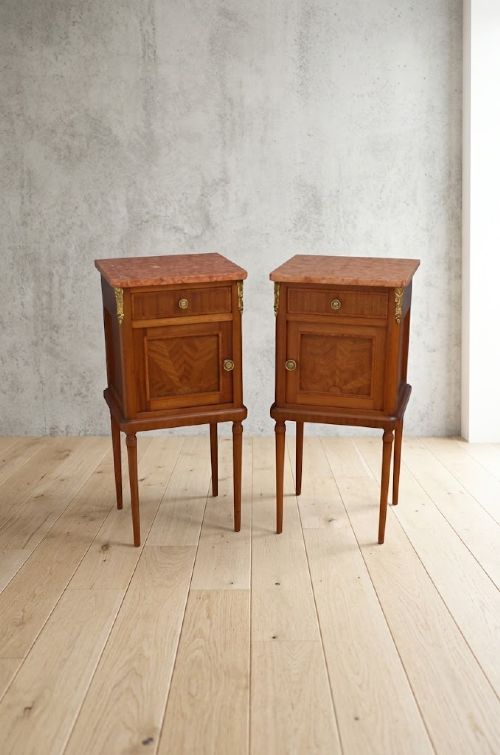
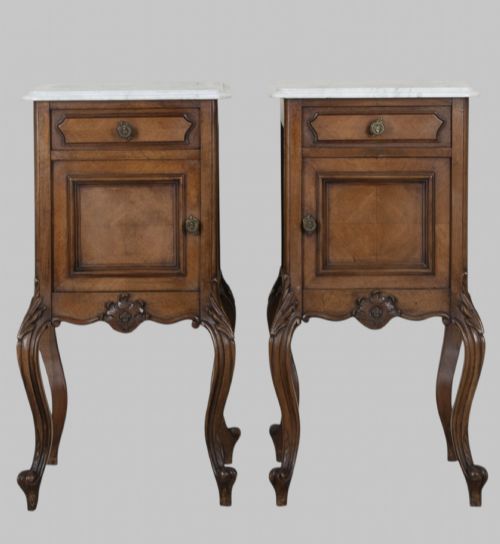
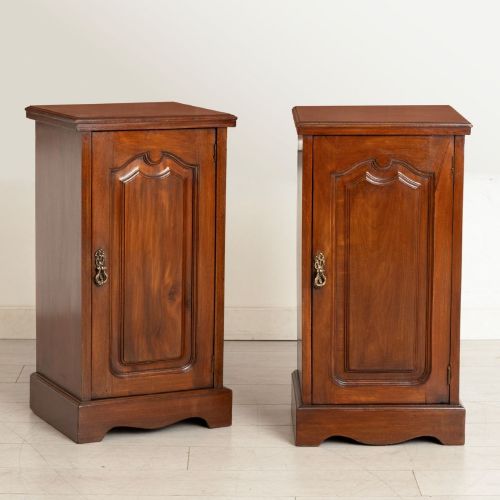
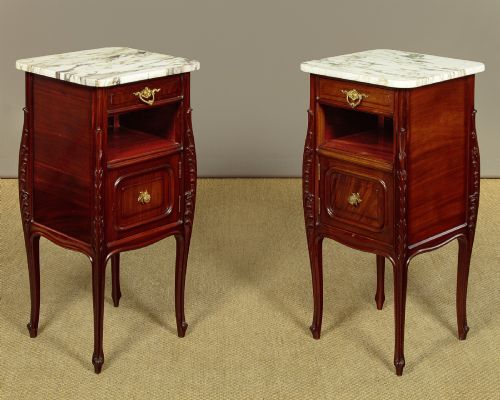
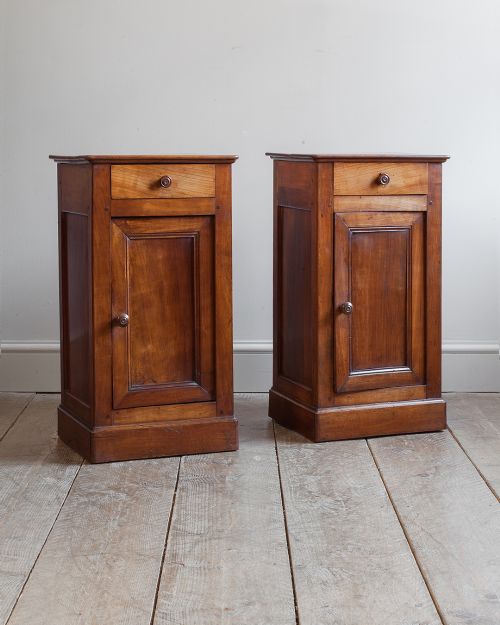
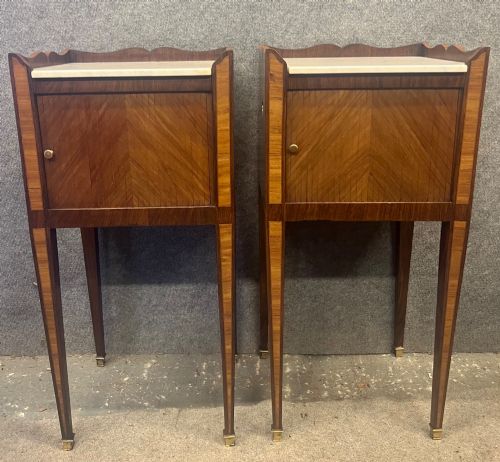
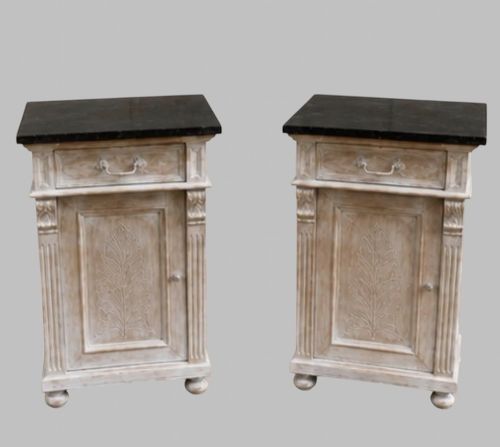
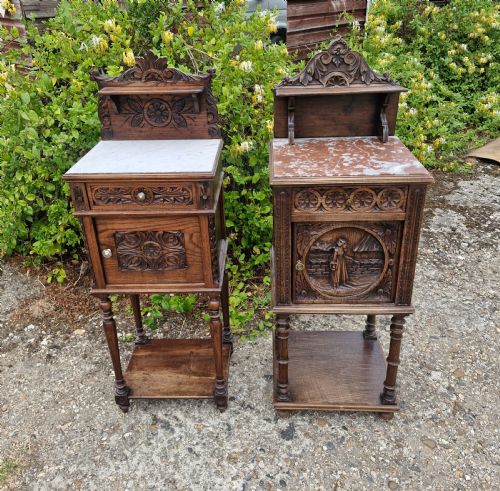
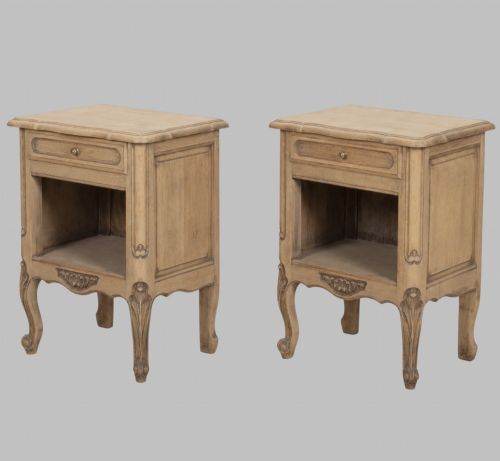
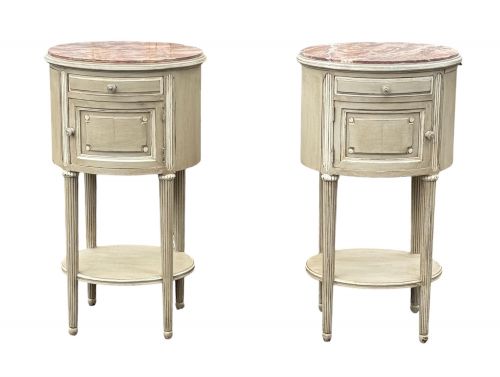
A french pot cupboard pair consists of two matching bedside cabinets or small bedside tables designed to sit symmetrically on either side of a bed. When buyers search for a french pot cupboard pair, they encounter bedside cabinets and nightstands originating primarily from the nineteenth and twentieth centuries.
The selections on this page span diverse aesthetic movements including French Provincial, French Chateau, Louis Philippe, and Art Deco. Common forms include pedestal cabinets, cylindrical stands, and low cupboards intended originally to house a chamber pot.
Makers utilised various regional woods and fitted stone surfaces to create matched sets for domestic chambers. Walnut, mahogany, oak, and cherrywood appear frequently alongside lighter timbers such as satinwood.
How they were made
Cabinet makers constructed these enclosures using dense hardwoods like walnut and mahogany, frequently applying marquetry, inlay, or painted finishes to the exterior surfaces. Structural frames often incorporate carved detailing, panelled doors, and precise joinery suited to daily use.
Many examples incorporate fitted marble tops in white or coloured stone, providing a durable and washable surface for water jugs and lamps. Brass mounts, handles, and gallery rails complete the hardware on finer specimens.
French Pot Cupboard Pair Retail Price Guide 2026
Typical asking prices for french pot cupboard pair among the pieces listed under this phrase on Sellingantiques today, from the lower quarter to the upper quarter. They describe what is for sale here now, not the wider market.
Several cabinets retain their original internal shelves designed strictly for chamber pots, now repurposed for quiet nocturnal reading.
What varies in quality
The standard of a matched pair depends heavily on the precision of the timber matching and the intricacy of any applied inlay or carving. Grain alignment across both cabinets indicates superior workshop practice.
Hardware selection and stone thickness also distinguish finer examples. Heavy, finely veined marble slabs and original brass mounts elevate the execution beyond standard utility pieces.
The French Pot Cupboard Pair Glossary
- Pot cupboard
- A small enclosed bedside cabinet originally designed to conceal a chamber pot. They typically feature a single door above or beside a small interior shelf.
- Marquetry
- The art of applying small pieces of veneer to a structure to form decorative patterns. Craftsmen utilised contrasting timbers such as tulipwood and walnut.
- Louis Philippe
- A mid-nineteenth century style characterised by restrained curves and minimal ornamentation. Pieces from this period rely on the natural grain of mahogany or walnut.
- Satinwood
- A durable hardwood with a lustrous, golden sheen utilised for fine veneering. It appears frequently on decorative cabinets from the late nineteenth century.
French Pot Cupboard Pair: Frequently Asked Questions
How were french pot cupboards used historically?
These cabinets served primarily as bedside storage within French bedchambers, holding personal items and concealing a chamber pot behind a small door.
Over time, their practical function shifted towards general bedside storage for lamps, books, and night-time accessories while maintaining their symmetrical arrangement.
How do I style a matched pair in a modern bedroom?
Placing identical cabinets on either side of the bed creates visual balance and anchors the room. Their compact footprints allow them to fit neatly beside both low platforms and taller bedframes.
Pairing antique wooden tones with contemporary textiles softens the interior scheme, while marble surfaces offer a practical, wipe-clean shelf for daily essentials.
How can I tell different French periods apart?
Earlier nineteenth-century pieces often display restrained Louis Philippe lines or rich mahogany veneers, relying on timber grain rather than heavy carving. Later nineteenth and early twentieth-century examples embrace revival styles like Louis XV and Louis XVI, featuring elaborate marquetry, gilt brass mounts, and shaped marble tops.
Art Deco items introduce geometric forms, streamlined silhouettes, and distinctive exotic woods that depart entirely from traditional floral or classical motifs.
Are these cabinets sturdy enough for daily use?
Built from dense hardwoods like oak, walnut, and mahogany, these cabinets possess robust joinery designed to withstand decades of domestic service. Their enclosed shelving and solid frames easily support modern bedside lighting and heavy items.
Regular care with appropriate wood waxes and gentle cleaning for marble surfaces preserves both the structural integrity and the finish for continued everyday placement.