




French Porcelain Urn Lamp
A French porcelain urn lamp brings classical grandeur and hand-painted colour to a room through its balanced vessel form and decorative mounts.
French Porcelain Urn Lamp
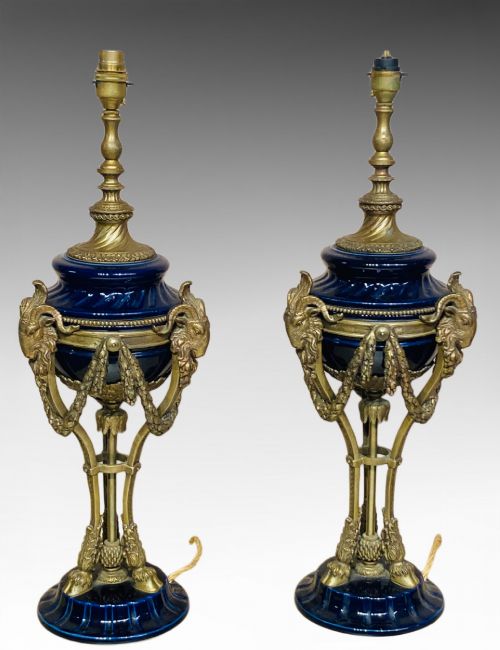
A french porcelain urn lamp takes its shape from traditional decorative vessels adapted to hold electrical fittings or oil burners. These pieces combine ceramic bodies with cast metal mounts to create structured vertical silhouettes suited for side tables and mantels.
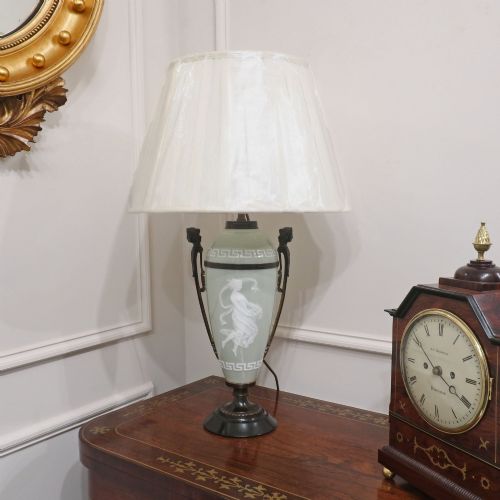
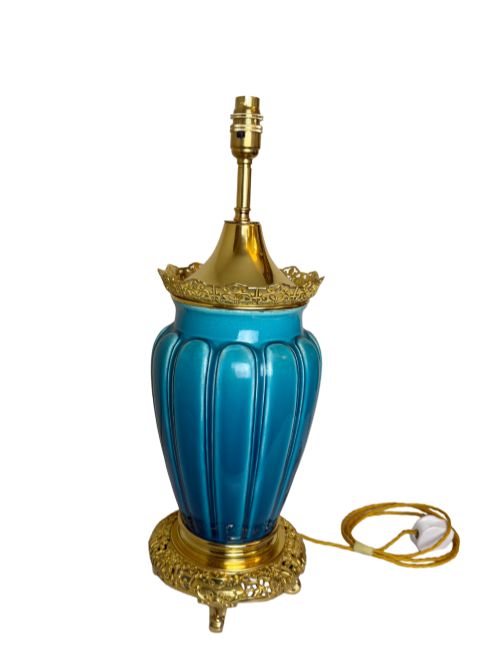
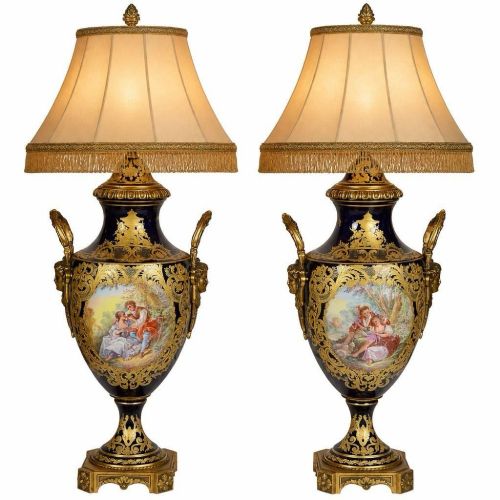
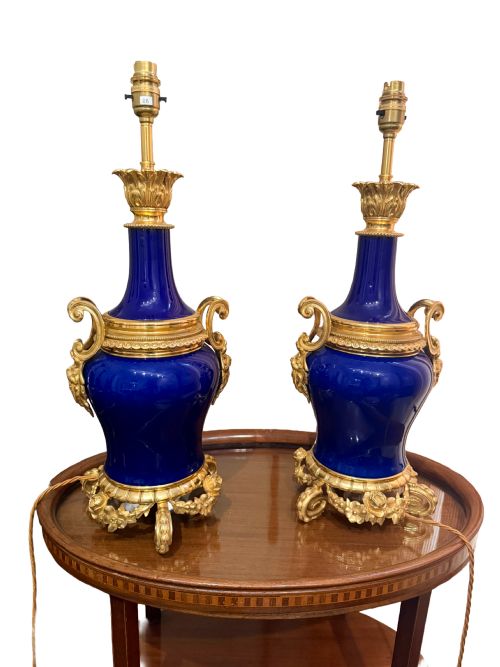
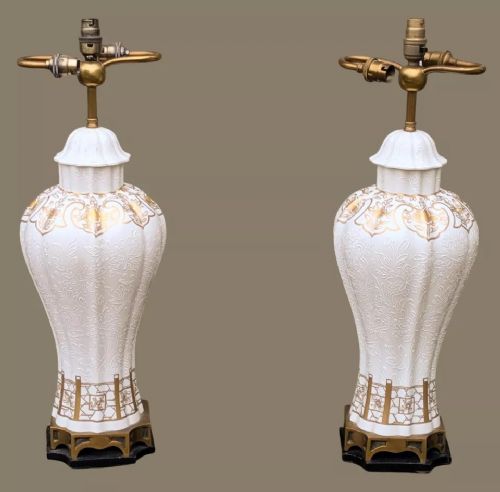
Most examples found here date across the nineteenth century, including pieces styled after Sevres or Chinese export designs. The bodies frequently display cobalt blues, turquoise glazes, or pate sur pate decoration paired with handles and bases.
Buyers encounter single lamps and balanced pairs shaped as vases, amphorae, or lidded jars. They serve both as functional illumination and as sculptural focal points in traditional interiors.
Materials and Construction Methods
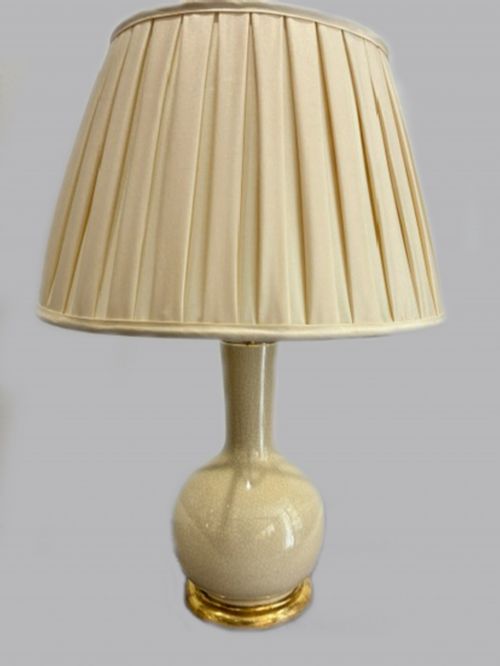
The body of a french porcelain urn lamp relies on fired ceramic, often finished with hand-painted polychrome scenes, gilding, or monochrome glazes such as bleu celeste and powder blue. Artisans shaped these porcelain vessels using traditional potting techniques before applying decorative surface layers.
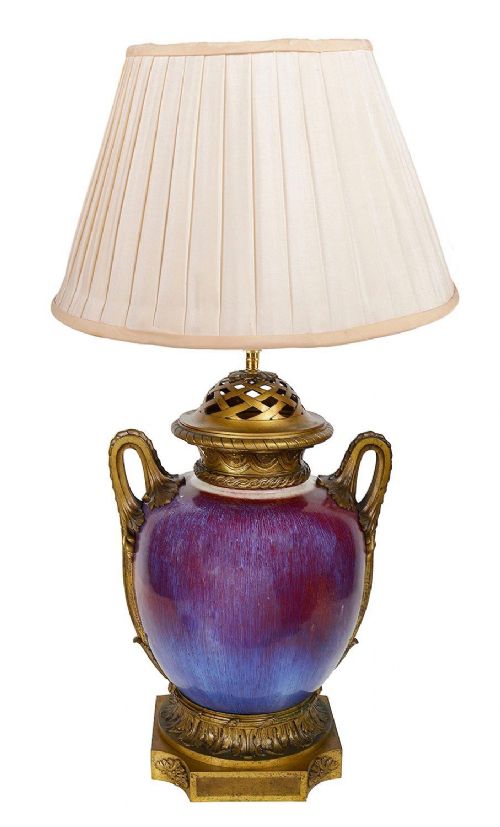
Metal components including ormolu, gilt bronze, brass, and gold leaf provide structural support and ornamental accents around the rims, handles, and bases. These mounts were cast and chased separately before being secured to the ceramic body.
Listings feature porcelain, ormolu, gilt bronze, brass, and silk across periods spanning the eighteenth, nineteenth, and twentieth centuries.
Distinctions in Quality and Execution
The refinement of the hand-painted details and the crispness of the gilt bronze or ormolu mounts set the standard for these lamps. Finer pieces demonstrate precise brushwork on the porcelain panels and heavy, well-chased metal castings that fit the ceramic contours tightly.
The integrity of the porcelain body and the harmony between the ceramic vessel and its metal mounts determine the overall success of the piece. Superior examples maintain original gilding and undamaged glazes across both the main body and the secondary decorative elements.
The French Porcelain Urn Lamp Glossary
- Ormolu
- Gilded bronze mounts applied to furniture and decorative objects. This technique involves coating cast bronze with a mercury and gold amalgam before heating.
- Pate sur pate
- A ceramic decorating method where successive layers of liquid clay are built up on a dark body to create a low relief cameo effect.
- Bleu celeste
- A pale turquoise or sky-blue ceramic glaze popular in nineteenth-century French porcelain production. It provides a distinct backdrop for gilt highlights.
- Sang de boeuf
- A rich red copper-based glaze originating in Chinese ceramics and later emulated by European potteries. The deep crimson colour varies according to firing conditions.
- Sevres style
- Decorative porcelain produced in imitation of the famous French royal factory. These pieces typically feature rich blue grounds, hand-painted reserves, and heavy gilding.
French Porcelain Urn Lamp: Frequently Asked Questions
What periods do these lamps come from?
The selection spans the eighteenth, nineteenth, and early twentieth centuries, with a strong concentration of nineteenth-century Victorian and Napoleon III pieces. Styles range from French Neoclassical and Rococo Revival to Chinoiserie and Chinese export designs.
Dates are attributed based on stylistic evidence, manufacturing techniques, and historical markers found on the porcelain bodies and metal mounts.
How were these urn lamps used?
Many began as decorative vases or oil lamps before being converted to table lamps for electrical lighting. They were designed to sit on side tables, pedestals, or mantelpieces in formal rooms.
Their substantial height and decorative presence allowed them to function primarily as ornamental objects that also provided ambient illumination.
Are these lamps sold as pairs?
Listings include both individual lamps and matched pairs. Pairs are frequently sought after for placement on matching side tables or mantel ends.
Single lamps often result from the separation of an original pair or the conversion of a single antique vase into a lighting fixture.
What materials are used in the mounts?
The metal fittings incorporate ormolu, gilt bronze, brass, and gold leaf. These materials provide structural support and decorative framing around the ceramic bodies.
The quality of the metalwork often mirrors the standard of the porcelain, with hand-chasing and heavy casting indicating higher-tier production.