
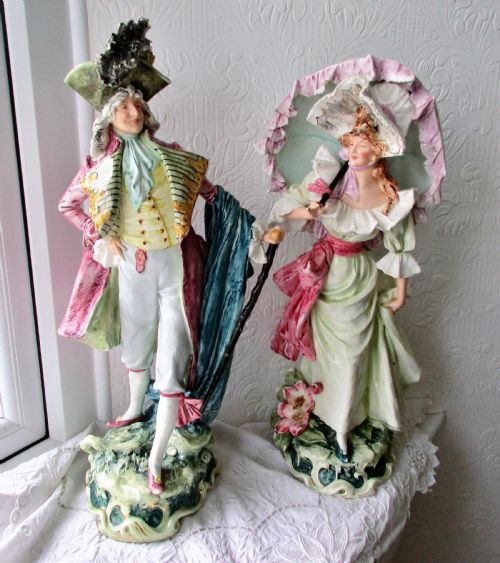


French Porcelain Statues
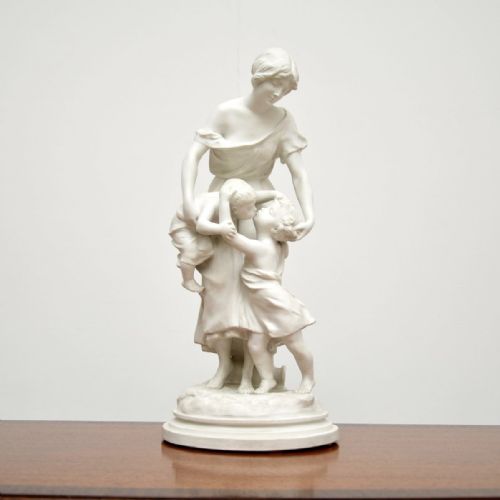
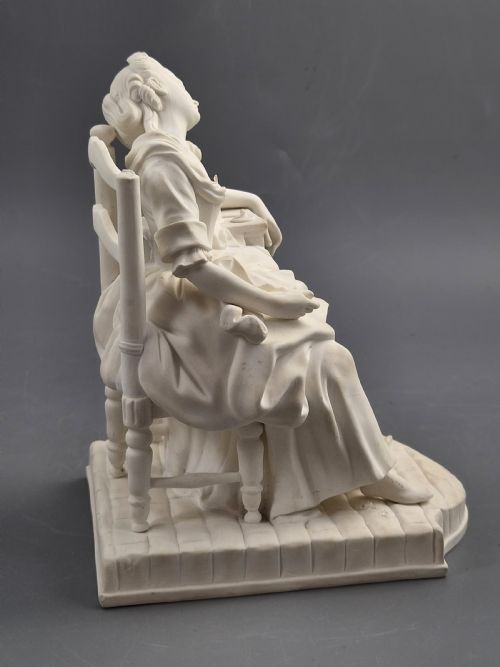
French porcelain statues bring nineteenth-century figurative art into interiors through modelled figures, portrait busts and pastoral groups.
French Porcelain Statues
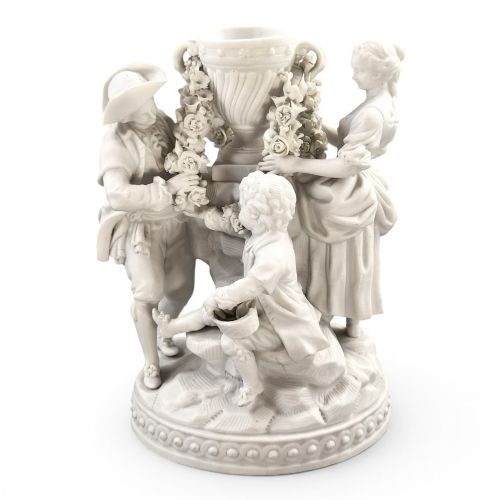
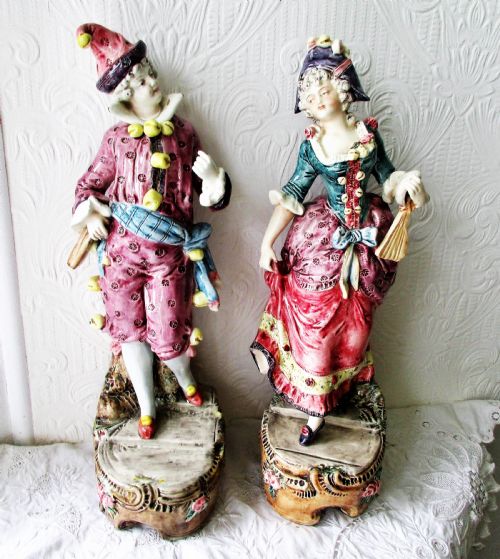
The forms span single figures on circular or rococo bases, balanced pairs designed as mantel garnitures, and complex multi-figure sculptural groups adorned with floral garlands. Makers frequently drew inspiration from earlier models, producing pieces in the manner of eighteenth-century factories such as Chelsea or Derby alongside original French neoclassical and romantic designs. These pieces function primarily as decorative cabinet displays and sculptural focal points for period rooms.
Materials and construction methods
Makers utilised hard-paste porcelain, soft-paste porcelain, earthenware and unglazed bisque or biscuit porcelain, often combined with hand-painted enamel details, gilt highlights and gold leaf. Bisque porcelain provided a matt, marble-like surface texture favoured for neoclassical busts and finely modelled figures, while glazed porcelain accommodated rich polychrome painting and delicate lace applications. Figures were slip-cast or hand-modelled in sections, then assembled and fired at high temperatures before applying surface decoration or gilding.
Early porcelain lace figures feature actual fabric dipped in liquid porcelain before firing, burning away in the kiln to leave delicate ceramic threads.
Assessing quality and execution
Quality in these statues rests upon the crispness of the modelling, the delicacy of facial expressions and the precision of the hand-painted enamels or gilding. Superior examples display clean underglaze or impressed factory marks, well-defined extremities such as fingers and foliage, and careful finishing that conceals mould seams. Lesser pieces exhibit softer surface detail, thicker application of glaze that obscures fine incisions, or simpler mass-produced polychrome decoration without individual hand-touching.
Bourdois and Bloch Paris·Letu and Mauger Paris·Samson of Paris·Vion et Baury·Sevres
The French Porcelain Statues Glossary
- Bisque porcelain
- Un-glazed porcelain with a matt, white, marble-like finish that highlights fine sculptural modelling and facial detail. It is frequently found on nineteenth-century portrait busts and classical figures.
- Hard-paste porcelain
- A durable ceramic composition fired at high temperatures using kaolin and petuntse. It produces a dense, bright white body capable of accepting complex glazes and vibrant enamels.
- Parian ware
- A fine-grained, unglazed porcelain developed in the nineteenth century to imitate white marble. It was widely utilised for portrait busts and classical sculptures.
- Faience
- Tin-glazed earthenware produced in France with opaque colours applied over the glaze. It offers a heavier body and softer texture than porcelain.
- Biscuit porcelain
- Alternative term for bisque porcelain, denoting unglazed ceramic ware fired once to vitrify the body. It retains a porous texture ideal for absorbing delicate flesh tones.
French Porcelain Statues: Frequently Asked Questions
How do I clean antique porcelain statues?
Dust surfaces gently using a soft, dry artist's brush to protect delicate painted details, gilding and fragile elements like porcelain lace.
Avoid submerging unglazed bisque pieces in water or using chemical solvents that can penetrate porous ceramic bodies and damage historical pigments.
What is the difference between bisque and glazed porcelain?
Bisque porcelain is fired without a glossy surface glaze, producing a matt, tactile finish that resembles carved white marble.
Glazed porcelain receives a glassy coating before its final firing, creating a shiny, waterproof surface suitable for rich hand-painted colours and gold leaf.
Are nineteenth-century French figures marked?
Many pieces bear impressed, painted or incised factory marks on the underside, ranging from pseudo-Chelsea gold anchors to specific Paris maker stamps.
Unmarked examples remain common, requiring attribution based on paste composition, modelling style, glaze characteristics and subject matter.
How were pairs of figures displayed?
Makers frequently produced matched pairs representing romantic couples, allegorical seasons or street vendors to balance mantelpieces and furniture tops.
They were arranged symmetrically as garnitures to frame clocks, candelabra or central sculptural groups in nineteenth-century interiors.