






French Porcelain Mantle Clock
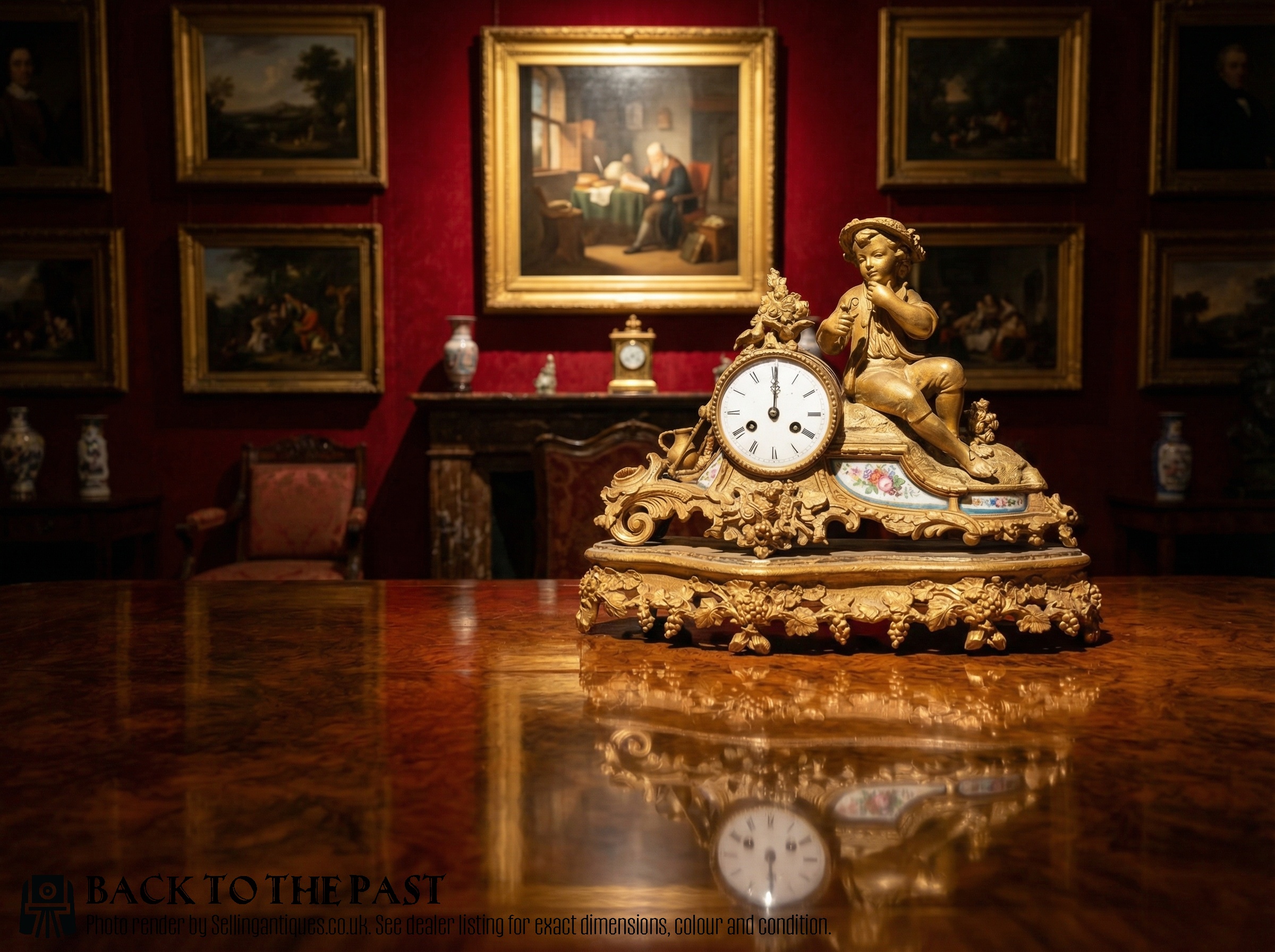
A french porcelain mantle clock brings together painted ceramic panels and heavy gilt metalwork to anchor a Victorian interior.
French Porcelain Mantle Clock
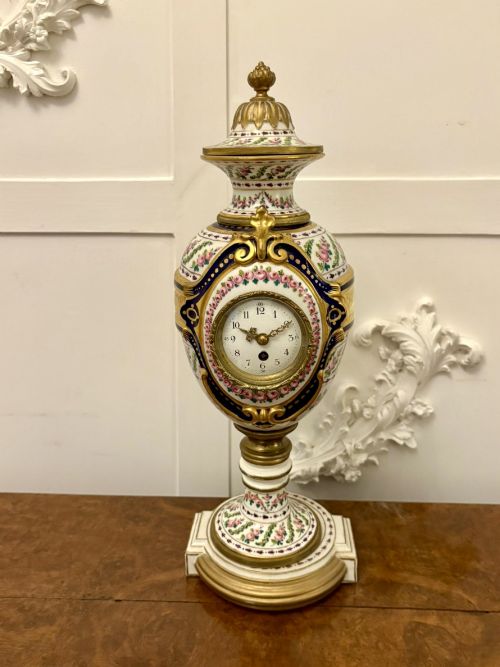
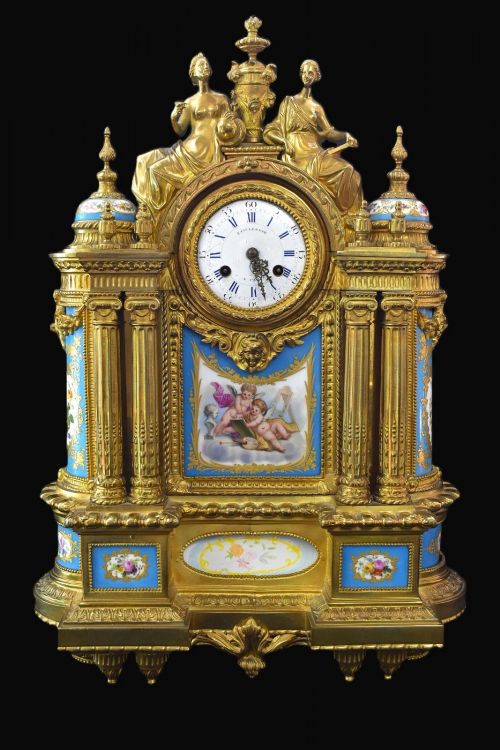
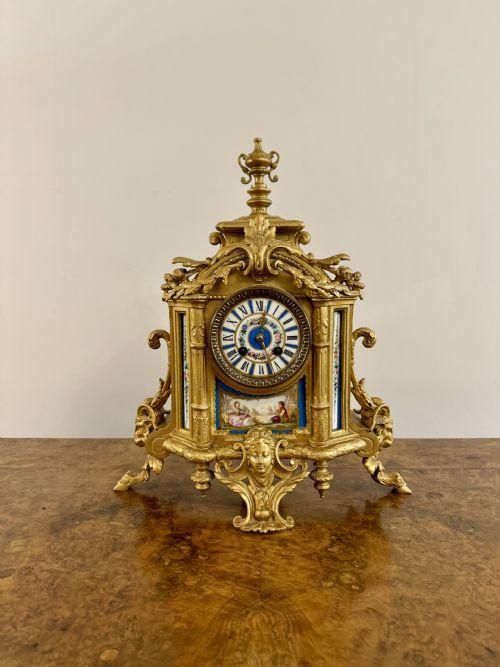
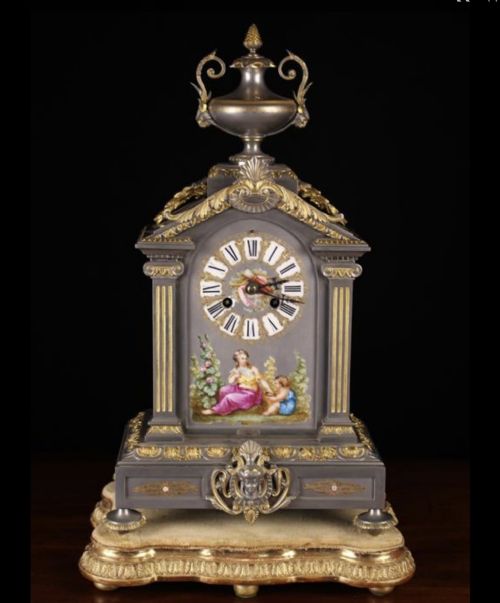
A french porcelain mantle clock combines ceramic bodies or dial panels with cast metal housings, frequently appearing as part of matching garniture sets alongside side urns or candelabra. These timepieces typically date from the nineteenth century, spanning Victorian decades from the eighteen-fifties through to nineteen-hundred.
Forms range from urn-shaped bodies and drum head movements to four-glass regulators and elaborate architectural cases influenced by Rococo and Louis XVI revivals. They sit upon mantelpieces and console tables, driven by eight-day movements that strike hours and half-hours on bells.
Originating largely from French workshops and Parisian makers, these pieces reflect the decorative tastes of the Second Empire and the late nineteenth century. Collectors encounter them paired with enamel dials, gilt bronze, ormolu mounts, and hand-painted ceramic plaques.
Materials and construction
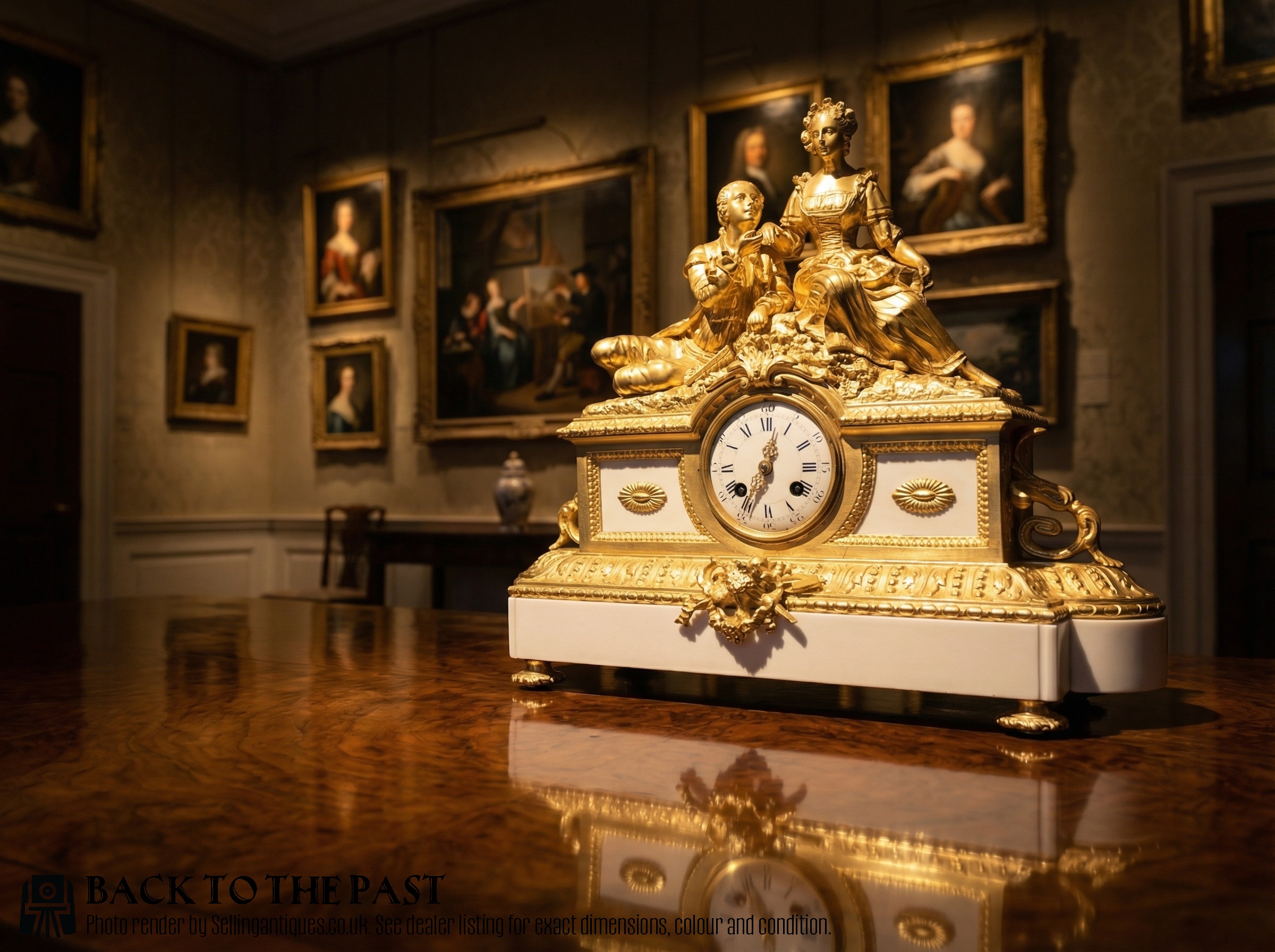
Cases rely heavily on cast ormolu, gilt bronze, and gilt metal, providing a bright metallic chassis that frames the ceramic elements. Porcelain components, including painted dials, urn bodies, and inset plaques, are frequently decorated with hand-painted scenes or floral motifs.
Movements are integrated with brass gear trains, often incorporating silk suspension threads or pendulum regulation, housed behind glass panels or brass bezels. Enamel is utilised for individual dial chapters, while secondary structural elements employ wood, marble, and glass domes.
Assessing quality and execution
The precision of the metal casting dictates the definition of the scrollwork, figures, and floral mounts across the case. Finer examples display crisper chasing in the ormolu and more detailed hand-painting upon the porcelain plaques and urns.
The presence of a recorded maker or retailer mark on the movement backplate distinguishes standard production items from workshop pieces. Furthermore, complete garniture sets and the retention of original components like glass domes elevate the integrity of the ensemble.
Etienne Lenoir·Japy Freres·Phillipe H. Mourey·P.H Mourey
The French Porcelain Mantle Clock Glossary
- Ormolu
- Gilded bronze produced by applying a mercury and gold amalgam to a cast bronze base, yielding a durable metallic finish. This technique was widely utilised in nineteenth-century French clock cases.
- Garniture set
- A matching centre clock accompanied by side pieces such as urns, vases, or candelabra designed for display together on a mantelpiece. These sets unify the decorative scheme of a room.
- Sevres style
- A descriptive term for porcelain decorated with hand-painted pastoral scenes or floral reserves against rich coloured grounds, emulating the output of the Sevres factory. Such panels are characteristic of Napoleon III period clocks.
- Drum head clock
- A timepiece featuring a circular movement housing shaped like a drum, mounted prominently within an architectural or sculptural base. This form places visual emphasis on the dial.
- Four glass regulator
- A clock encased in glass panels on all four sides, allowing the movement and pendulum to be viewed from multiple angles. These pieces often feature mercury-filled pendulums for temperature compensation.
French Porcelain Mantle Clock: Frequently Asked Questions
How do I wind my clock?
Use the appropriate winding key on the dial apertures to tension the spring gently until resistance is felt. Avoid over-winding to protect the internal brass mechanism.
Ensure you do not force the key past its natural stop, as nineteenth-century springs require a measured, steady turn to function reliably.
Why does the clock lose time?
Changes in temperature, uneven mantel surfaces, or the need for a clean and re-oil can alter the beat of the pendulum. Minor adjustments to the pendulum regulation nut usually correct small discrepancies.
If the clock stops entirely, the escapement may be out of beat, requiring professional adjustment by a horologist familiar with eight-day movements.
What is a garniture set?
A garniture set consists of a central mantel clock accompanied by matching decorative side objects like urns or candelabra. These matched groupings were placed together on drawing room mantelpieces.
They share identical motifs, materials, and gilding styles, creating a cohesive decorative display across the furniture.
How do I identify the period?
Examine the style of the case, such as Rococo revival scrollwork or Louis XVI symmetry, alongside the materials and dial construction. Maker marks stamped on the movement backplate also provide a reliable guide to the decade of manufacture.
Inscriptions, retailer stamps, and registration numbers help narrow down the production era within the nineteenth century.