
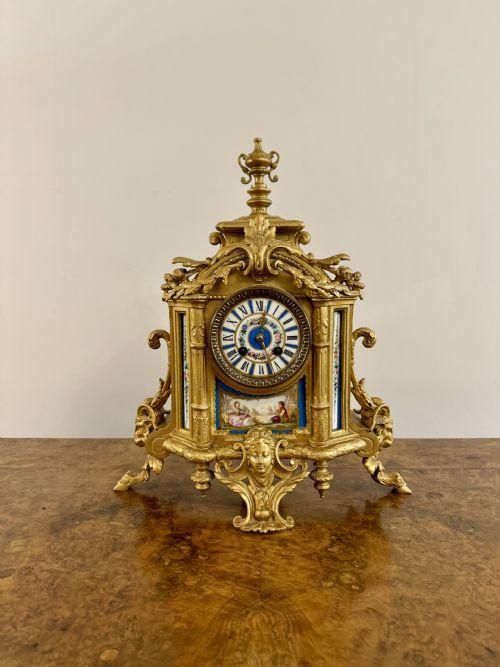


Gold French Shelf Clock
A gold french shelf clock brings opulent nineteenth-century metalwork and precision timekeeping into domestic interiors.
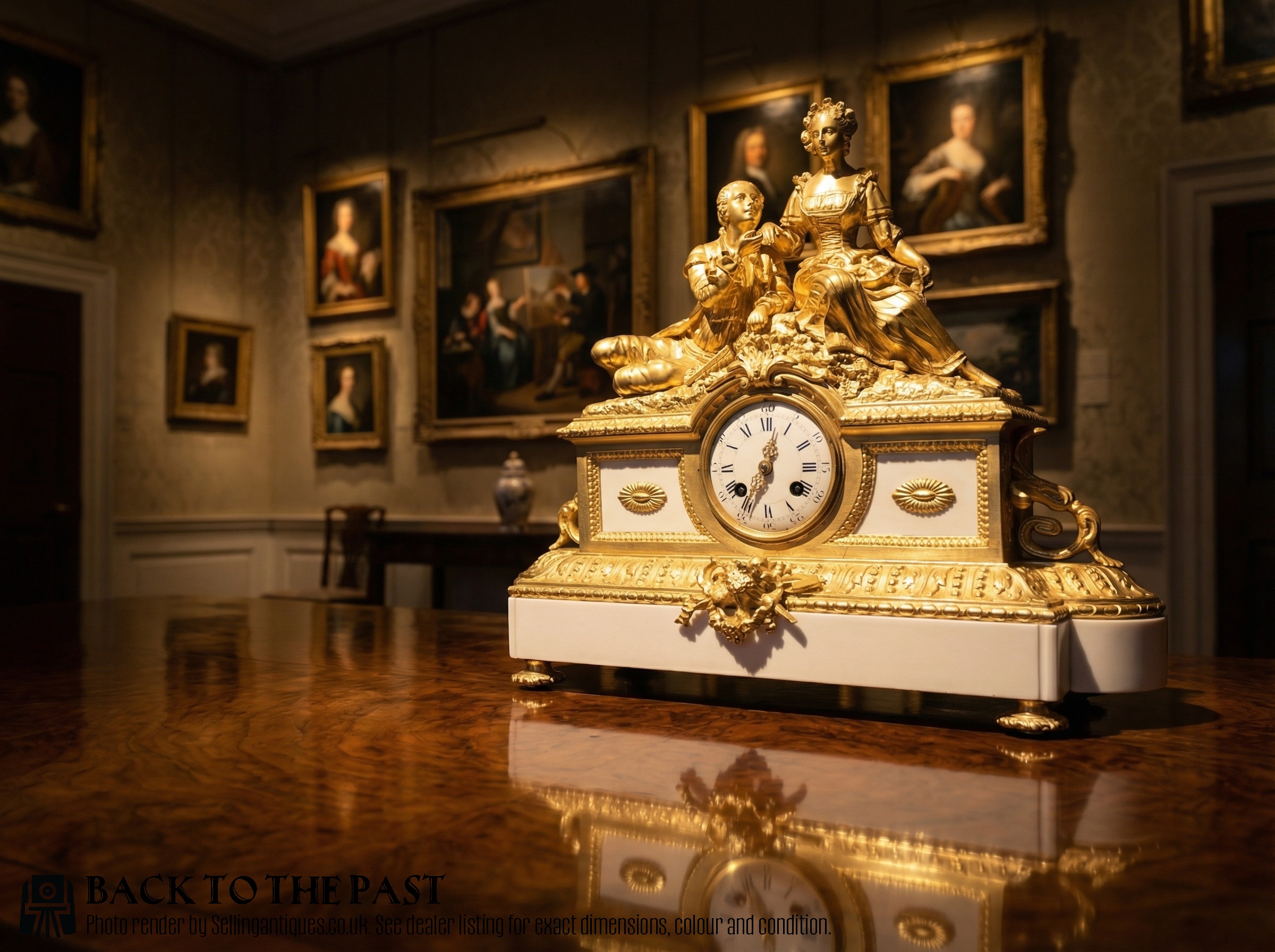
Gold French Shelf Clock
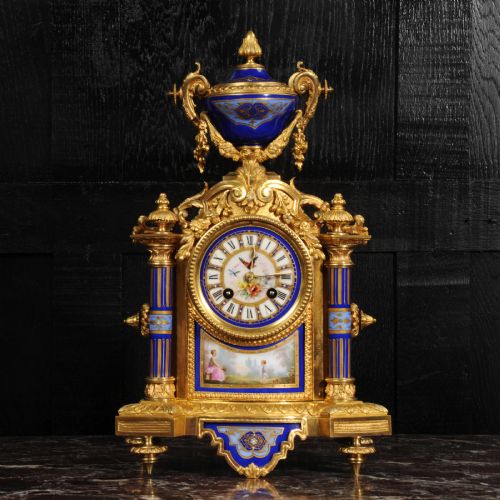
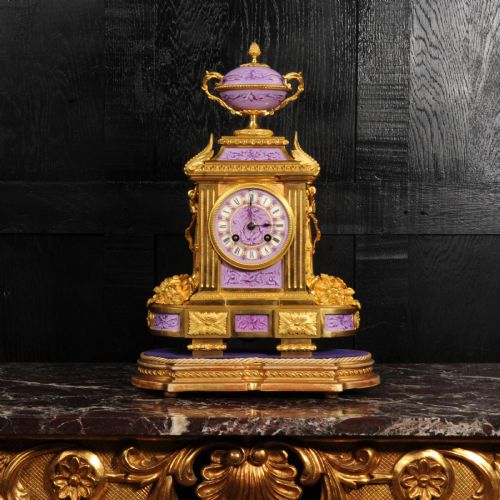
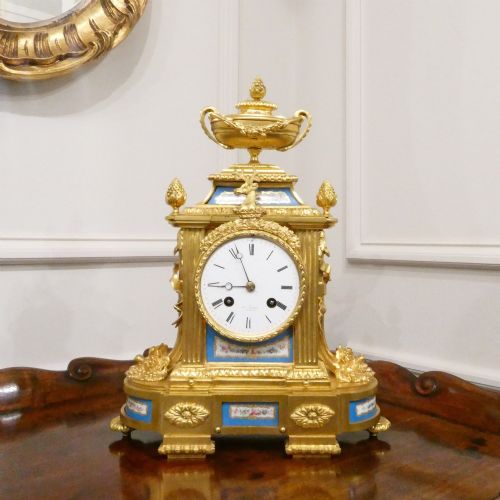
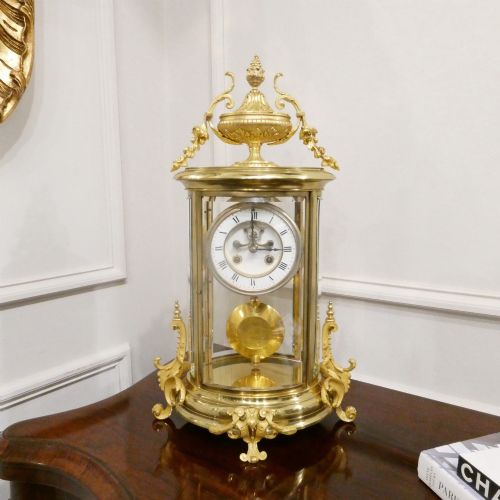
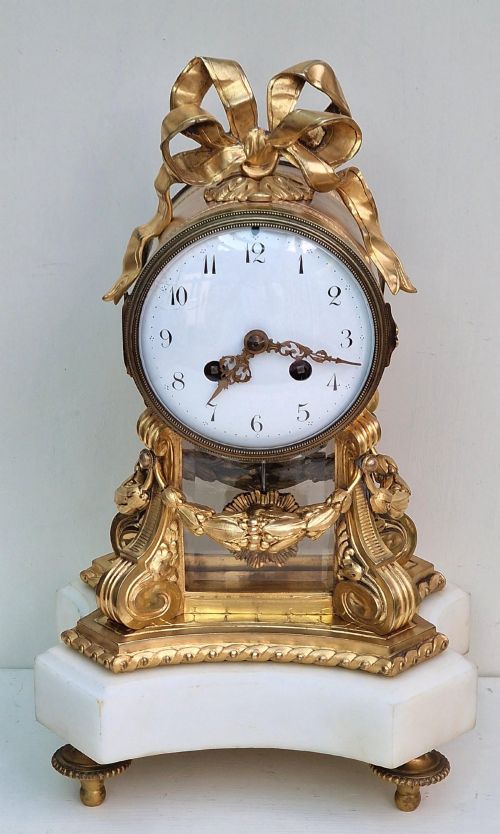
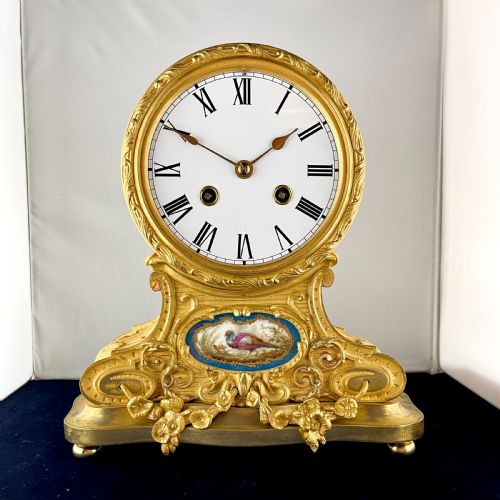
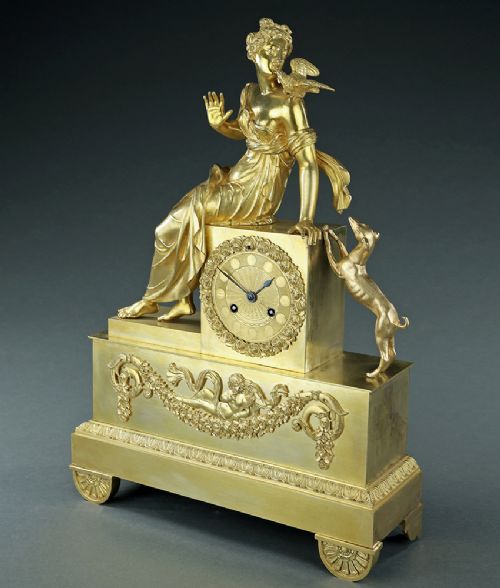
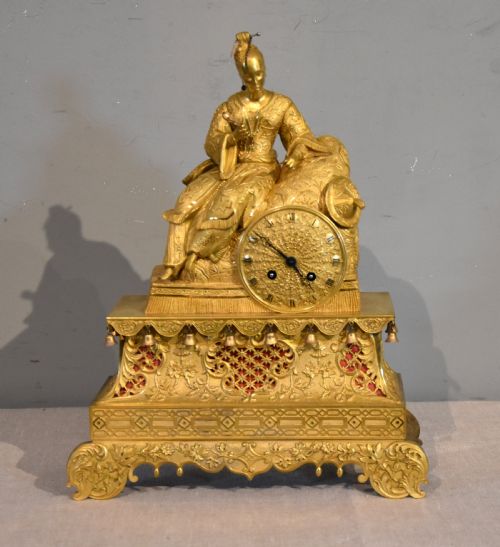
A gold french shelf clock represents domestic horology from periods spanning the eighteenth to the early twentieth century, with nineteenth-century examples dominating current availability. These objects take the form of mantel clocks, mantle clocks, and four-glass bracket clocks designed to sit prominently on a shelf or surface.
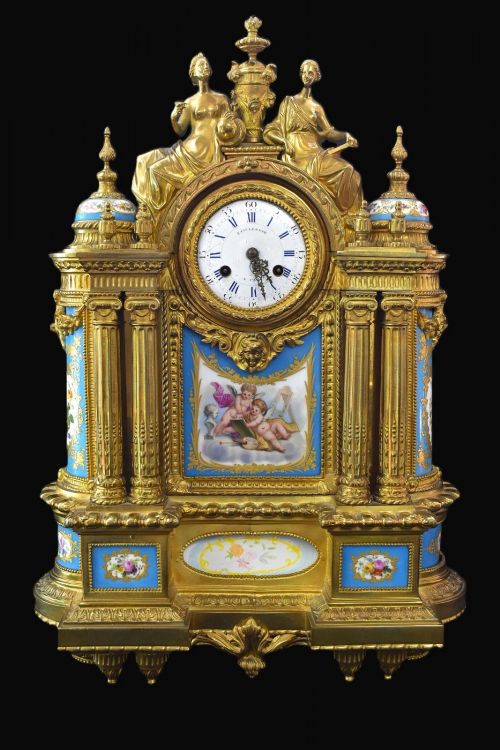
The aesthetic vocabulary draws heavily on French Rococo Revival, Louis XVI Style, French Empire, and Second Empire movements. Pieces frequently combine architectural cases with decorative figural elements, classical motifs, and ornate dial surrounds.
Origins trace directly to continental workshops and prominent makers operating during the Victorian era and preceding decades. Buyers encounter both robust architectural brass designs and delicate porcelain-mounted decorative works.
Materials and Techniques
Cases combine heavy cast metals including ormolu, gilt bronze, gilt brass, and gilt metal, often polished or fire-gilded to achieve a bright golden finish. These metallic structures provide the substantial weight required to house intricate mechanical gear trains.
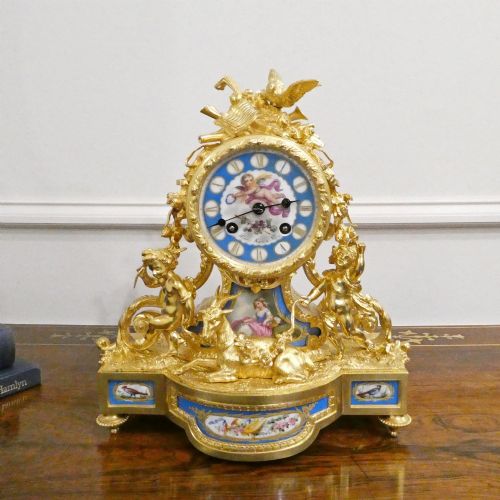
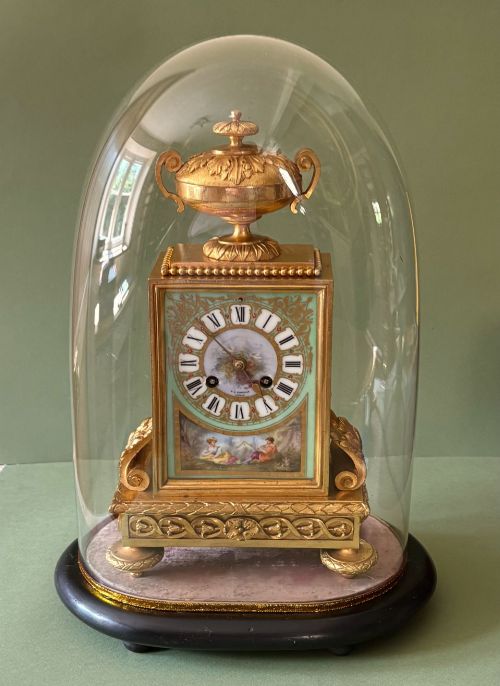
Decorative panels and dials utilise painted Sevres porcelain, champleve enamel, and contrasting white marble or glass panels. Movements incorporate precise brass gearing designed for eight-day striking or repeating functions.
Several mechanical timepieces incorporate sculpted bronze doves perched atop the case, symbolizing love and fidelity within the domestic interior.
Quality and Craftsmanship
Quality rests upon the crispness of the bronze or brass casting and the depth of the gilding applied to the case. Superior examples exhibit sharply chiselled surface detailing, whereas lesser works show softer, shallower ornamentation from secondary casting.
The integration of signed mechanical movements by recognised makers elevates a piece above standard commercial production. Hand-painted porcelain plaques and uncompromised dial enamel further separate standard decorative clocks from masterworks.
Japy Freres·Achille Brocot·Henry Marc·Samuel Marti·Delettrez·Etienne Lenoir
The Gold French Shelf Clock Glossary
- Ormolu
- A gilded bronze technique involving the application of a finely ground high-carat gold amalgam to a bronze object. This process creates a rich, durable golden surface characteristic of fine French decorative arts.
- Sevres
- Porcelain produced by the renowned French national manufactory, identifiable by painted pastoral scenes or floral motifs. These ceramic panels adorn the front and sides of many formal mantel clocks.
- Champleve
- An enamelling technique where troughs are dug into the metal surface and filled with vitreous enamel powder before firing. The resulting coloured patterns decorate the brass or bronze clock housing.
- Repeater
- A clock mechanism that chimes the hours or minutes on demand when a pendant or lever is activated. This complication demonstrates superior horological engineering.
- Movement
- The internal mechanical assembly of gears, springs, and escapements that drive the clock hands and strike the bells. These mechanisms require precise calibration to maintain accurate time.
Gold French Shelf Clock: Frequently Asked Questions
How do I wind my clock?
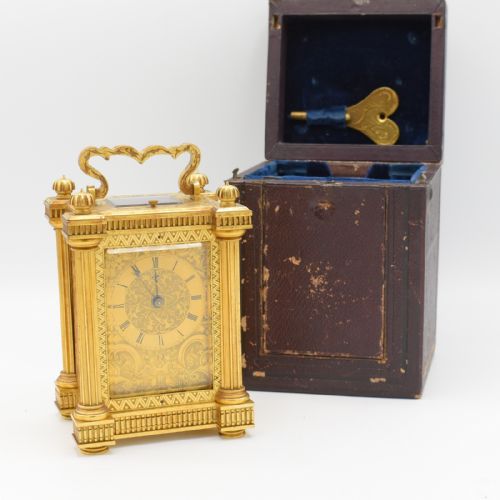
Most mechanical clocks require a specialised key inserted into the dial arbors to tension the mainsprings.
Care must be taken not to overwind the mechanism, stopping as soon as resistance is felt.
Where should I place the clock?
Position the piece on a stable, level surface such as a mantelpiece, shelf, or heavy wooden cabinet.
Avoiding direct sunlight and drafty areas helps protect the delicate gilding and internal mechanics.
How do I identify the period?
Examine the stylistic cues of the case, such as Louis XVI symmetry or flamboyant Rococo scrollwork.
Maker signatures on the movement backplate often provide precise manufacturing dates.
Why does the clock lose time?
Mechanical clocks require correct physical levelling on their shelf to keep the pendulum swinging evenly.
Older movements also benefit from professional cleaning and lubrication to restore precise timekeeping.