




Striking Mantle Clock
A striking mantle clock brings mechanical movement and audible timekeeping into a room, spanning Georgian craftsmanship to Victorian design.
Striking Mantle Clock
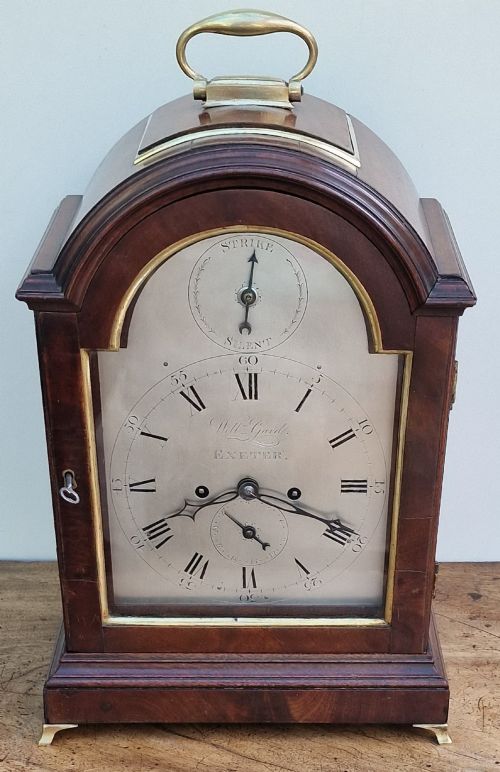
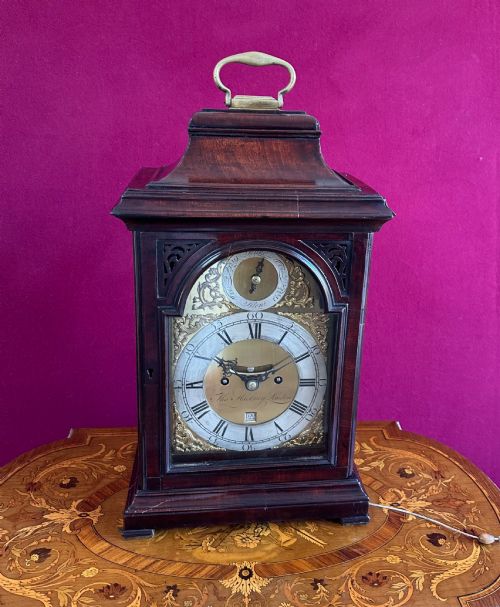
A striking mantle clock is a portable or shelf-standing timekeeper designed to sound the hours or fractions of hours on bells, gongs, or dual bells. These objects appear in various formats on this page, including domestic bracket clocks, French carriage clocks, and heavy marble or wooden mantel pieces.
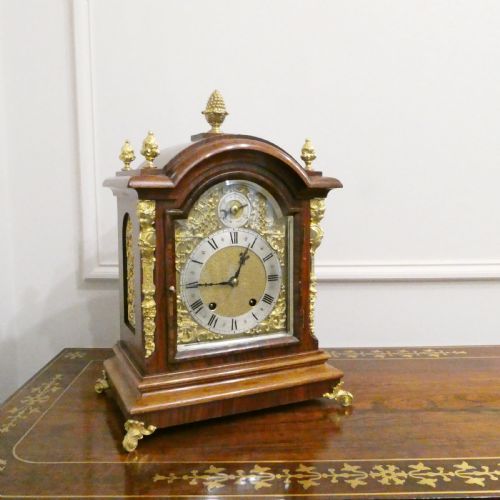
The domestic forms range from early Georgian wooden bracket clocks with verge or fusee movements to ornate Victorian marble, ormolu, and ebonised designs. French workshops also contributed gilt bronze, champleve, and porcelain-panelled models made for the mantel shelf or library.
Buyers encounter both English table clocks with wooden cases and continental mantel models utilising cast brass, glass domes, and ornate metalwork. Many domestic examples date from the eighteenth and nineteenth centuries, reflecting long traditions of clockmaking in London, Paris, and provincial centres.
How they were made
Case makers utilised dense timbers such as mahogany, walnut, rosewood, and ebonised wood, alongside structural metals like brass, gilt bronze, ormolu, and heavy marble. These materials formed structural housings designed to enclose intricate mechanical movements while displaying decorative veneers, carvings, or glass panels.
Clockmakers constructed mechanical movements using brass wheels, steel pinions, and escapements such as verge, anchor, or platform escapements. Dials were frequently fashioned from white enamel with painted numerals, or engraved brass, paired with hands driven by spring-driven or fusee gear trains.
Listings feature movements ranging from simple hour strikes to complex quarter-striking, repeating, and alarm mechanisms across eighteenth and nineteenth-century examples.
What varies in quality
The sophistication of the internal movement dictates much of the standing of a piece, separating standard time-only or simple hourly striking mechanisms from complex grand sonnerie, petite sonnerie, repeating, or quarter-striking systems. Twin-fusee mechanisms and elaborate escapements reflect higher technical ambition from makers.
Materials and case execution separate standard production from high-end craftsmanship, seen in the weight and finish of marble blocks, the crispness of gilt bronze ormolu casting, and the refinement of hand-painted enamel dials. Original components, such as matching brackets, glass domes, and signed backplates by known makers, elevate the integrity of the piece.
Mappin & Webb·C. Detouche Paris·Schneckenburger·Henry Jacob·J. F. Bautte Et Cie·Hunt & Roskell·Mathias Bauerle·John Leroux·John Fletcher·Isaac Hurley·Achille Brocot·Winterhalder & Hoffmeier
The Striking Mantle Clock Glossary
- Fusee
- A conical pulley used in mechanical clocks to maintain an even pull on the movement as the mainspring unwinds. This device ensures more consistent timekeeping throughout the power reserve.
- Grand Sonnerie
- A striking mechanism that chimes both the hours and the quarters automatically on every quarter hour. It represents an advanced level of horological complication.
- Verge escapement
- An early type of escapement mechanism using a crown wheel and a vertical rod with pallets. It is typically found in older eighteenth-century bracket and table clocks.
- Ormolu
- Finely ground high-purity gold applied to a bronze base metal through a mercury amalgamation process. This technique gives nineteenth-century French clock mounts their characteristic warm metallic lustre.
- Carriage clock
- A small, portable spring-driven clock originally designed for travelling officers and gentlemen. They generally feature glazed brass cases and folding top handles.
Striking Mantle Clock: Frequently Asked Questions
What is a striking mantle clock?
A striking mantle clock is a mechanical timepiece designed to sit on a shelf or mantelpiece while audibly chiming the hours or fractions of hours. These items combine functional timekeeping with decorative cabinetwork made from wood, marble, or metal.
They rely on wound springs or weights to drive gear trains that operate both the hands and the striking hammers. Different models produce sounds via bells, gongs, or multiple tuned rods.
How do fusee movements work?
A fusee movement uses a conical pulley connected to the mainspring by a cord or chain. As the spring unwinds and loses tension, the chain moves to a wider section of the cone to maintain consistent torque.
This mechanical system prevents the clock from losing accuracy as the power reserve diminishes. It is commonly found in better quality English bracket and table clocks.
What is a carriage clock?
A carriage clock is a portable timepiece with a glazed brass case and a swinging handle designed for travel. Nineteenth-century examples often feature platform escapements and striking or repeating functions.
They were built to withstand movement while remaining accurate on journeys. Many sit inside protective leather outer cases or decorative gilt frames.
How do I identify a French clock?
French mantle clocks from the nineteenth century frequently employ marble, ormolu, porcelain panels, or ebonised wood cases with distinct regional styling. Their movements often bear stamped foundry marks or serial numbers from makers.
They range from architectural marble designs to ornate gilt bronze figural pieces. Many include matching side urns or sit beneath protective glass domes.
Where should I place a mantle clock?
A mantle clock requires a stable, level surface such as a wooden mantelpiece, sideboard, or bracket shelf. Stability ensures the pendulum or escapement maintains an even beat.
Keeping the clock away from direct heat sources and damp environments helps preserve wooden cases and delicate metal movements. Winding and setting procedures should follow the specific mechanical requirements of the movement.